






















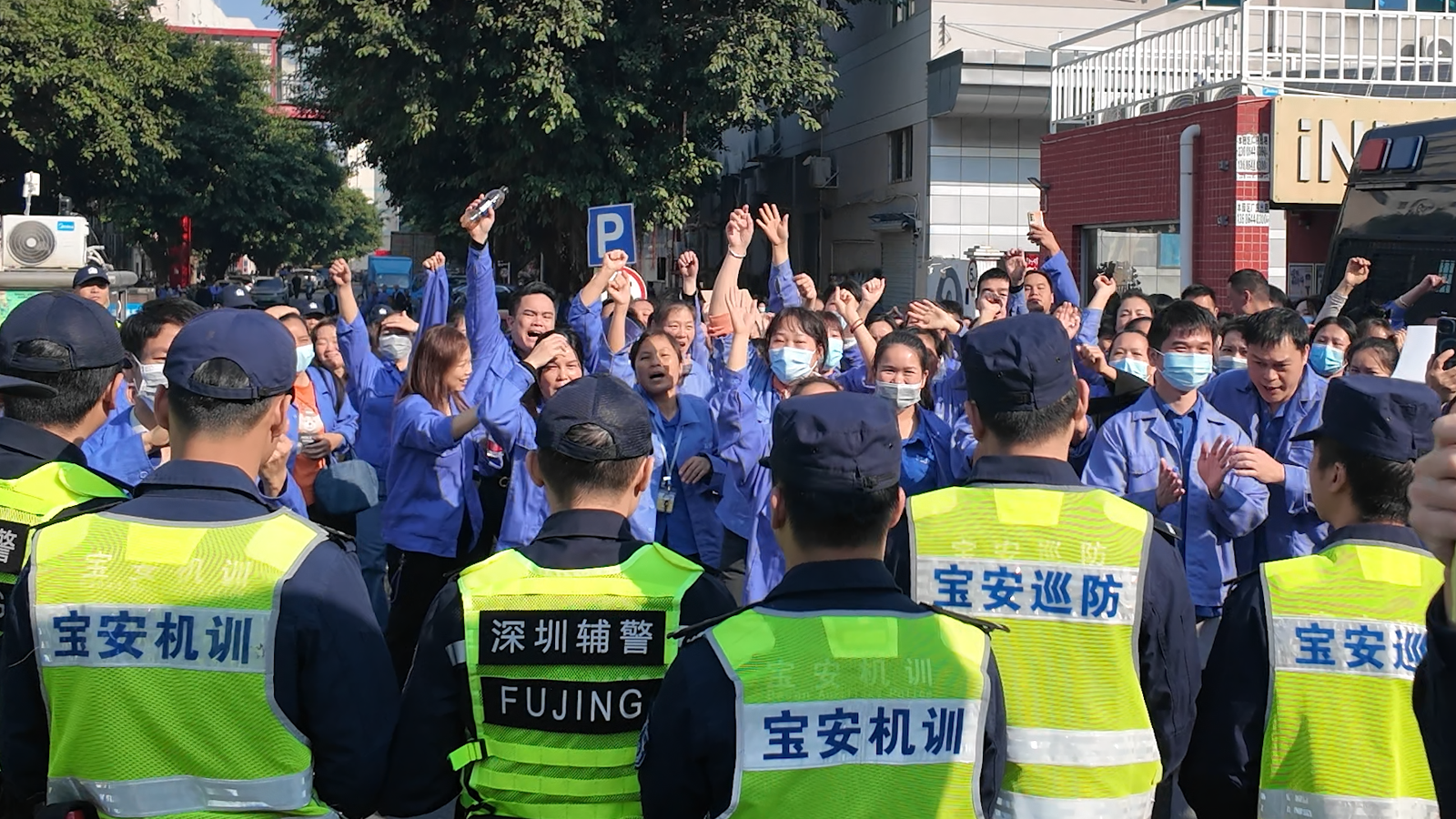
Workers Protest in Shenzhen Amidst Economic Strains
Factory workers in Shenzhen have initiated a strike, drawing attention to ongoing economic grievances within China. For four consecutive days, employees at the Yi Li Sheng factory protested against reduced working hours and wages that fail to meet the high living costs in the city. The protest highlights the growing unrest among workers as economic pressures mount.
A Rising Wave of Dissent
Observations from the protest indicate a significant police presence, with authorities visibly on edge. Those nearby were discouraged from filming, illustrating the sensitivity surrounding such events in China. Despite government efforts to suppress public dissent, incidents of protest have reportedly seen a notable rise.
Troubling Conditions for Workers
Reports from the striking workers reveal a concerning reality. Many claim their hours have been cut as manufacturing capacities have shifted overseas. A female worker expressed distress over receiving just 1900 RMB (£200) last month, asserting that this amount is insufficient to sustain herself in Shenzhen.
The factory has not responded to inquiries regarding these claims, and any attempts to document the events are often met with swift removal by authorities. China’s history of censorship concerning protests complicates the visibility of such strikes; local media typically avoids coverage, and social media posts are often deleted.
Voices of Dissent
Expressing dissatisfaction has become increasingly perilous in China, revealing the desperation felt by many. When foreign media approached the striking workers, they reacted with enthusiasm, showcasing their desire for their voices to be heard. However, this was met with immediate resistance from security personnel, illustrating the tense atmosphere surrounding public expressions of dissent.
Protest Data Overview
According to research from the China Dissent Monitor, there were over 5,000 recorded protest incidents in 2025, signifying a 48% increase compared to previous years. Many of these protests relate to economic grievances, including unpaid wages and unjust working conditions. Only a small percentage of these protests have overt political implications, showcasing a focus on immediate economic issues rather than outright governmental opposition.
Context and Implications
The growing unrest among China’s workforce has been attributed to several factors, including economic downturns and heightened control by the government. The public often feels unheard, as highlighted by the striking workers’ frustrations. This scenario is further complicated by a historical context where many civil society organisations have ceased operations, leaving the populace with fewer avenues for voicing concerns.
Even though some individuals in China enjoy prosperity and do not see a need for protest, the unrest indicates a significant undercurrent of dissatisfaction that the government aims to address and suppress. Reports from dissidents highlight that many citizens possess a keen awareness of the political situation, yet many choose to tread carefully when expressing their thoughts publicly.
Conclusion
The recent events in Shenzhen emphasise a critical juncture for China as it faces mounting internal pressures. As expressions of dissent continue, the world watches closely, understanding that these protests could have broader implications for China’s social and economic landscape.
Background
The recent protests follow a series of high-profile incidents, such as the “White Paper Protests” of 2022, sparked by strict COVID-19 regulations. These instances illustrate a growing challenge for the Chinese government as it balances the desire for economic stability with the increasing demands of its citizens.
Source: Original Article






