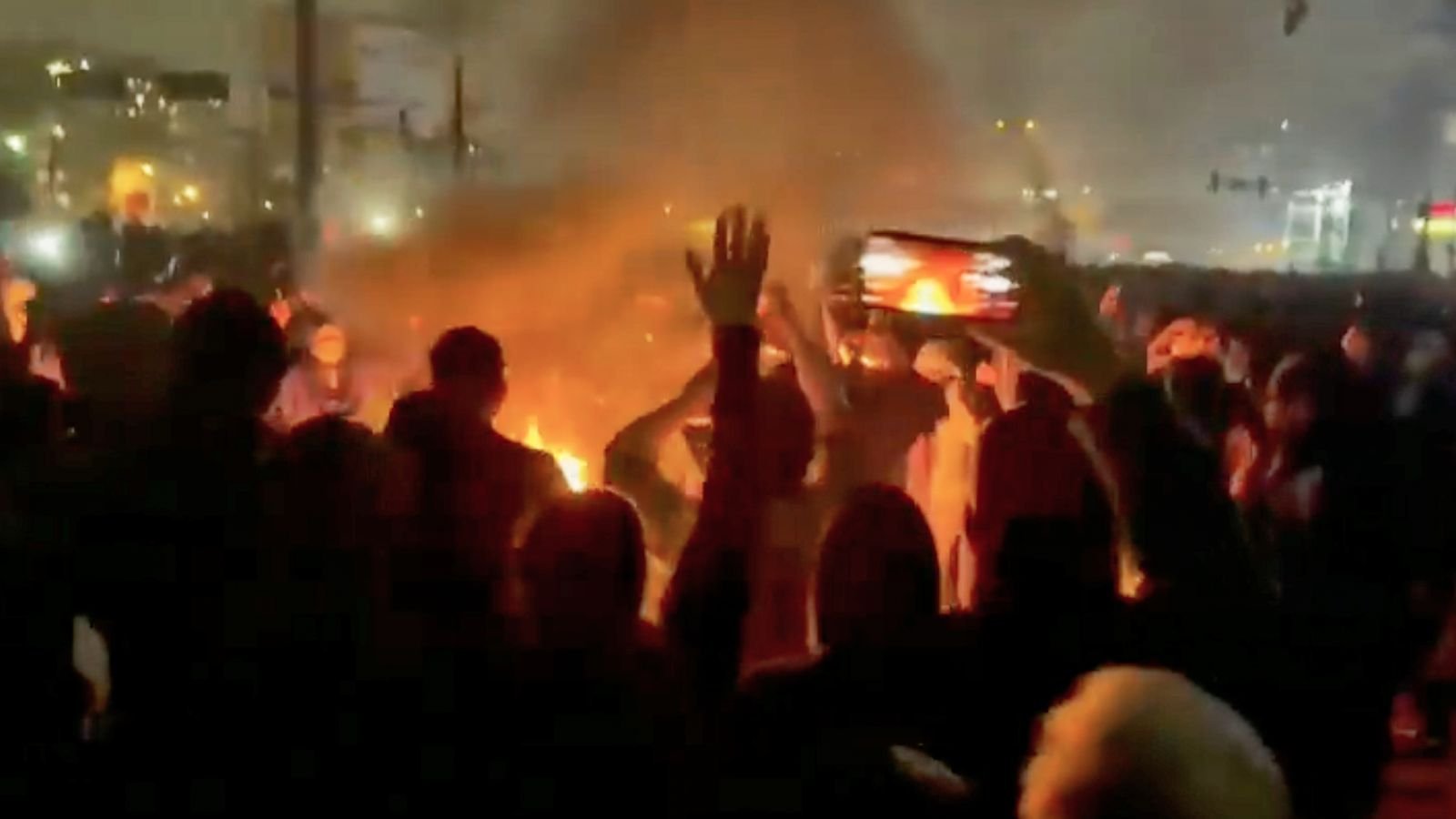
Unrest in Iran: A Government’s Grip Under Threat
Protests have erupted across Iran, sparked by economic turmoil and widespread dissatisfaction with the government’s leadership. While previous uprisings have been met with violent crackdowns, current unrest features a growing coalition of citizens, including both the merchant class and impoverished communities, expressing their frustrations over rising living costs and declining economic stability.
Economy at the Centre of Protests
The catalyst for the latest protests was the dramatic devaluation of the Iranian rial, which has significantly increased the prices of essential goods, leading to heightened discontent among the populace. The situation has escalated to a point where even the once-loyal merchant class is beginning to challenge the government’s authority.
At the heart of the economic crisis lies the inability of the government to alleviate the burden on its citizens, further complicating its position. Without visible signs of economic recovery, the Iranian administration’s ability to maintain control appears increasingly precarious.
Historical Context: Past Protests and Government Response
Iran has witnessed several major protests in recent years, including the notable “women, life, freedom” movement three years ago, which was brutally suppressed. However, the current wave of protests is distinct in several aspects, particularly due to the broader range of grievances being aired by a wider demographic of Iranian society.
Expanding Discontent Amidst Military Failures
Adding to the unrest is the fallout from a recent military conflict that has left the Iranian government under scrutiny for its failure to protect its citizens. The recent skirmish with Israel was perceived as a significant debacle, undermining the regime’s longstanding promises to safeguard the nation against external threats. Iranians are questioning the allocation of financial resources that were intended for military defence, now overshadowed by the loss of life and military assets.
The Future: Calls for Change or Reform?
Observers note a palpable demand for change among the populace, particularly the youth, who express a desire to see the end of the regime that has ruled for decades. While conventional wisdom suggested that reform would likely occur from within the government itself, the current crisis may push citizens towards a more revolutionary mindset, with increasing numbers participating in protests.
As protests continue, the leadership of Iran remains on high alert, cognisant of the historical precedents of reform leading to regime downfall in other countries. The supreme leader, Ayatollah Ali Khamenei, has resisted implementing substantial reforms, which leaves the government vulnerable amid rising public discontent.
Conclusion
As the situation continues to develop, the potential for new dynamics within Iran’s political landscape looms large. The government’s response to ongoing protests will be critical in determining whether the unrest will lead to meaningful change or if it will be met with further suppression. The eyes of the world remain firmly fixed on Iran as its citizens navigate this turbulent chapter in their history.
Background
- Past protests in Iran have often been met with extreme violence, leading to heightened fear among the populace.
- The Iranian rial has seen unprecedented lows, exacerbating living conditions for many.
- The recent military conflict with Israel has raised questions regarding the government’s ability to defend its citizens, further fueling discontent.
Source: Original Article