






















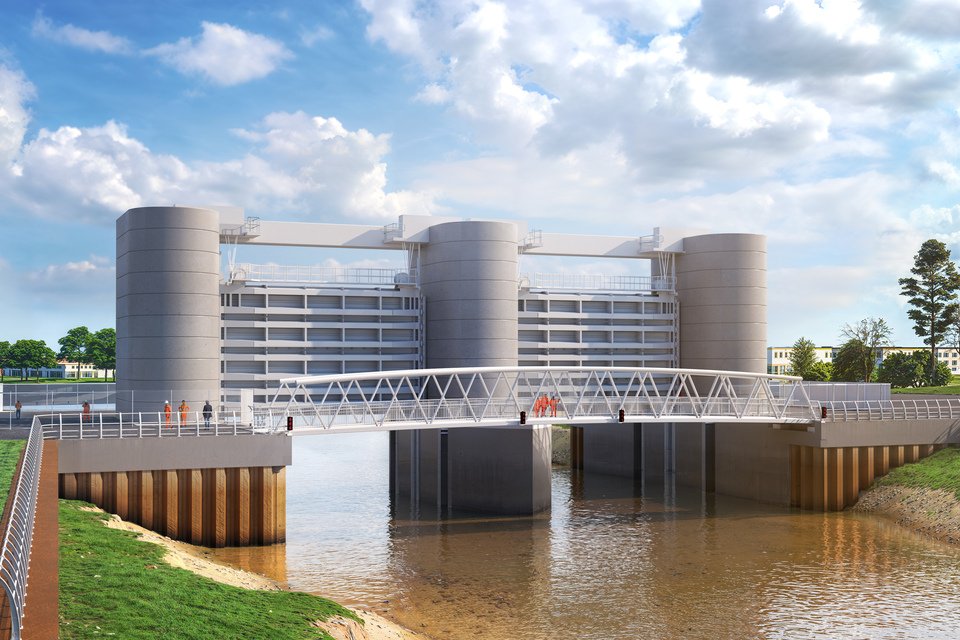
Bridgwater Tidal Barrier Scheme Update: Design Efficiency Review Underway
The Environment Agency has initiated a comprehensive design efficiency review of the Bridgwater Tidal Barrier project. This is aimed at ensuring continued cost-effectiveness while safeguarding construction progress and the scheme’s ultimate purpose: to protect nearly 13,000 homes and businesses from tidal flooding.
Objectives of the Review
Despite the ongoing review, the primary aim of the Bridgwater Tidal Barrier remains intact. The adjustments made to the superstructure will incorporate modern construction techniques and technologies, enabling cost reductions without diminishing the level of flood risk protection.
Key Design Changes
Several notable modifications are being introduced:
- A reduction of 10 metres in the overall height of the barrier, with the three towers now standing at approximately 13 metres.
- The towers will feature more uniform shapes, complemented by modern mechanical systems.
- The drive equipment, responsible for operating the barrier gates, has been relocated to the base of the towers, facilitating easier maintenance and reducing long-term operational costs.
- New high-level walkways will replace the previous overbridge, providing operational access between the towers.
The scheme will be hosting public drop-in sessions on January 21 and 23, where the project team will share updates and engage with the community to address any queries regarding the review and design changes.
Additional Aspects Under Review
In addition to cost considerations, the design review is also focusing on constructability, operational efficiency, carbon footprint reduction, and long-term maintenance requirements. The ongoing study aims to further identify cost-effectiveness in sections such as the operational building and landscape design, with updates expected later in 2026.
Statements from Officials
Ross Barton, the project director, expressed confidence in the review’s findings, stating that the modifications will preserve high levels of flood protection while enhancing efficiency and affordability. Furthermore, Bill Revans, Leader of Somerset Council, underscored the project’s significance to local communities and the economy, reaffirming support for the balanced approach taken to ensure the scheme’s viability.
Progress and Funding Situation
Construction on the barrier’s substructure and downstream defences has advanced significantly, with enabling work commencing in early 2023. Although a precise completion date is yet to be established, current projections indicate that work will extend for an additional five to six years, including essential landscaping. The project has received robust backing from the central government and has secured £249 million in funding.
While financial challenges persist, especially for large-scale projects, the review has already identified valuable savings. The final cost of the scheme will be confirmed upon completion of the ongoing reviews and subsequent government reporting.
Background
- The Bridgwater Tidal Barrier is intended to provide a 1 in 200-year standard of flood protection, estimating a 0.5% annual chance of exceeding the barrier’s capacity.
- Protection is expected to last until 2125 for Bridgwater and until 2055 for downstream communities.
- The project operates under the planning approvals granted in 2022, which allow for flexibility in modifications without requiring new permissions.
For ongoing updates and more information, you can visit the Bridgwater Tidal Barrier scheme website.
Source: official statements, news agencies, and public reports.
https://www.gov.uk/government/news/bridgwater-tidal-barrier-scheme-gets-a-more-efficient-design






