Astronauts Make Historic Emergency Return from Space Station
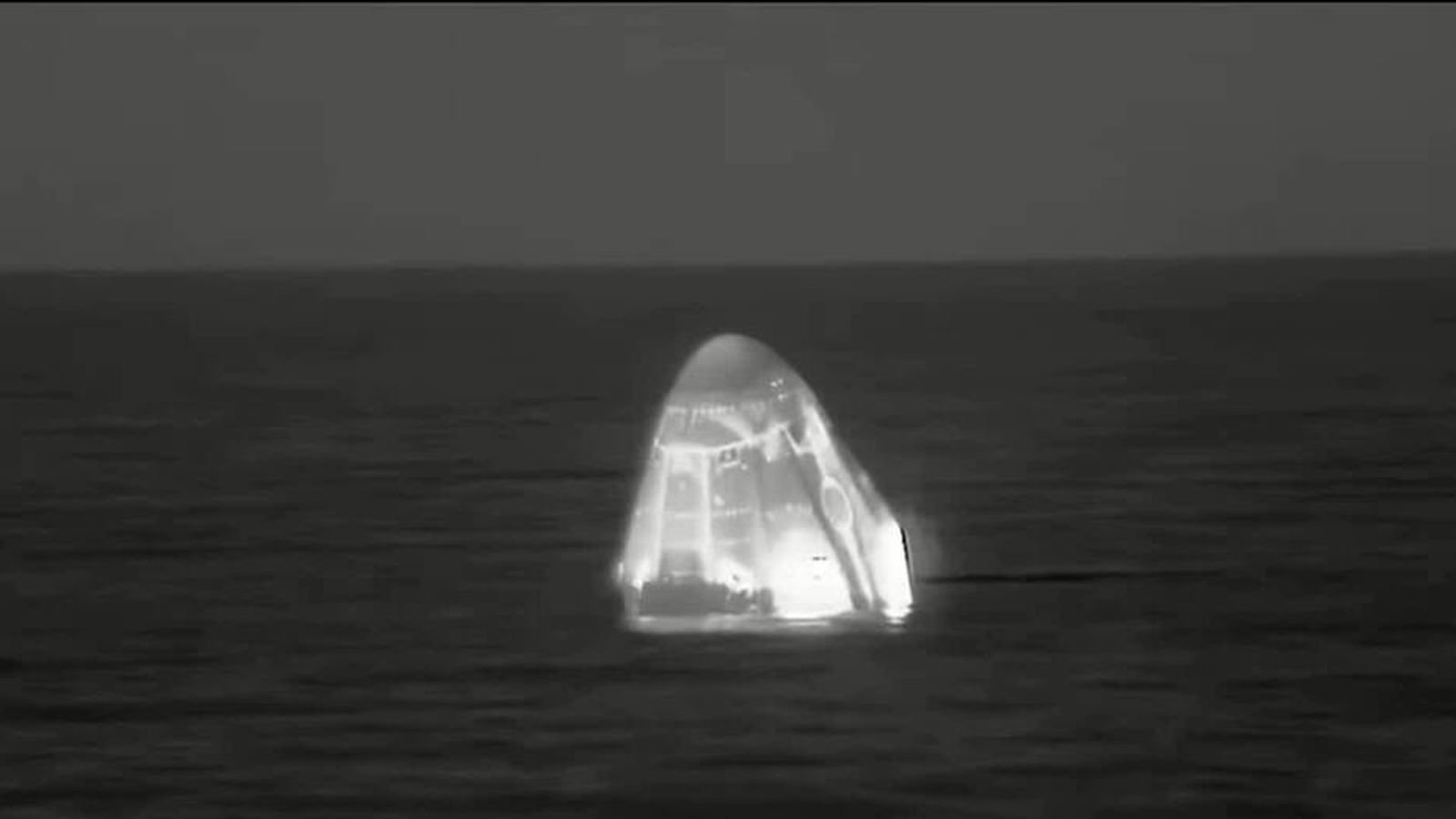
A crew of four astronauts has safely returned to Earth, marking the first emergency evacuation from the International Space Station (ISS) due to a medical concern. The crew made a nighttime splashdown in the Pacific Ocean near San Diego, approximately a month ahead of schedule.
Swift Action Taken
With support from SpaceX, the Crew Dragon capsule landed just under 11 hours after the astronauts departed from the ISS. Following their return, the crew was taken to a hospital for overnight monitoring and standard medical examinations.
NASA Administrator Jared Isaacman reassured the public that the astronauts were “safe” and “in good spirits” following their unexpected descent. He elaborated that NASA made the decision to bring the crew home early only about a week prior due to the medical situation unfolding onboard.
Medical Emergency Details
While officials have not disclosed the specifics of the medical issue or which astronaut was affected, Mr. Isaacman confirmed that the crew member in question is now doing well. An update regarding their health will be provided “when it is appropriate to do so.”
This incident signifies a new chapter in space travel, as it was the first time NASA had to cut short a mission due to health reasons. NASA’s Deputy Associate Administrator, Joel Montalbano, noted that meticulous attention to detail allowed for a successful emergency return.
Future of the Space Mission
Despite this setback, the crew successfully completed 140 experiments during their time in space. The remaining skeleton crew of three on the ISS will continue essential operations until the arrival of a new team of astronauts scheduled to launch in the coming weeks.
The astronauts aboard the capsule included NASA’s Zena Cardman and Mike Fincke, along with Japan’s Kimiya Yui and Russia’s Oleg Platonov. Their commander, Ms. Cardman, reportedly expressed relief upon landing, saying, “It’s good to be home.”
Background
This medical emergency arose following an incident that occurred on 7 January, which resulted in the cancellation of a scheduled spacewalk. NASA officials clarified that the medical issue was not related to any operational injuries. As the landscape of space travel evolves, such emergency responses are likely to become increasingly crucial.
The next crew, designated Crew-12, is expected to launch to the ISS in mid-February, bolstering the current team consisting of NASA astronaut Christopher Williams and two cosmonauts who arrived aboard a Russian Soyuz spacecraft back in November.
Source: Original Article