






















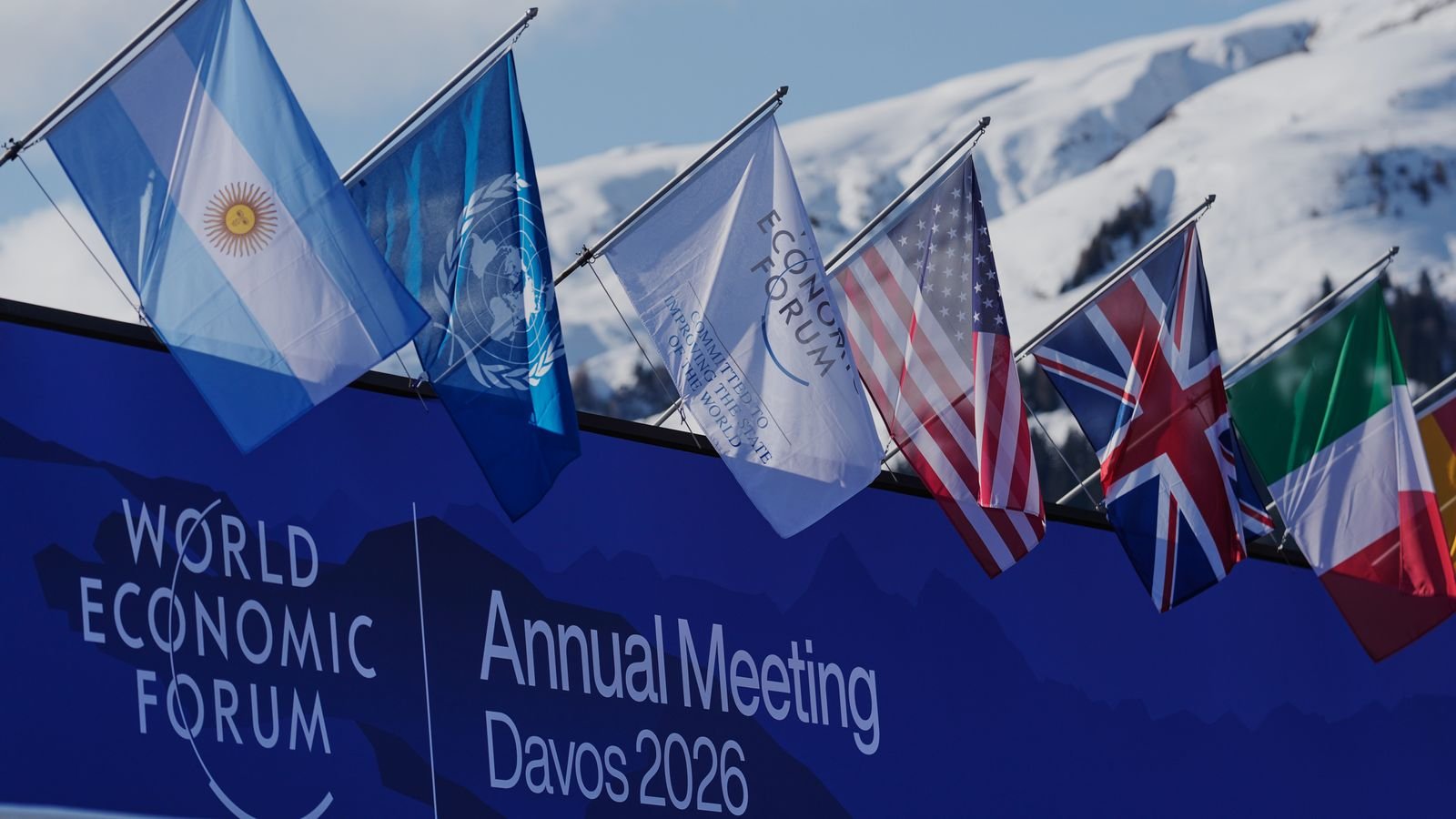
Trump’s In-Person Return to Davos Marks Tense Diplomatic Climate
This week, the World Economic Forum (WEF) in Davos will see an in-person appearance from US President Donald Trump, accompanied by an extensive delegation of 80 officials, including key cabinet members. This marks a significant escalation in the ongoing tensions between the US and its European allies, as Trump makes headlines with threats of tariffs targeting nations like Greenland and the UK.
A Shift in Global Economic Dynamics
A year ago, Trump addressed the WEF virtually, signalling a shift away from the traditional free-trade model cherished by global leaders. His comments left many in the room unsettled, but his intentions have since become unmistakably clear, as he now embarks on this year’s forum with a mix of economic bravado and unprecedented policy challenges trailing in his wake.
Increased Tensions with Allies
The proposed tariffs against Nordic countries, including the UK, represent a notable fracture in transatlantic relations. They symbolize Trump’s readiness to exert economic pressure not only on adversaries but also on allies, raising the stakes as economies worldwide are still recovering from the effects of previous unilateral measures.
In addition to tariff threats, Trump’s recent geopolitical stances—including a return to gunboat diplomacy in Venezuela—emphasize a more aggressive American foreign policy that prioritizes economic interests, particularly with regard to energy resources.
World Leaders Gather Amid High Stakes
This year’s gathering will feature leaders from six G7 nations, with the notable absence of UK opposition leader Sir Keir Starmer, although the composition could shift as discussions evolve. French President Emmanuel Macron and EU President Ursula von der Leyen are expected to articulate their positions in prominent speeches, while Chinese Vice Premier He Lifeng may find an opportunity to capitalize on the fractures within the Western alliance.
Davos: A Hub for Business and Politics
As the forum unfolds, expectations included a focus on the ongoing conflict in Ukraine and potential avenues for reconstruction. However, with such a forceful presence from Trump, the diplomatic narrative may become increasingly complex. Davos remains a unique environment—a hybrid of conference, trade fair, and summit—where powerful figures converge to negotiate and strategize in relative secrecy.
For many executives, attending Davos becomes a crucial networking opportunity. As one corporate leader noted, the amount of productive dialogue achievable in three days there surpasses three months of typical business interactions.
UK Representation and Opportunities
The UK’s presence will be led by Chancellor Rachel Reeves, who is set to engage in discussions with business leaders, spearheaded by Jamie Dimon of JPMorgan. Her goal will be to draw attention to British interests amidst the backdrop of global economic dialogues—though the political landscape may dominate many of the conversations this year.
Background
Trump’s first virtual address to Davos raised alarm bells regarding the stability of the global economic order, leading many to speculate about the implications of his administration’s policies on international alliances. As the WEF continues to attract the elite of industry and government, the outcomes of these discussions will undoubtedly shape future diplomatic and economic relations.
With powerful nations at loggerheads and the spectre of renewed protectionism looming, the world waits to see how developments will unfold in Davos, which remains pivotal in shaping the narratives around globalisation and economic cooperation.
Source: Original Article






