






















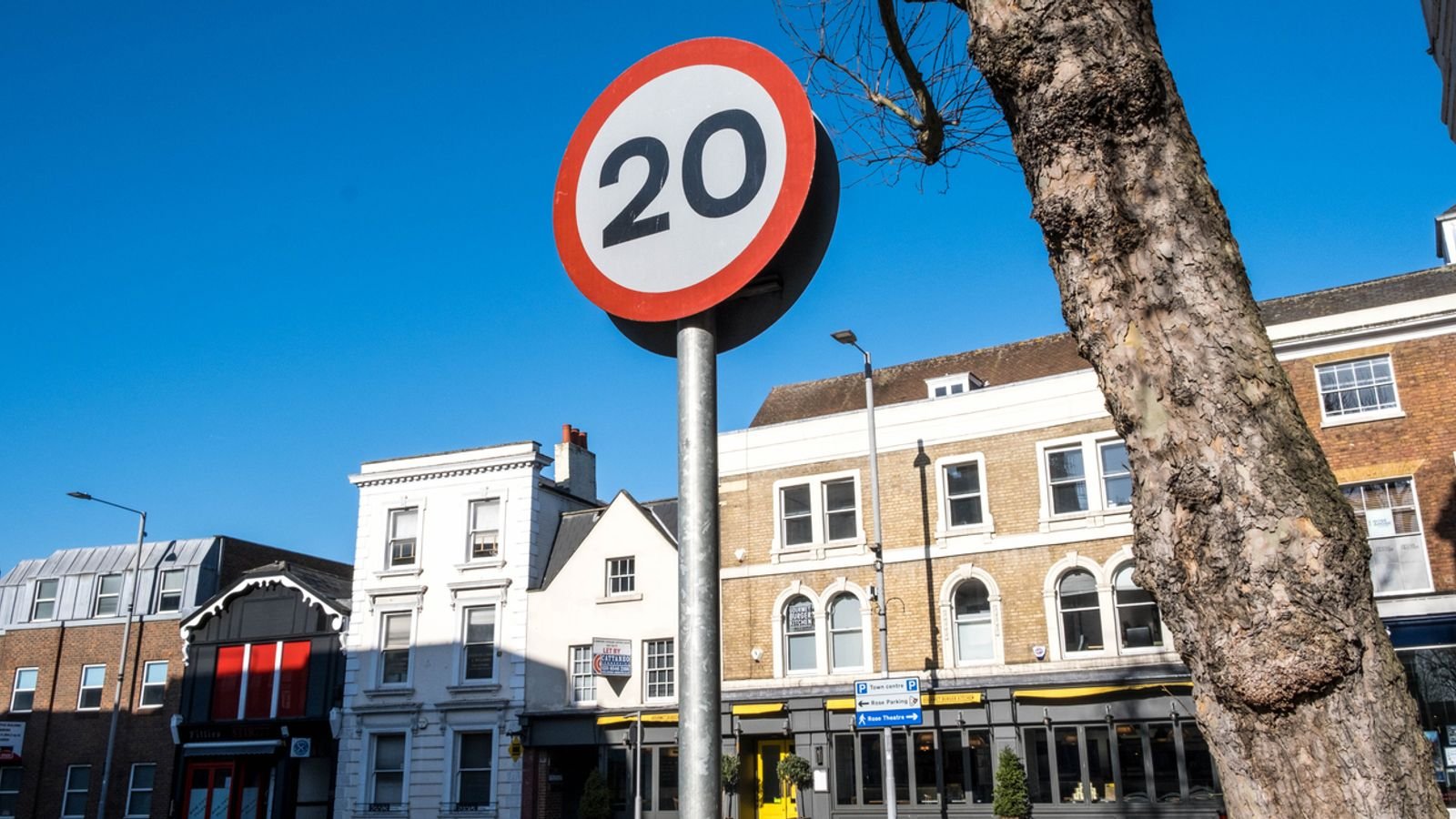
London Ranks as World’s Slowest Driving Capital
Research conducted by TomTom has revealed that London has earned the dubious title of the slowest driving capital globally, largely attributed to widespread 20mph speed limits. Travelling just one kilometre in the city centre took an average of three minutes and 38 seconds last year; a significant delay for drivers navigating the capital.
Impact of Speed Regulations
Mayor Sadiq Khan’s primary transport initiative focuses on lowering speed limits from 30mph to 20mph in an effort to enhance road safety and reduce the incidence of traffic-related injuries. Currently, over half of London’s roadways are designated as 20mph zones. This measure stems from findings that indicate pedestrians are five times more likely to suffer fatal injuries when struck by a vehicle travelling at 30mph compared to one travelling at 20mph.
Traffic Congestion Details
The findings also point to significant traffic congestion, with an average of 141 hours per driver spent in rush hour gridlock in 2025. The peak of congestion occurred on September 10, coinciding with a Tube strike, exacerbating travel difficulties for many Londoners.
Insights from TomTom
Traffic expert Andy Marchant from TomTom noted that the low average speeds in London are often misinterpreted solely as congestion issues. He argued that these averages are influenced by static factors such as the extensive implementation of 20mph speed limits, outdated street designs, and consistently high traffic volumes, which keep travel times prolonged even when roads appear clear.
Comparative Analysis and Trends
In a global context, only Colombia’s Barranquilla reported slower average driving speeds than London last year. Domestically, London ranks as the eighth most congested city in the UK with an average congestion level of 52%, inferior only to Belfast, Edinburgh, and Cambridge.
Belfast tops the congestion charts with a level of 58%, followed closely by Edinburgh and Cambridge, both also at 58% and 54% respectively.
Looking Ahead to Urban Mobility
Marchant anticipates that this year will present significant developments in urban mobility, particularly with plans for trials of autonomous vehicles across 20 boroughs in London. A spokesperson for the Mayor’s office commented on the data from Transport for London, noting that current travel times on the TfL network are comparable to those from 2019, with broader UK studies suggesting that lower speed limits do not necessarily worsen congestion. They further indicated that 20mph speed limits may actually facilitate better traffic flow and decrease overall traffic jams.
Background
The introduction of 20mph limits in London has been a topic of considerable debate. Advocates argue that these limits are crucial for improving safety, particularly for pedestrians and cyclists, while critics contend they contribute to increasing traffic congestion and longer travel times. As urban areas grapple with the dual challenges of safety and mobility, London’s experience may provide insights for other cities worldwide.
Source: Original Article






