






















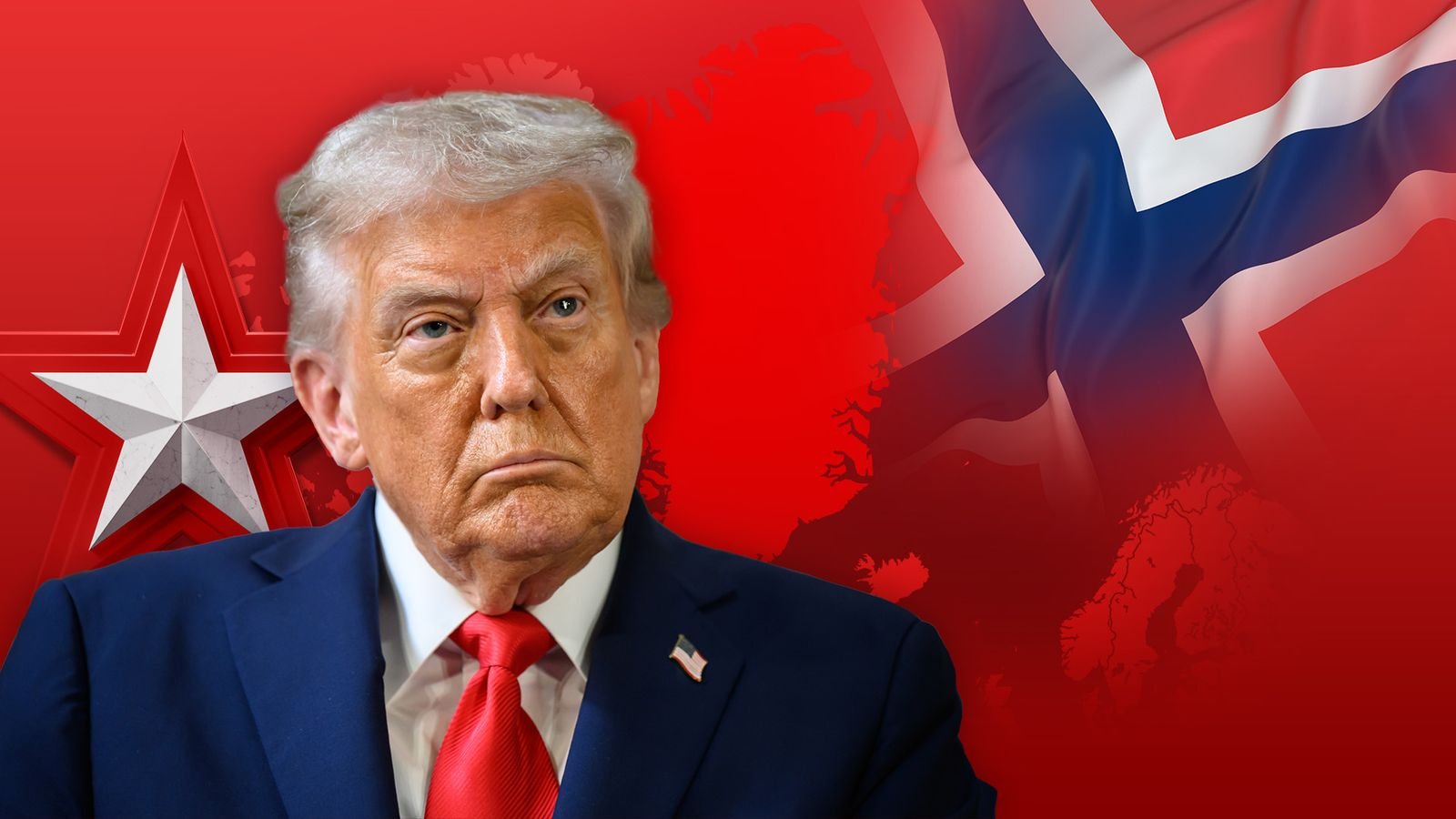
US-EU Tensions Rise Over Greenland Security Deployments
The diplomatic relationship between the United States and its European allies has reached a boiling point over Greenland following a recent surge in military activity in the Arctic region. Troops from various European nations have been deployed to Greenland, interpreted by some as a demonstration of commitment to Arctic security amidst threats from President Donald Trump regarding tariffs on those nations.
Military Activity in Greenland
In the past week, military personnel from several European countries, including France, Germany, the UK, the Netherlands, Norway, and Sweden, have arrived in Greenland. Initially promoted as a collaborative exercise, the deployment has raised questions about its implications amidst statements from US officials.
Reports indicate that President Trump, apparently misinformed about the operations’ intent, reacted by suggesting tariffs on European partners involved in the troop mobilization. This move has sparked fears that such tensions could endanger the stability of the NATO alliance.
Timeline of Developments
The situation escalated sharply on January 14, when President Trump reiterated his demands for US control over Greenland, citing national security concerns regarding Russia and China. Despite the content of discussions between US officials and their Danish counterparts, which acknowledged serious disagreements, Denmark announced plans to increase military presence in Greenland.
As European troops commenced their deployment on January 15, US officials attempted to downplay the matter, saying it would not impact Trump’s ambitions regarding Greenland. However, confusion arose over whether the troop presence was intended as a protective measure against the US itself.
Trump’s Threats and Responses
On January 16, President Trump threatened to impose tariffs on European nations that opposed US desires in Greenland, labeling their military actions as playing a “dangerous game.” Danish Foreign Minister Lars Lokke Rasmussen sought to clarify that the military escalation was aimed at promoting security in the Arctic and was not directed against the US.
European leaders responded critically to Trump’s comments, indicating they would view tariff threats as coercion. The Netherlands’s Foreign Minister described the situation as “blackmail,” while French President Emmanuel Macron discussed potential EU responses to safeguard member states.
Communication Between Leaders
In an effort to smooth over escalating tensions, UK Prime Minister Sir Keir Starmer engaged in diplomatic discussions with Trump, indicating that the President may have misunderstood the nature of the troop deployments. Starmer emphasized that EU nations were pursuing collective security efforts under NATO, not posing a threat to the US.
Italian Prime Minister Giorgia Meloni also voiced concerns that the White House might have misinterpreted the European military initiatives, asserting they were not aimed at countering US influence but at protecting against regional threats from other nations.
Background
Historically, Greenland has been a point of interest for various US administrations. In the 19th century, Secretary of State William H. Seward proposed purchasing Greenland and Iceland, while in 1946, President Harry Truman offered to buy Greenland from Denmark for $100 million in gold, a proposal that was ultimately rejected.
This latest chapter in the Greenland saga underscores significant geopolitical tensions in the Arctic, where rising interests from world powers create a complex security landscape. The interplay of military presence and national ambitions highlights the delicate balance between cooperation and conflict among NATO allies.
Source: Original Article






