






















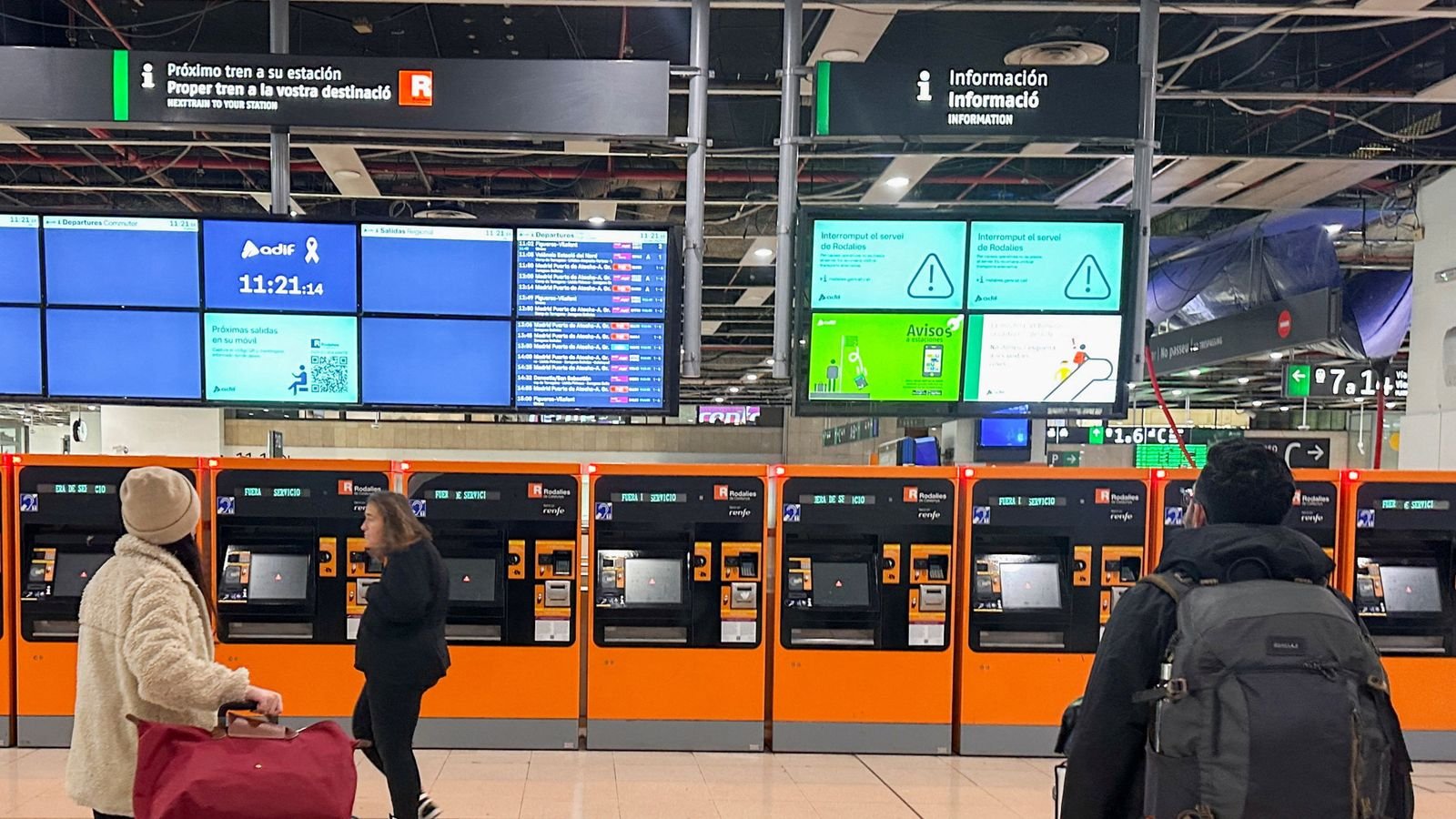
Train Collision in Spain: A Week of Rail Incidents
A commuter train collided with a construction crane in southeastern Spain, marking the fourth rail accident within a week. Occurring near the port city of Cartagena, this incident resulted in minor injuries for four individuals, as confirmed by emergency services in the Murcia region.
Details of the Incident
The collision, which took place around midday, did not lead to the train overturning or derailing, according to a spokesperson. Spanish rail operator Adif reported on social media that train services on the affected line were disrupted due to the crane straying into the track’s infrastructure. By 1.30 PM, train traffic had resumed.
Continued Wave of Incidents
This latest collision is part of a troubling pattern, as it marks Spain’s fourth rail incident since the past Sunday. Just two days prior, a high-speed train crash in southern Andalusia resulted in at least 43 fatalities, with more than 150 additional injuries. The tragic incident involved a train transporting 289 passengers from Malaga to the capital colliding with another train traveling from Madrid to Huelva.
Recent Train Derailments
On Tuesday, another serious incident occurred when a commuter train derailed near Barcelona after a containment wall collapsed onto the tracks due to heavy rainfall. The impact claimed the life of the train driver, injuring four other passengers significantly. This incident coincided with another collision in Catalonia.
Union Response and Protests
In light of the subsequent rail accidents, Spain’s largest train drivers’ union, SEMAF, announced plans for a three-day national strike beginning on 9 February. The union stated that the recent fatal incidents in Adamuz and Gelida represent a critical moment in advocating for enhanced safety measures in railway operations. Furthermore, SEMAF is seeking criminal accountability from those responsible for ensuring safety within railway infrastructure.
Transport Minister Oscar Puente expressed opposition to the idea of a general strike, asserting that the government does not believe this is the appropriate course of action.
Background
The sequence of rail accidents in Spain has raised significant safety concerns regarding railway operations. Following the catastrophic collision in Andalusia, the government and railway officials have been pressed to address safety measures and infrastructure maintenance adequately. The rising incidence of train-related accidents highlights a critical area for public safety and operational reliability within Spain’s transportation system.
Source: Original Article






