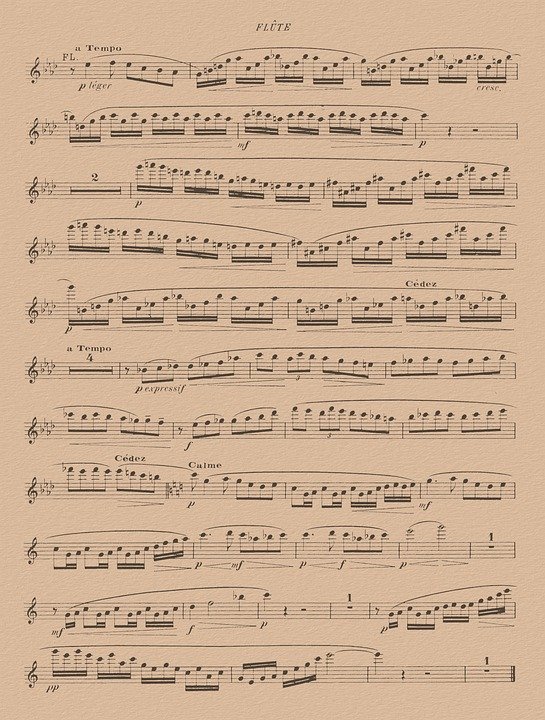
Harmony has always played a vital role in the evolution of music, serving as the backbone that supports melodies and enriches musical expression. From the simplest triads to the intricate jazz extensions employed by modern musicians, the complexity of harmony has developed significantly through the ages. This article explores this journey and illustrates how harmony has evolved within various musical contexts.
The Foundations of Harmony: Triads
At its core, harmony began with the triad, a three-note chord formed by stacking thirds. The most basic triad consists of the root, the third, and the fifth. These chords laid the groundwork for Western music harmony, and various combinations have been used across genres and styles.
- Major Triads: Formed by the first (root), third, and fifth degrees of the scale, for instance, C-E-G in the key of C major.
- Minor Triads: Created by lowering the third in a major triad, such as A-C-E in the key of A minor.
- Diminished and Augmented Triads: Offering tension and resolution, these triads introduce unique harmonic colors.
Chord Progressions and Their Role
As music developed, composers began using chord progressions—sequences of chords that create a sense of movement and emotional depth. The circle of fifths became a fundamental tool for creating smooth transitions between chords.
- Traditional Progressions: Patterns such as I-IV-V-I (C-F-G-C) formed the basis of countless songs across many genres.
- Cadences: Specific chord progressions that signal the end of phrases, giving a sense of closure, such as authentic and plagal cadences.
The Expansion into Jazz: Seventh Chords and Beyond
By the time jazz emerged in the early 20th century, musicians began to explore more sophisticated harmonic structures that went beyond the triadic foundation. Seventh chords provided a new layer of expression.
- Major and Minor Seventh Chords: Expanding triads by adding the seventh degree, e.g., Cmaj7 (C-E-G-B) and Am7 (A-C-E-G).
- Dominant Seventh Chords: These chords (e.g., G7) create tension that often resolves to the tonic, enhancing the harmonic progressions.
- Altered and Extended Chords: Jazz musicians began including ninths, elevenths, and thirteenths, pushing boundaries and allowing for an extensive palette of sounds.
The Influence of Modal Harmony
The modal system significantly influenced the harmonic landscape, allowing composers to explore a variety of tonal colors. Modes originated from ancient Greece and were revisited throughout the Renaissance and in jazz.
- Ionian to Locrian: These seven modes provide distinct characteristics; for instance, Dorian offers a jazzy, minor feel, while Mixolydian creates a dominant sound.
- Modal Interchange: Utilizing chords from parallel modes enhances harmonic richness and complexity.
Modern Harmony and Its Global Perspectives
Today, the study of harmony incorporates diverse cultural influences. Global music traditions showcase unique approaches to harmony, offering fresh perspectives on established theoretical frameworks.
- Non-Western Scales: Utilizing scales such as the pentatonic or exotic scales introduces new harmonic centers.
- Polychords: Combining different chords to create complex textures illustrates the fluidity of modern harmonic practices.
Conclusion
The journey from simple triads to complex jazz extensions highlights the evolving nature of harmony in music. Each period and genre has contributed to a rich tapestry of harmonic exploration. As musicians continue to innovate, the principles of established harmony remain vital, tying together traditions while inspiring new creations.