























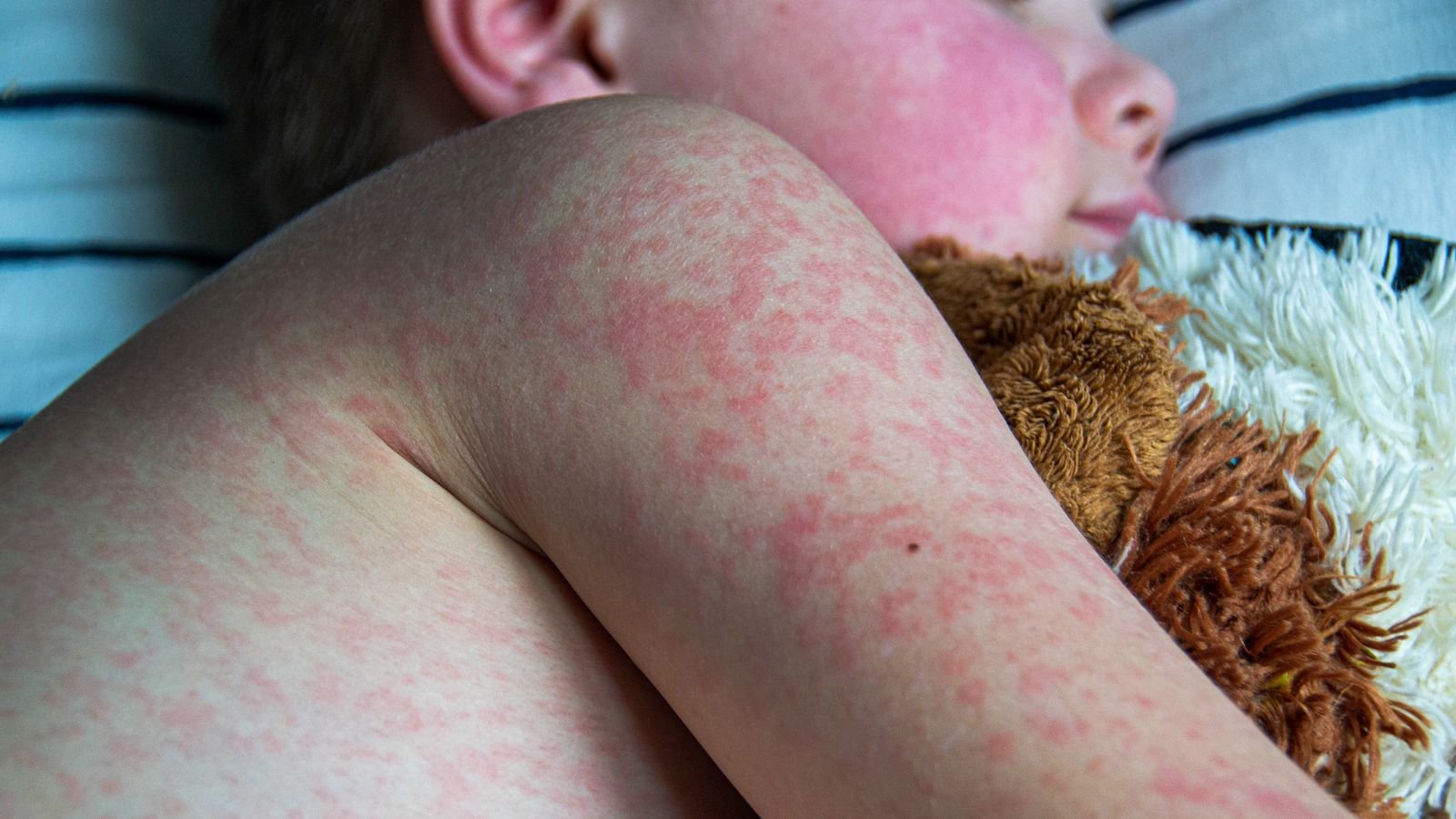
UK Loses WHO Measles Elimination Status Amid Rising Cases
The United Kingdom has officially lost its measles elimination status from the World Health Organisation (WHO), attributed to stagnant vaccination rates and a notable increase in the number of cases. The country enjoyed an elimination status from 2021 to 2023; however, health authorities reported a re-establishment of measles transmission in 2024.
Surge in Measles Cases
Vaccination rates in the UK have remained static in recent years, leading to a sharp rise in measles infections, which reached 3,681 in 2024. Among other nations facing similar losses in their vaccination status are Spain, Austria, Armenia, Azerbaijan, and Uzbekistan. The WHO has issued a call for countries to enhance vaccination efforts to avert further infections among children.
Expert Opinions
Dr. Ben Kasstan-Dabush, an expert in global health at the London School of Hygiene and Tropical Medicine, expressed concern over the UK’s status change, indicating that it follows notable outbreaks and the preventable death of a child in 2025. “It is unsurprising the UK has lost its WHO measles elimination status,” he added.
Vaccination Rates Decline
Data from the UK Health Security Agency (UKHSA) show that only 83.7% of five-year-olds received both doses of the measles, mumps, and rubella (MMR) vaccine during the 2024-25 period, marking a slight decline from the previous year’s 83.9% and the lowest level recorded since 2009-10. Furthermore, 91.9% had received one dose, which has not changed from the previous year and is the lowest since 2010-11. The WHO recommends a vaccination coverage of at least 95% for achieving herd immunity against such diseases.
Consequences of Low Vaccination Rates
Experts warn of the dangers of declining vaccination rates. “Infections can return quickly when childhood vaccine uptake falls,” said Dr. Vanessa Saliba, a consultant epidemiologist at the UKHSA. She emphasized the importance of ensuring all eligible children receive the complete two-dose MMR vaccination before starting school, along with catching up older children and adults who missed their vaccinations.
New Vaccination Initiatives
Beginning in January, the UK introduced a combined MMRV vaccine, which protects against measles, mumps, rubella, and chickenpox. This innovation aims to increase vaccination coverage among children as part of their routine schedule. The first dose is administered at one year of age, with the second dose now offered at 18 months instead of the previous age of three years and four months, following recommendations from the Joint Committee on Vaccination and Immunisation (JCVI) in 2023.
Broader Public Health Concerns
A spokesperson for the WHO cautioned that the UK’s change in status is indicative of a wider challenge faced across Europe, where outbreaks of measles and other vaccine-preventable diseases pose significant health risks. Dr. Bharat Pankhania, a public health medicine lecturer at the University of Exeter Medical School, expressed alarm over pockets of low vaccination uptake in the UK, urging immediate action to address this pressing public health issue.
Background
The UK’s current vaccination issues follow years of successful elimination of measles as a public health concern, with the country having reported zero cases in some years. The shift in status from the WHO highlights the fragility of public health achievements and the ongoing need for vigilance in vaccination coverage, especially in light of rising global health concerns regarding preventable diseases.
Source: Original Article






