






















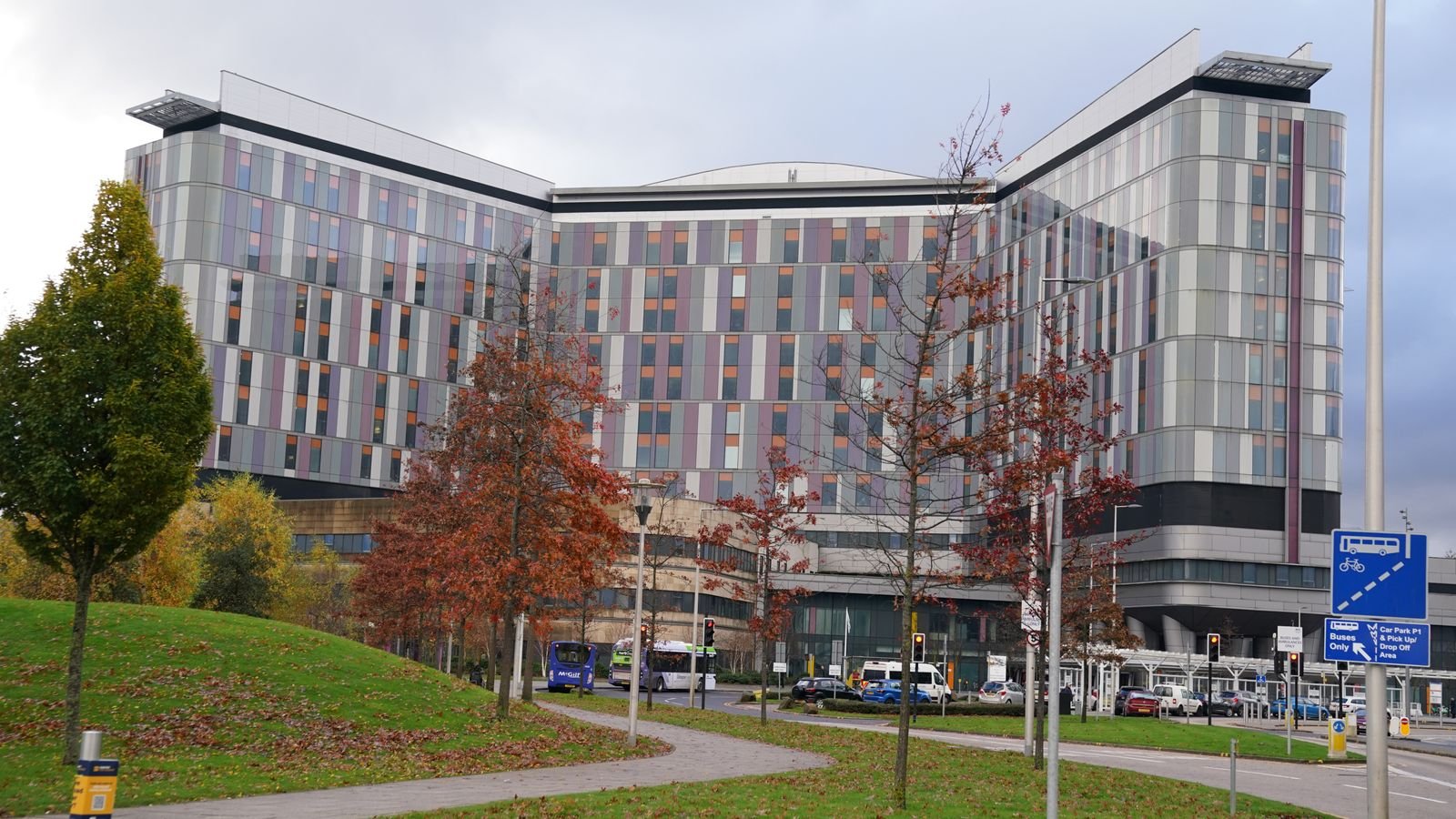
Health Secretary Affirms Safety of Scandal-Hit Hospital Amid Ongoing Inquiry
Scotland’s Health Secretary, Neil Gray, has assured Members of the Scottish Parliament (MSPs) that the Queen Elizabeth University Hospital (QEUH), under scrutiny for infection concerns, is safe for patients. This statement comes amidst a debate in Holyrood, where Gray faced multiple inquiries regarding the hospital’s safety as the Scottish Hospitals Inquiry continues to investigate the matter.
Inquiry Highlights and Admission of Responsibility
The QEUH has been embroiled in controversy linked to long-standing infection issues. In recent submissions, NHS Greater Glasgow and Clyde (NHSGGC) acknowledged a probable “causal connection” between infections experienced by patients and the hospital’s infrastructure, particularly its water system. This admission has reignited public concerns about the hospital’s safety and the circumstances surrounding its opening.
Scottish Labour leader, Anas Sarwar, has introduced a motion for the inquiry chairman, Lord Brodie, to scrutinize the SNP government’s political decisions in relation to the commissioning and opening of the QEUH. The motion demands urgent access to key documents pertaining to the hospital’s contaminated water and ventilation systems, along with communications related to the handling of infection issues. A vote on this motion is anticipated later today.
Whistleblowers and Affected Families Speak Out
In his opening remarks, Sarwar commended three whistleblowers for their courage in bringing attention to the hospital’s failings. He also recognized families affected by the hospital’s issues, particularly Kimberly Darroch, whose daughter, Milly Main, tragically died after contracting an infection at the facility. Sarwar emphasized the need for accountability and transparency, calling the situation “the biggest scandal in the history of this Scottish parliament.”
Political Implications and Calls for Accountability
The inquiry is examining significant concerns regarding patient safety at the hospital, which cost nearly £1 billion to construct. It was initiated in response to alarming infection rates and fatalities, including that of Milly Main in 2017, who contracted an infection in the Royal Hospital for Children, part of the QEUH campus. The inquiry has also drawn attention to pressures that led to the hospital’s premature opening in 2015, while the health board later clarified that these pressures originated internally.
As the debate unfolded, the issue of political responsibility came to the forefront. Sarwar argued that former First Minister Nicola Sturgeon, Deputy First Minister John Swinney, and former Health Secretary Shona Robison have yet to provide testimony in the inquiry, leaving crucial gaps in accountability.
Background
The QEUH was inaugurated in 2015 amid high expectations for its role in providing healthcare. However, the subsequent years have revealed serious allegations of mismanagement and safety lapses, especially linked to its water system that may have contributed to patient infections.
Calls for an examination of the political decision-making surrounding the hospital’s construction reflect a wider public demand for accountability in health governance. As the inquiry progresses, scrutiny on public health policies and their implementation is likely to intensify.
Next Steps and Ongoing Inquiry
Mr. Gray, while expressing his understanding of the concerns raised, noted that investigating political decisions could violate the legal boundaries of the ongoing inquiry, asserting that the independence of the inquiry is paramount. The outcome of the vote on Sarwar’s motion and further developments from the inquiry will be closely monitored by both the public and political stakeholders in Scotland.
Source: Original Article






