Venezuela Moves Towards Oil Sector Privatisation
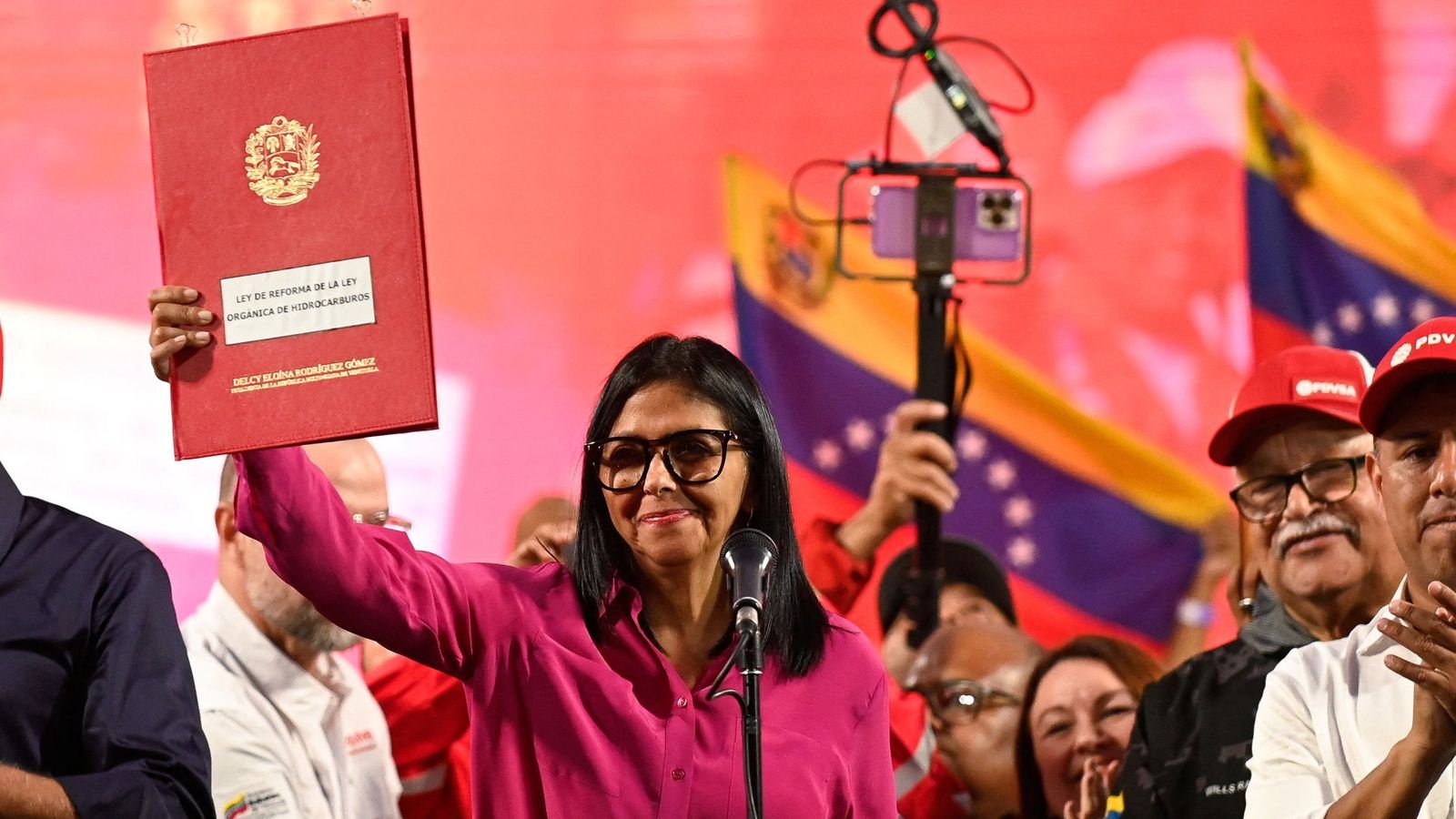
Venezuela’s interim president, Delcy Rodriguez, has signed a significant law enabling the privatisation of the country’s oil sector in an effort to attract foreign investment. This legislative change comes on the heels of the US easing certain sanctions on Venezuela’s oil industry, a move expected to reshape the landscape of oil production and foreign relations in the country.
Legislative Changes to Open Up Investments
The National Assembly of Venezuela approved the proposed bill on Thursday, allowing US companies to engage in various aspects of Venezuelan crude oil, including purchasing, selling, transporting, storing, and refining. However, it is important to note that while this new law facilitates operations, it does not eliminate existing US restrictions on production levels.
The legislation gives private firms the opportunity to manage oil production and sales, effectively breaking the monopoly previously held by the state-owned Petroleos de Venezuela SA. Under the new law, any private entity must demonstrate sufficient financial and technical capabilities through an approved business plan before assuming management responsibilities.
A New Framework for Dispute Resolution
Another notable aspect of the new legislation is the provision for independent dispute resolution, which is anticipated to protect foreign investors from potential future expropriations by the government. This approach is vital for bolstering investor confidence, particularly among US firms that have been cautious about investing in Venezuela due to previous challenges in the legal framework.
Reform Goals and Expectations
The Venezuelan government envisions that these reforms will encourage increased foreign investment in oil and gas production, particularly in light of a recent $100 billion reconstruction initiative proposed by US President Donald Trump. Rodriguez expressed optimism regarding the changes, stating, “We’re talking about the future. We are talking about the country that we are going to give to our children.”
These reforms could also adjust extraction taxes significantly, establishing a 30% royalty cap while allowing the government to tailor these rates based on the capital requirements and competitiveness of individual projects.
Background
This legislative shift comes in the context of a broader geopolitical landscape, marked by the recent US military operation aimed at former president Nicolas Maduro. The economic reforms represent a departure from the strategies employed by Maduro’s predecessor, Hugo Chavez, who emphasised state control over the oil sector as a key tenet of his government since his election in 1998.
Additionally, the US administration aims to play a pivotal role in managing Venezuela’s oil sales, with plans to oversee the transportation and unloading of Venezuelan oil at US ports. The total worth of this oil could exceed $2 billion (£1.48 billion), demonstrating the potential economic implications for both countries.
The approval of this legislation may herald a transformative era for Venezuela as it seeks to revamp its oil industry amidst significant international scrutiny and economic challenges.
Source: Original Article