AI Music Production: Opportunities and Threats
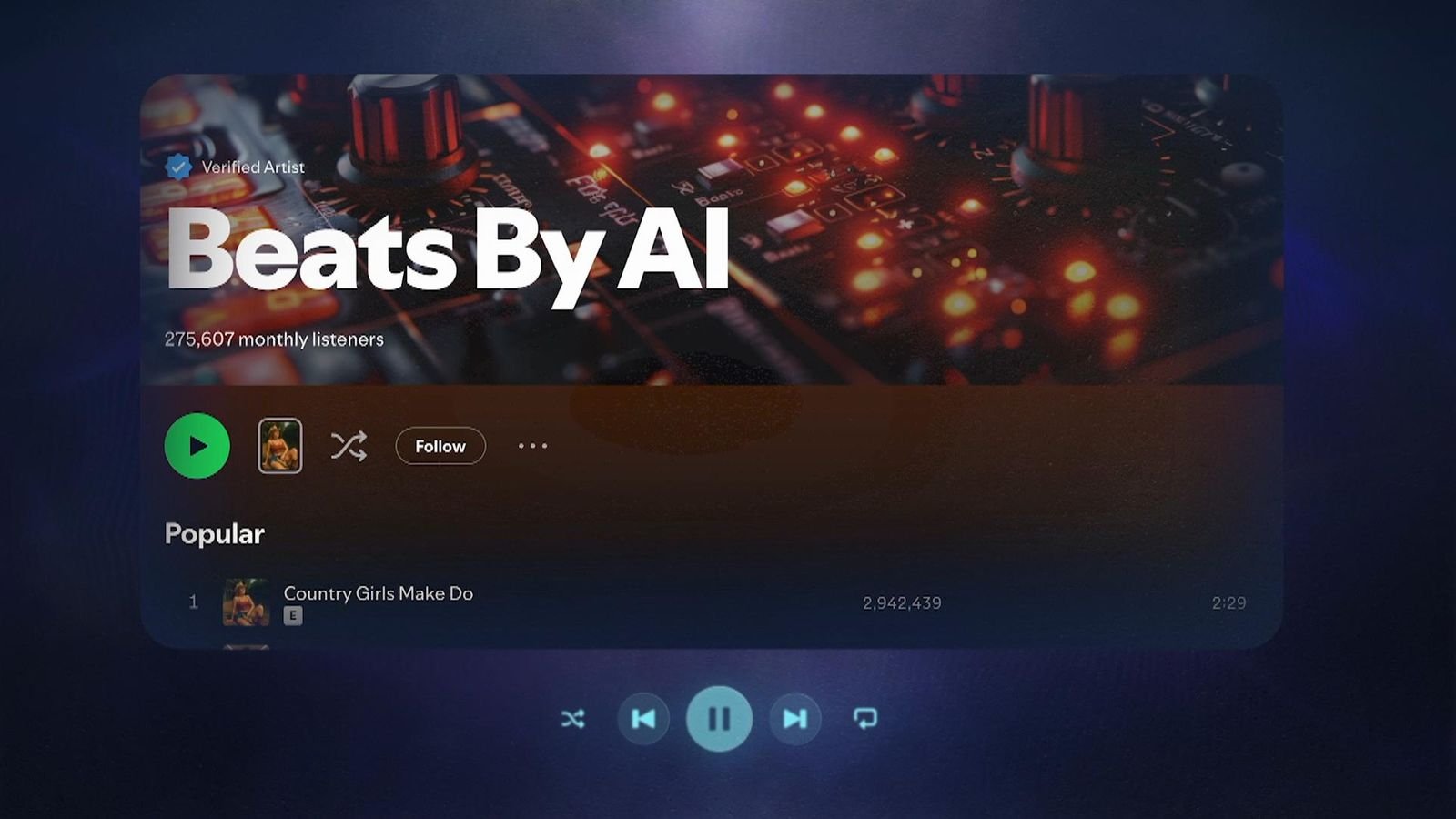
The rise of artificial intelligence (AI) in music production has made it possible for individuals with no musical background to create entire tracks in mere moments. However, this technological advancement has also led to significant fraud within the industry, with criminals manipulating streaming platforms to exploit the system at the expense of real musicians.
The Magic of AI Music Creation
For many, the experience of producing their first AI-driven music track can be transformative, even for those lacking musical skills. Within as little as half a minute, users can generate pop, soul, or metal music simply by inputting their requests into an AI engine. While the output may sometimes lack originality, most listeners cannot distinguish it from human-made music.
With advancements in AI technology, the musical Turing Test has now been surpassed, indicating that the systems are capable of producing sounds indistinguishable from those of human artists. This suggests a growing potential for AI to handle complex creative tasks that only a few years ago seemed out of reach.
The Dark Side of AI Music
However, the convenience of AI-generated music comes with serious drawbacks. Investigations have revealed a widespread scheme involving criminals who exploit AI tools to manufacture music on a massive scale and then employ bots to stream their creations repeatedly, thereby generating royalties fraudulently.
According to estimates from Deezer, a prominent music streaming service, as many as 60,000 fully AI-generated tracks are uploaded to its platform daily—accounting for more than one-third of all content production. To put this in perspective, the entire US music industry produced roughly 57,000 tracks in 2015. Projections indicate that Deezer alone could receive 21 million AI tracks per year, a conservative figure given the escalating pace of AI music production.
The Mechanics of the Fraud
The fraudulent activities unfold in two main stages. First, substantial amounts of AI music are generated and uploaded. Then, automated bots are employed to listen to these tracks repeatedly, which, as a result, accumulates royalties for the fraudsters.
Despite the legality of the tracks themselves, the surrounding actions constitute fraud. Deezer’s head of royalties has noted that a large majority of listens—up to 85% of streams for AI-generated tracks—are actually manipulative in nature. This systematic abuse robs genuine artists of their earnings as the streaming revenue is shared from a communal pool based on the number of streams each artist receives.
Impact on Musicians and Streaming Services
The implications of this form of deception extend beyond Deezer, affecting real musicians who rely on streaming incomes. With no fixed payment per stream, increased fraudulent activity can diminish the overall pool of royalties available to all artists. Deezer’s CEO has pointed out that losses from fraudulent streams could amount to billions annually across the music ecosystem.
Streaming platforms are making efforts to combat this issue. Deezer is working on identifying bots to prevent them from generating royalties, and the company has created algorithms designed to detect AI tracks. However, as technology evolves, so too do the methods employed by fraudsters, making it a continual struggle.
The Artists’ Perspective
Reactions from musicians regarding this situation have been stark. Many artists express frustration over losing out on earnings due to the influx of bot-generated streams. For example, folk musician Lila Tristram described the situation as infuriating, particularly as artists are already receiving far less than they deserve from streaming revenues.
Labeling and Responsibility
In response to this crisis, Deezer has begun labeling AI-generated tracks to inform users, becoming the only major streaming service to do so. In contrast, Spotify has opted against such labelling, fearing it may hinder the acceptance of musicians using AI tools creatively. Meanwhile, neither Apple Music nor YouTube currently label AI tracks, though YouTube encourages creators to disclose AI involvement when applicable.
As the demand for AI music increases, the music industry faces the challenge of balancing technological innovation with the need to protect human musicians from exploitation. The future of music may well hinge on finding effective strategies to mitigate fraud while embracing the creative possibilities offered by AI.
Background
The integration of AI into various creative fields has grown exponentially, reflecting both advancements in technology and the increasing ease with which individuals can access these tools. However, this progress has raised questions about authenticity, ownership, and the broader economic implications of AI on traditional artistic careers.
Source: Original Article