Pakistan Battles Separatist Insurgency in Deadly Balochistan Conflict
Over the course of a tense 40-hour confrontation in Balochistan, Pakistan, nearly 150 militants have been reported killed following a series of coordinated assaults by separatist fighters. The Pakistani government has confirmed that these attacks resulted in the deaths of close to 50 individuals, including both civilians and police.
Attacks Across Multiple Districts
On Saturday, Balochistan faced simultaneous strikes involving guns and explosives in various districts, including Quetta, Gwadar, Mastung, and Noshki. Attackers, who disguised themselves as civilians, targeted essential public spaces such as schools, hospitals, and banks, according to Talal Chaudhry, the junior interior minister. In the ensuing chaos, security forces launched extensive countermeasures to regain control.
Casualties and Military Response
Officials have reported the deaths of 92 militants on Saturday alone, with an additional 41 militants eliminated on the preceding day. In contrast, the insurgents are said to have killed 17 police officers and 31 civilians during these assaults. Chaudhry stated that prior intelligence alerts enabled preemptive operations, which likely mitigated further loss of life.
Balochistan’s Chief Minister, Sarfraz Bugti, noted that this recent clash marks the largest number of militants neutralised in such a brief period since the resurgence of the insurgency. He confirmed that the remains of these 145 militants have been secured, and some are believed to be foreign nationals, primarily from Afghanistan.
Claim of Responsibility and Implications
The Baloch Liberation Army (BLA), a proscribed separatist organisation, has claimed responsibility for the attacks, labelling the operation as “Operation Herof” or “black storm”. This group, which the United States recognizes as a terrorist organisation, has also claimed to have inflicted significant casualties on Pakistani security forces. However, those figures remain unverified, and the military has refrained from commenting.
Context of the Conflict
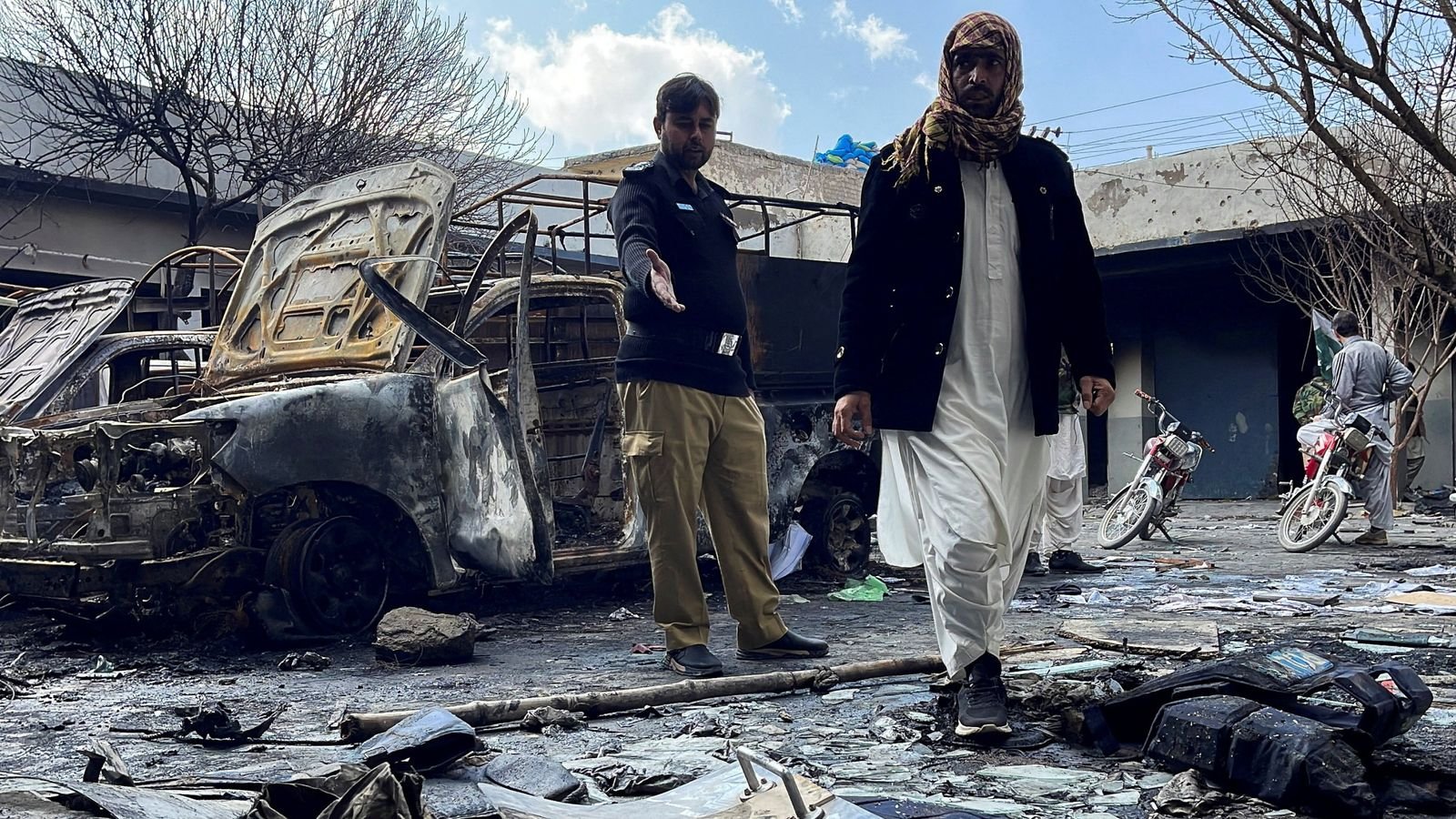
The aftermath of the attacks painted a stark picture across Quetta, with damaged vehicles and barricaded streets evident. Balochistan, Pakistan’s largest yet most impoverished province, has experienced ongoing separatist unrest for decades. The separatists demand increased autonomy and a more equitable sharing of the province’s abundant natural resources. Khawaja Asif, the country’s defence minister, has accused the insurgents of deliberately targeting vulnerable communities, labourers, and civilians in their quest for autonomy.
Allegations of External Sponsorship
Chaudhry further accused the insurgents of using civilians as human shields, mentioning that the attackers came disguised as everyday citizens, indiscriminately targeting those going about their daily routines. The Pakistani government has also put forth claims of Indian involvement in sponsoring these insurgent activities, although such allegations have been dismissed as unfounded by India.
Background
Balochistan’s separatist conflict reflects broader issues related to resource distribution and political autonomy within Pakistan. The region is rich in natural resources but continues to grapple with widespread poverty and underdevelopment, fuelling grievances that often manifest in violent uprisings. This ongoing struggle poses not only a challenge for Pakistan’s stability but also poses concerns for regional security and international observers.
Source: Original Article