






















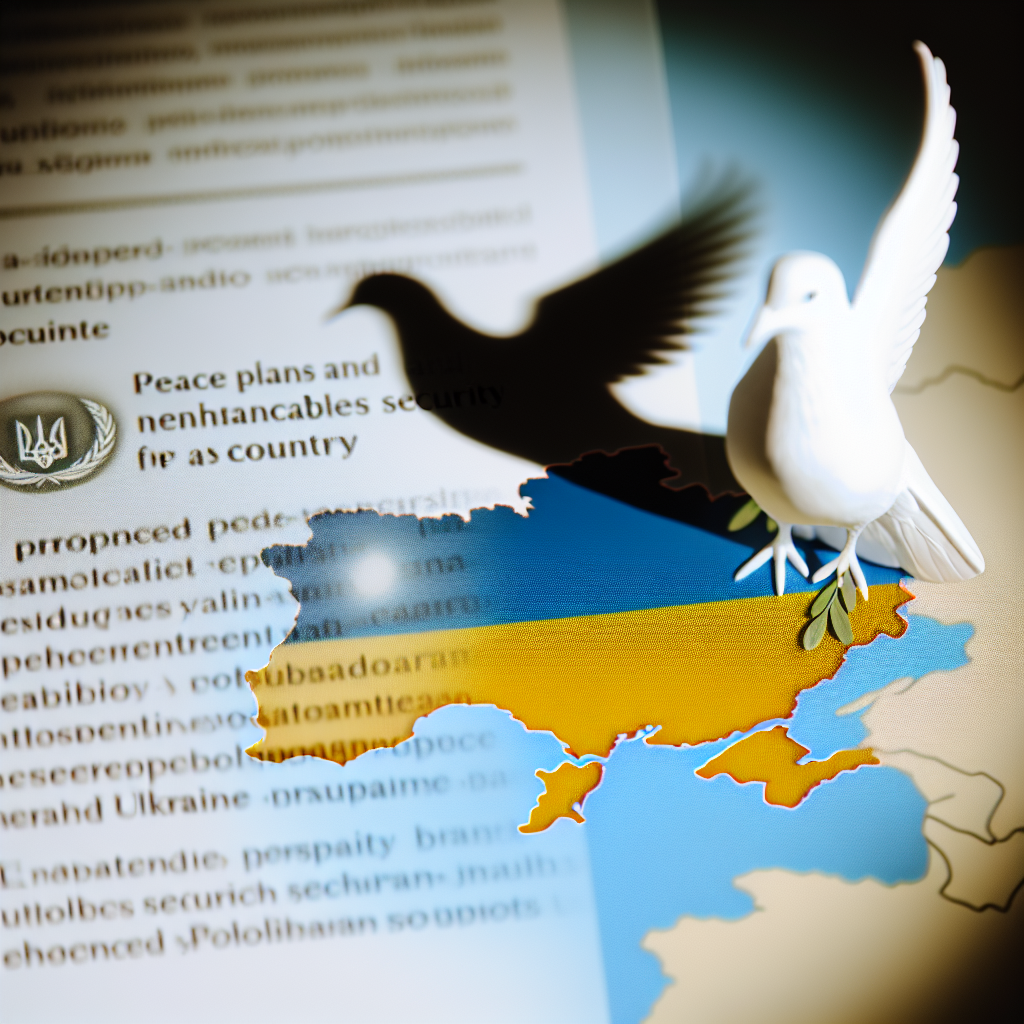
Concerns Arise Over Proposed Trump Peace Plan for Ukraine
Donald Trump’s recently unveiled peace proposal regarding the ongoing conflict in Ukraine has sparked significant debate among international leaders and analysts. Critics argue that the plan essentially capitulates to Russian demands, potentially undermining Ukraine’s sovereignty and failing to ensure lasting peace.
Details of the Plan
Trump’s proposal outlines several key points that have raised alarm:
- The plan suggests that land taken by Russian forces during their invasion would be relinquished by Ukraine.
- Territory that has seen intense fighting and significant casualties would also be included in the concessions.
- Ukraine would be barred from NATO membership and prohibited from hosting long-range foreign weapons or military personnel, drastically reducing its military capacity.
Perhaps most concerning is the proposal for NATO and Russia to engage in negotiations with the United States positioned as mediator. This raises questions about the commitment of the U.S. to NATO as a cooperative alliance, contrasting with Trump’s previous positioning of America as an external arbitrator.
Implications for Trans-Atlantic Relations
The potential acceptance of such a plan would represent a significant shift in international norms that have governed borders and sovereignty since World War II. Observers have noted that rewarding Russia for its aggression could have long-lasting negative repercussions for global security. Analysts argue that allowing Moscow to dictate terms would embolden further territorial ambitions.
Furthermore, the plan’s timing could not be more critical, with escalating tensions between NATO and Russia. Many in Europe are questioning whether their leaders are adequately prepared to address the fallout of this situation.
Historical Context
Since Trump assumed the presidency, there have been ongoing concerns among European nations regarding his perceived affinity for Moscow. These apprehensions were often exacerbated by NATO’s response to Trump’s assertive foreign policy stance, which has not consistently aligned with the alliance’s unified approach to security.
The crisis in Ukraine has also drawn parallels to other geopolitical issues, such as the conflict in Gaza, where the complexity of peace talks has often failed to address root causes. Critics argue that this may lead to a misperception of Trump’s capability to resolve intricate international conflicts efficiently.
The Call for European Responsibility
Key figures in European diplomacy have voiced concerns about the implications of the U.S. plan for Ukraine’s security. The recurring message is clear: responsibility for Ukraine’s security hinges increasingly on Europe in light of fluctuating American commitments. As one former Baltic foreign minister succinctly put it, “This is the end of the end.”
European leaders now face a pivotal challenge. Should they fail to bolster Ukraine’s defense against Russian advances, the consequences may reverberate far beyond Eastern Europe, impacting stability across the continent.
Conclusion
The contentious nature of Trump’s peace plan serves as a litmus test for the resilience of NATO and the West’s commitment to the principles of sovereignty and territorial integrity. As the situation continues to evolve, the international community must grapple with the implications of this proposal and its potential to reshape global alliances.






