






















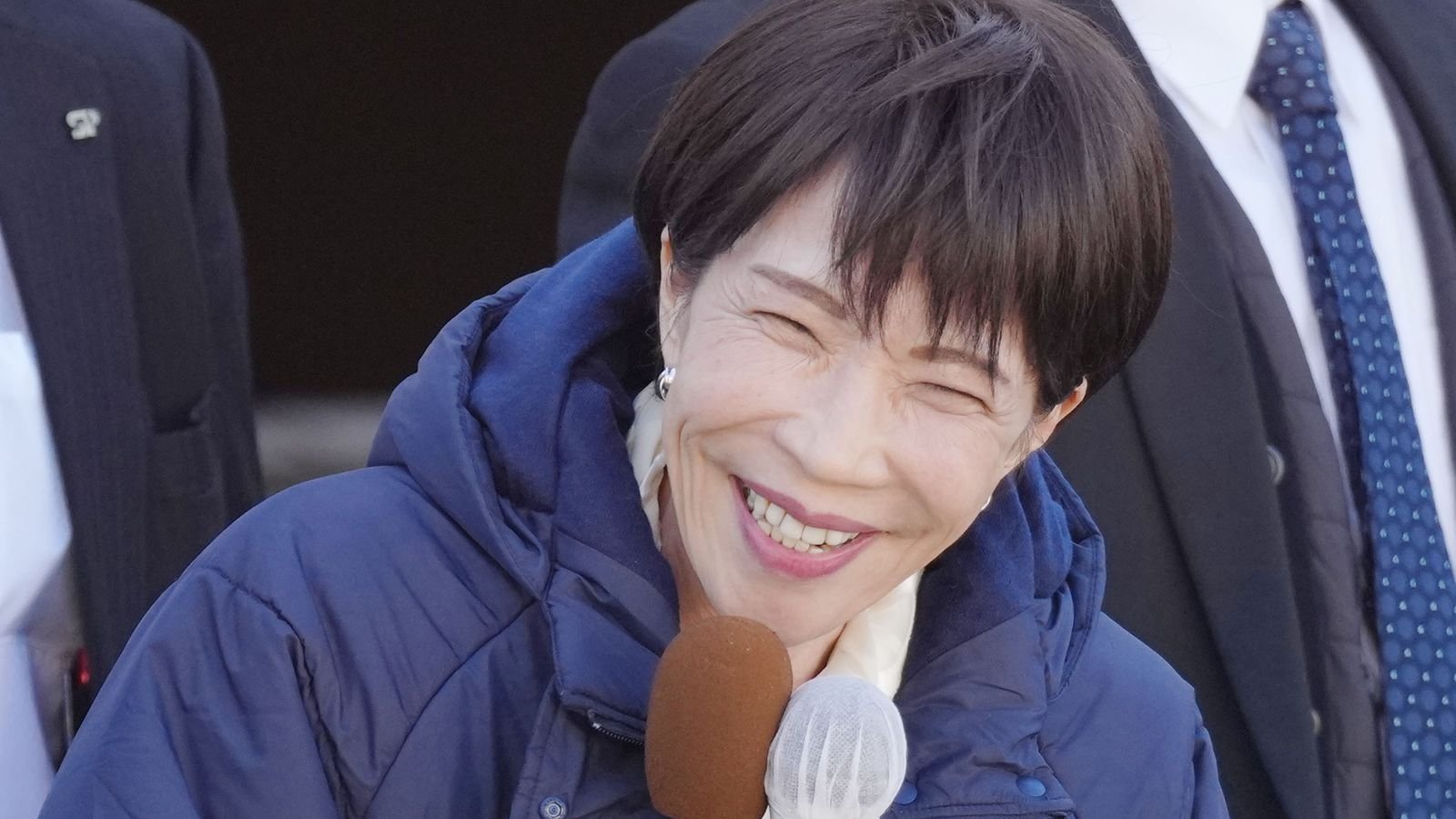
Japan’s Prime Minister Set to Enhance Her Power Following Election Victory
Prime Minister Sanae Takaichi of Japan appears poised to expand her influence significantly after exit polls indicated substantial support for her coalition in the recent lower house elections. Forecasts suggest that her alliance could secure between 302 and 366 of the 465 available seats, well exceeding the 233 needed for a governing majority.
Election Strategy and Public Support
In a bid to leverage her popularity, Takaichi, aged 64, called an unusual winter snap election. She had pledged to resign if her coalition did not achieve a majority, showcasing her confidence in her approval ratings and strategies. This high-stakes gamble is now anticipated to pay off handsomely.
Political Stance and Controversies
As a former heavy metal drummer, Takaichi’s political rhetoric has gained attention for its nationalist elements. She has expressed concerns regarding growing “foreigner fatigue” in Japan due to immigration and tourism, and her stances have sparked tension with China. Notably, she opposes same-sex marriage and champions traditional gender roles, citing late British Prime Minister Margaret Thatcher as a key influence.
Plans for Military and Budget Revisions
Takaichi’s administration also aims to depart from Japan’s long-standing pacifist policies. Plans include strengthening the military and lifting restrictions on arms exports, marking a significant shift in Japan’s defense posture. Additionally, her government is expected to advocate for a record-breaking budget of 122.3 trillion yen (approximately £565 billion).
Background
Takaichi’s rise to prime ministership has been significant, as she became Japan’s first female leader in October. Her ascendancy followed her leadership of the Liberal Democratic Party (LDP), which has been a dominant force in Japanese politics since its inception in 1955, with only brief interruptions. Recently, however, the party has faced challenges, including a poor electoral performance in 2024 amidst economic issues and a financial scandal.
A stronger position in the lower house will empower Takaichi to advance her agenda more effectively, potentially reshaping Japan’s future direction in both domestic and international spheres. Her policies and leadership style have already garnered support among younger voters, further complicating the political landscape in Japan.
Source: Original Article






