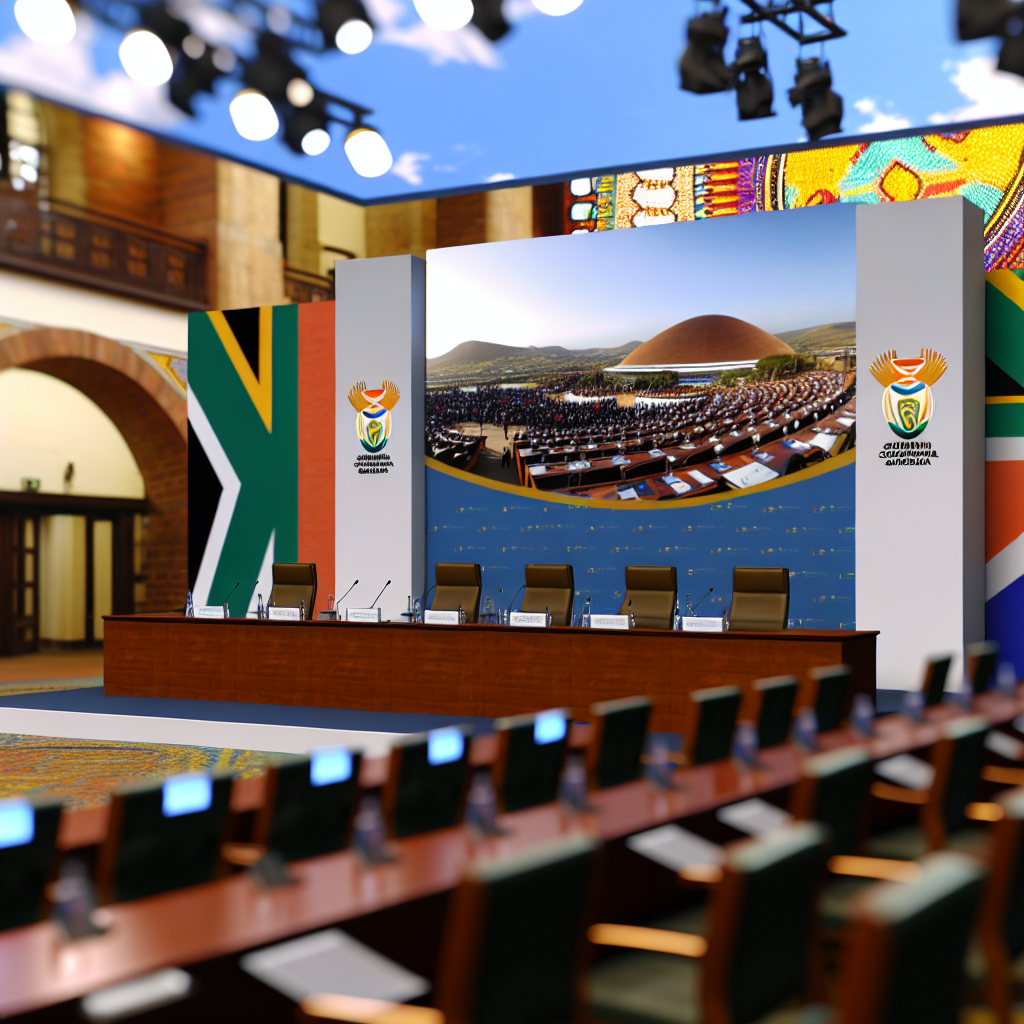
G20 Summit Concludes with Emphasis on Multilateral Collaboration
The recent G20 summit held in South Africa has concluded with a collective commitment to enhanced multilateral cooperation, focusing on issues such as climate change and economic disparity. This declaration marks a significant moment despite the absence of the United States, which declined to participate in the meeting in Johannesburg.
Key Takeaways from the Summit
During the closing ceremony, South African President Cyril Ramaphosa highlighted that the agreement reflects the shared aspirations among participating nations, suggesting that common goals transcend individual differences. The summit represented a historic first for Africa, having been convened on the continent after Indonesia, India, and Brazil hosted in previous years.
Despite American President Donald Trump’s absence, attributed to a widely discredited narrative regarding violence against South Africa’s white minority, the remainder of the G20 leaders remained optimistic about the future of multilateralism. Brazilian President Luiz Inácio Lula da Silva stated that Trump’s non-attendance should not detract from the movement towards robust global collaboration.
Future G20 Engagements
The next G20 summit is set to take place in the United States in 2026, with proposals to host the event at Trump’s golf course in Florida. Although the ceremonial handover of the G20 presidency was expected to occur at the summit’s conclusion, it has been deferred until next week, pending a meeting of junior officials.
German Chancellor Friedrich Merz commented on the decision by the US to abstain from the summit, asserting that it was not a wise choice. He noted a noticeable global realignment and the emergence of new diplomatic ties during discussions at the summit.
Focus on Global Conflicts
Delegates successfully reached a consensus on pursuing “just, comprehensive, and lasting peace” in conflict-stricken regions including Ukraine, Sudan, the Democratic Republic of Congo, and the Occupied Palestinian Territory. The inclusion of Sudan in the discussions has been deemed particularly noteworthy; Sudanese commentator Saeed Abdalla remarked that this highlights the conflict’s prominence on a global stage for the first time in over two years.
Background
The G20, comprising the world’s major economies, serves as a critical platform for international dialogue on economic and political issues. The recent summit underscores the challenges of global governance, especially in the context of increasing isolationism and nationalism in various countries. As nations navigate complex issues such as climate change—including rising temperatures—and socio-economic inequalities, collaborative efforts will be vital for sustainable development.