






















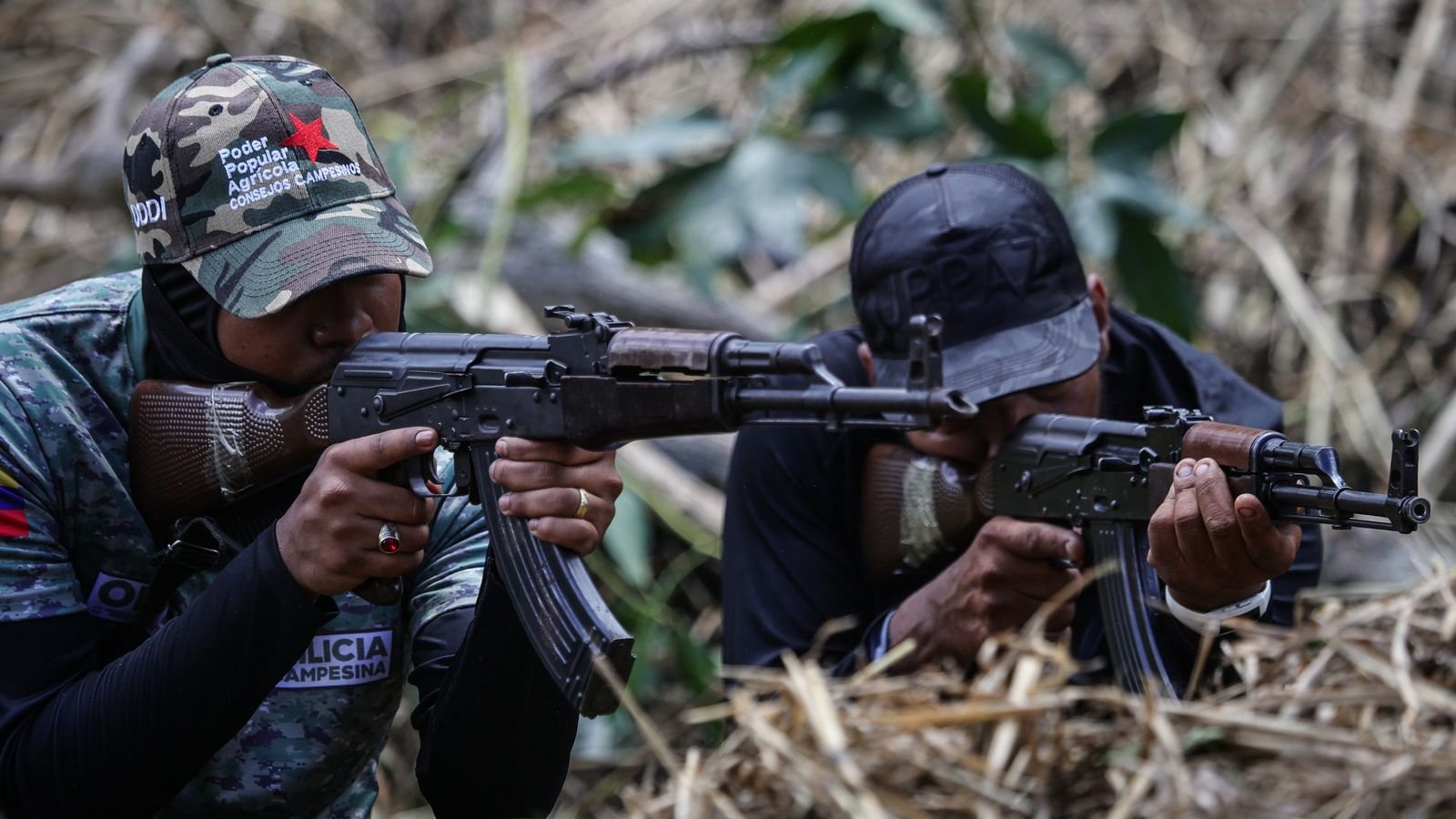
Tensions Rise as U.S. Military Operations Intensify in the Caribbean
In recent months, the United States has significantly ramped up its military presence in the Caribbean alongside allegations of links between Venezuela’s government and drug trafficking. U.S. operations have included naval strikes, covert actions, and troop deployments aimed at curtailing what President Trump describes as “narco-terrorism”.
Escalation of Military Actions
In September, relations between the U.S. and Venezuela began to deteriorate sharply after President Trump publicly accused Venezuelan President Nicolas Maduro of leading a criminal organization without presenting concrete evidence. This rhetoric was preceded by U.S. military strikes on a vessel reportedly connected to drug trafficking, resulting in multiple fatalities. Since early September, American forces have engaged in a series of operations that have reportedly led to over 80 deaths across 21 separate attacks targeting small boats accused of drug transportation.
Trump has asserted that drug cartels pose a threat to U.S. national security and has approved the involvement of CIA operations within Venezuela to combat alleged trafficking. However, U.S. authorities have yet to provide evidence supporting claims that those killed in these strikes were involved in drug trafficking.
Venezuela’s Response
In response to the U.S. actions, Maduro has accused Trump of fabricating a “new eternal war” against Venezuela with the aim of achieving regime change. He has denied any engagement with the drug trade and labelled U.S. strikes as illegal acts of aggression.
U.S. Naval Movements
The arrival of the USS Gerald R. Ford, the world’s largest aircraft carrier, in the Caribbean has raised alarms. Located just 25 miles off Venezuela’s coast, this deployment is seen as a statement of military might. The U.S. has also dispatched other warships and aircraft as part of a mission dubbed Operation Southern Spear, with Rear Admiral Paul Lanzilotta stating the focus is to protect U.S. interests against narcotics-related threats in the region.
Experts have noted that while these military assets may not be well-suited for combatting drug cartels, they serve to intimidate the Maduro administration.
Concerns Over Air Travel
As tensions escalated, the U.S. Federal Aviation Administration issued warnings about potential hazards over Venezuelan airspace. This led to cancellations of several international flights from the country as the threat of military action loomed. Trump subsequently suggested that the airspace surrounding Venezuela should be considered entirely closed, a move condemned by Venezuelan authorities as an infringement on national sovereignty.
Understanding the Broader Context
President Trump’s assertions connecting Venezuelan migrants—many of whom are fleeing economic turmoil—to drug trafficking have been met with skepticism. Analysts have pointed out that while Mexico accounts for the majority of fentanyl trafficking into the U.S., Venezuela primarily serves as a transit point for drugs originating in Colombia and other South American countries. Critics argue that Trump’s motivations may also be linked to Venezuela’s substantial oil reserves.
Potential for Conflict
Discussions surrounding U.S. military options in Venezuela have intensified. Trump’s prior statements hinted at possible land operations to target drug traffickers, raising concerns about a significant military escalation. Experts like Dr Carlos Solar from the Royal United Services Institute have suggested that the scale of military preparedness indicates a strategic aim beyond fighting drug trafficking.
The situation remains delicate, with potential ramifications not only for the U.S. and Venezuela but also for the broader international community.
Background
Nicolas Maduro has faced years of criticism over his administration’s handling of Venezuela’s deepening humanitarian crisis, which has led to millions fleeing the country. Accusations of fraudulent elections and poor governance have further dented his legitimacy on the world stage. The growing U.S. presence in the Caribbean adds another chapter to a complex narrative of geopolitical tension in the region.
Source: Original Article






