Germany Reinstates Voluntary Military Service Amid Generational Resistance
Germany’s parliament has recently approved a plan to reinstate voluntary military service, but attracting recruits from Generation Z may be a substantial challenge. Many young people have taken to the streets to protest, fearing this move could pave the way for mandatory conscription in the future.
Protests Erupt Across Germany
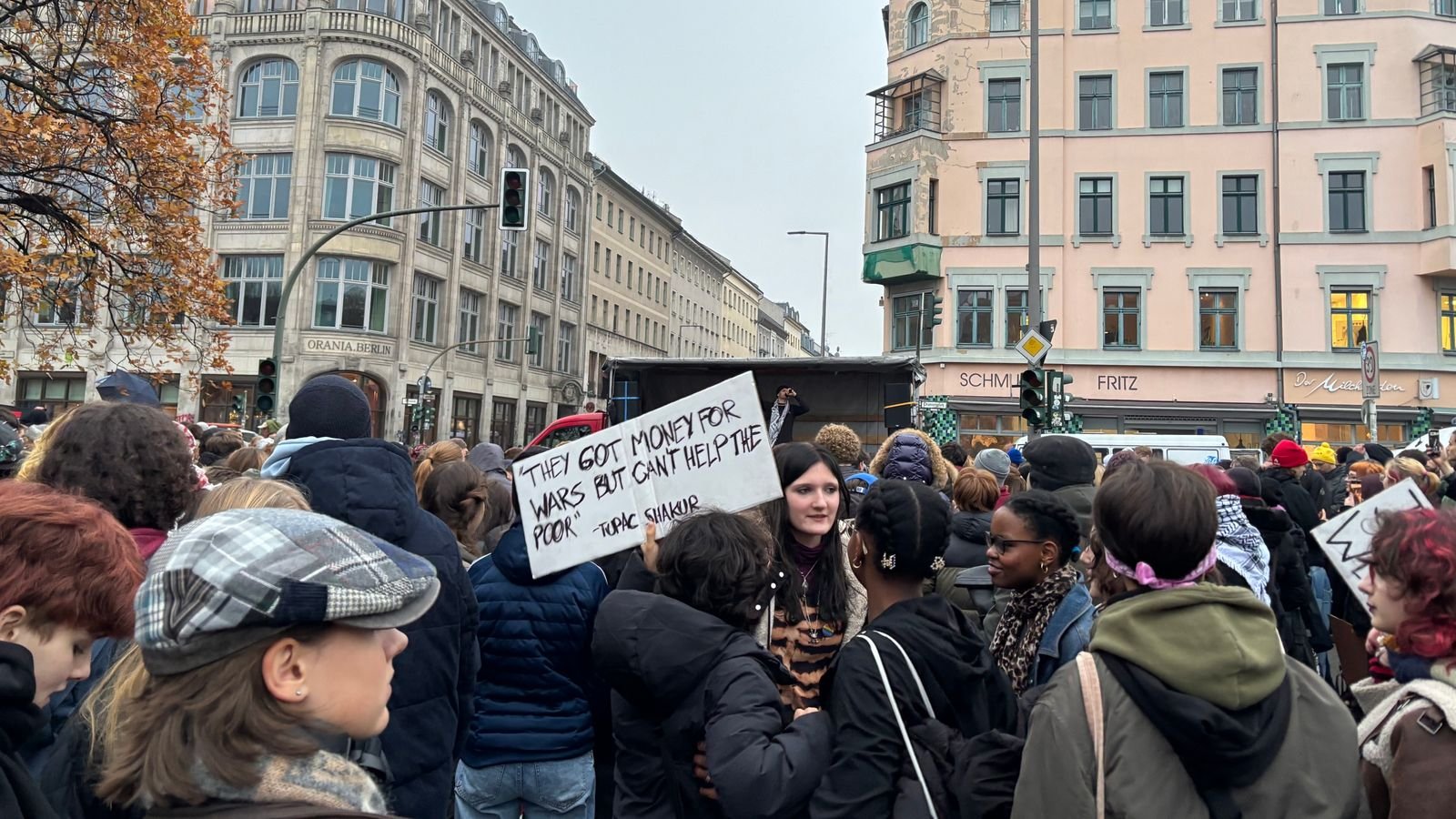
Demonstrations erupted in various cities, including Berlin, where young people carried banners featuring slogans such as “You can’t have our lives if we don’t eat your lies.” The protests drew participants from diverse age groups, with some parents bringing their children. One mother was seen displaying a sign saying, “You can’t have my son.”
The New Military Plan
Beginning in January, Germany will send questionnaires to all individuals turning 18, assessing their fitness and willingness to serve in the military. While men will be required to respond, participation for women is voluntary. The new plan includes provisions for potential conscription during times of war or emergencies if volunteer numbers are insufficient, a prospect viewed with horror by many protesters.
Voices of the Youth
Younger demonstrators expressed strong feelings against the newly proposed military requirements. Levi, a 17-year-old protester, shared his disillusionment with the government, citing negligence in addressing climate issues and social welfare, leading him to feel no loyalty towards his country. “None of us want to die for a country that doesn’t really care about us,” he stated.
Another protester, Sara, echoed similar sentiments, categorically stating her refusal to join the military. “I don’t think it’s right to send anyone against their will into the military because war is just wrong,” she asserted.
Government’s Justification and Future Plans
The German defence minister, Boris Pistorius, explained that the mandatory medical examinations for all male 18-year-olds, starting in 2027, are essential for identifying those fit for military service. This initiative marks a significant cultural shift for a country that discontinued conscription in 2011.
Context and Reactions
This legislative change is largely a reaction to geopolitical tensions heightened by Russia’s invasion of Ukraine. NATO officials have voiced concerns over the potential threat posed by Russia to member countries in the near future.
Still, views on the military’s necessity are mixed among the youth. Lola, 19, recognised a potential threat from Russia but emphasised the importance of addressing more pressing social issues rather than focusing on military conflict. Balthasar, 28, pointed out the true nature of international relations, advocating for diplomatic resolutions instead of militaristic posturing.
Public Sentiment and Recruitment Challenges
Discussions about military service also revealed a stark generational divide in sentiments. A recent survey indicated that an overwhelming 81% of young people would be unwilling to fight for Germany, in contrast to older generations who tend to support conscription. Valentin, the only protester willing to serve, stated that he might fight only in self-defence, saying, “When we are attacked, then yes [I would fight], but when we are attacking other countries, then no.”
Conclusion: Potential for Wider Changes
Germany isn’t isolated in its search for military volunteers; countries like France are also implementing new services for those over 18. Currently, ten EU nations maintain compulsory military service while others, including Germany and Belgium, are pursuing voluntary schemes. The proposed plan will undergo further approval from the parliamentary upper house later this month before being enacted in January.
Background
Germany previously abolished mandatory military service in 2011, resulting in a significant shift in the nation’s military approach. The recent geopolitical climate, particularly the conflict in Ukraine, has prompted a reassessment of national defense strategy, spurring the move to reintroduce voluntary service.
Source: Original Article