China and Japan’s Air Encounter Raises Tensions
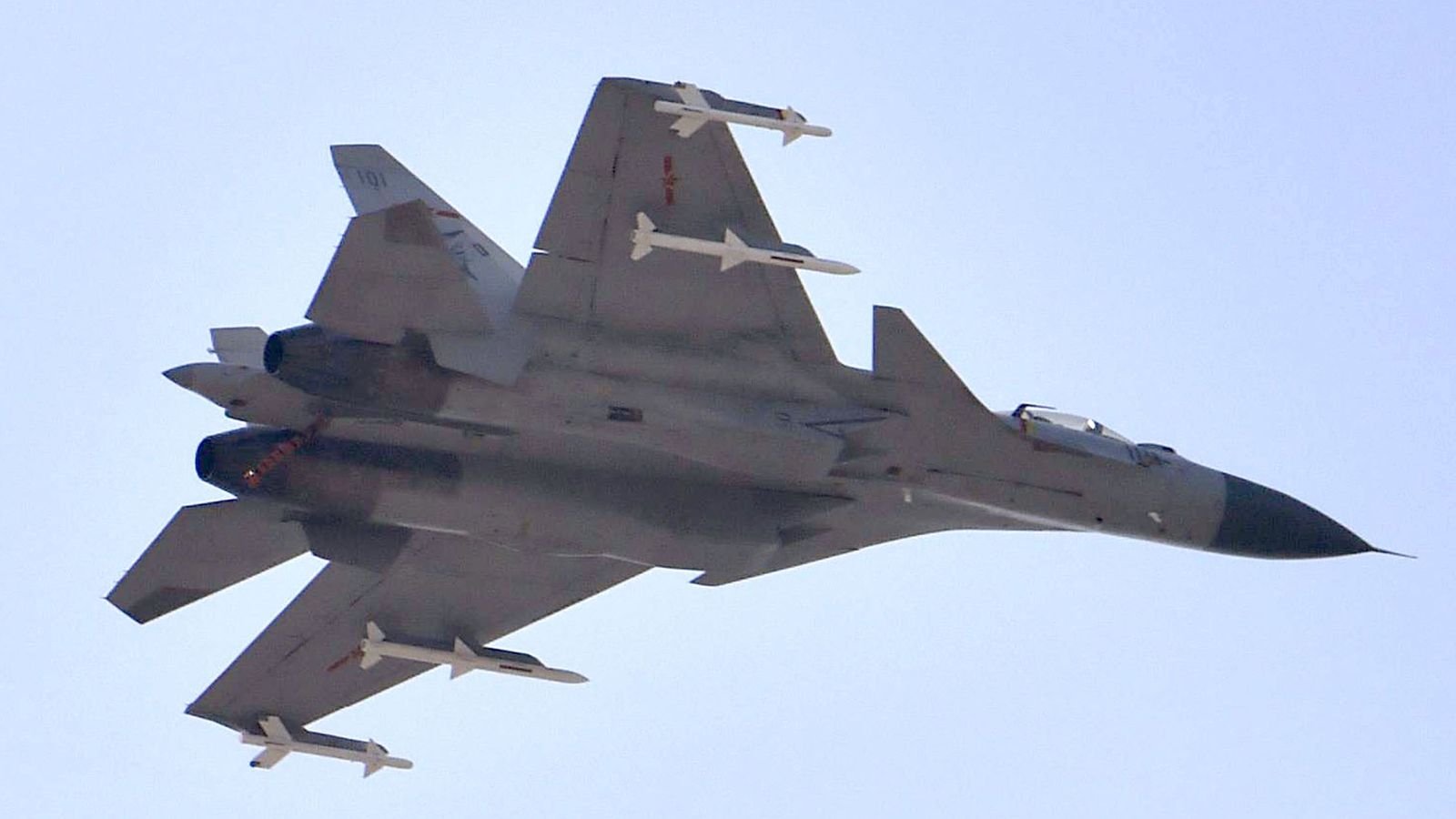
Japan has accused a Chinese military aircraft of locking its radar onto Japanese fighter jets in a contentious incident near Okinawa, which officials have labelled as a “dangerous act.” The Japanese Defence Ministry reported that a Chinese J-15 fighter jet briefly targeted its radar at two Japanese F-15s during two separate occurrences over the weekend.
Details of the Incident
The Japanese ministry stated that the radar lock was detected during two intervals: approximately three minutes in the late afternoon and about thirty minutes in the evening. This action is considered particularly provocative, as it implies a potential offensive move, necessitating evasive responses from the targeted jets.
According to Japan, the Chinese J-15 was launched from the Liaoning aircraft carrier, which was conducting operations south of the Okinawa islands, accompanied by three missile destroyers. This event marks a significant incident, reportedly the first documented occurrence involving a radar lock between Chinese and Japanese military aircraft.
Reactions from Both Countries
Japan’s government has firmly asserted that there was no violation of Japanese airspace and reported no injuries or damage resulting from the incident. Conversely, a spokesperson for the Chinese navy dismissed Japan’s claims, stating that they were “completely inconsistent with the facts.” The spokesperson further alleged that a Japanese Self-Defence Force aircraft had disturbed the Chinese operations during training.
Diplomatic Fallout
In the aftermath of the encounter, Japan’s Defence Minister, Shinjiro Koizumi, announced that the government had lodged a formal protest with China over the incident. Koizumi stated that the actions taken by China surpassed what is necessary for safe operations of military aircraft and demanded stringent preventive measures from China to avoid future occurrences.
Worsening Relations
The incident comes at a time of deteriorating relations between Japan and China, intensified by remarks recently made by Japan’s Prime Minister, Sanae Takaichi. She suggested that Japan’s military might intervene if China were to act aggressively toward Taiwan, which Beijing asserts must come under its control. These remarks were met with sharp criticism from China, with a foreign minister stating that such comments have “crossed a red line.”
Background
The ongoing tensions between Japan and China stem from long-standing historical issues, territorial disputes, and differing views on regional security. The situation near Taiwan, a self-governing island that Beijing considers part of its territory, adds a layer of complexity to the dynamics between these two nations.
As military encounters become increasingly frequent in this vital region, the implications for global security and diplomatic relations remain profound, highlighting the need for dialogue and conflict resolution strategies among nations.
Source: Original Article