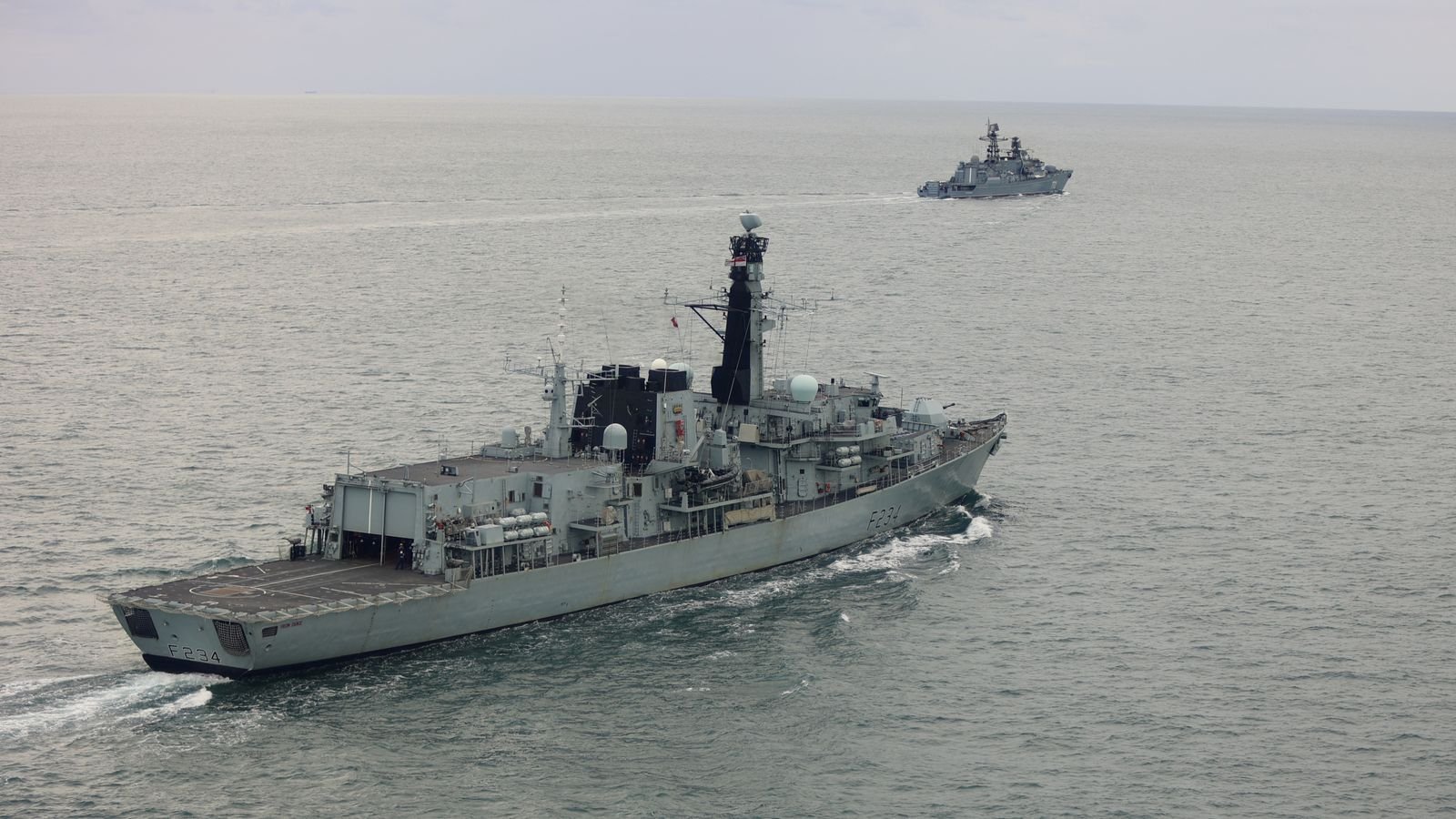
Royal Navy Chief Urges Increased Defence Funding Amid Rising Threats
The First Sea Lord of the Royal Navy, General Sir Gwyn Jenkins, has called on the UK government to enhance funding for defence to preserve Britain’s maritime superiority in the Atlantic. He warned that failure to act could result in the UK losing its dominant position to Russian naval forces for the first time since World War II.
Concerns Over Naval Readiness
Speaking at a conference in London, General Jenkins emphasised the urgent need for reinvestment in the armed forces, stating that the current state of readiness is precarious. “We are maintaining our position, but not for much longer,” he remarked, highlighting the need for vigilance as adversaries significantly boost their military expenditures. “Our potential rivals are investing heavily, and if we do not increase our funding, we risk losing our edge,” he added.
In a prior meeting attended by military leaders, there was reported tension regarding the funding necessary to rebuild the forces, as fears of further budget cuts loom. Sources within the Ministry of Defence noted a growing disconnect between the government’s promises for defence revitalisation and the reality of a budget that many view as insufficient.
Russian Naval Expansion
General Jenkins outlined that Russia continues to ramp up its naval capabilities, particularly through its Northern Fleet, which operates within the Atlantic. Over the past two years, there has been a 30% surge in Russian incursions in these waters, raising alarms for the UK and its allies. One notable incident involved the Russian spy ship Yantar, which was reported to have engaged a Royal Air Force reconnaissance aircraft with a laser while operating near Scotland.
Moreover, Jenkins pointed out that the risks associated with Russia’s activities underneath the Atlantic surface—where crucial infrastructure such as communications cables and energy pipelines are located—pose an even more significant threat to UK interests.
Challenges Ahead for the Navy
The Royal Navy faces substantial challenges exacerbated by a lack of personnel, particularly sailors and submariners, which further restricts operational capacity. Decades of budget cuts since the Cold War, coupled with problematic procurement strategies, have impeded the Navy’s ability to modernise effectively and maintain a robust fleet.
Despite these challenges, Jenkins articulated a vision to transform the Navy into a more agile force capable of addressing contemporary threats. This includes a focus on developing a diverse fleet that integrates manned and unmanned vessels—a strategy he has termed a “hybrid navy.” However, he acknowledged that the timeline for this transformation stretches to 2029, raising concerns about the urgency of the threats posed by Russia and China.
Background
Discussions regarding the state of the UK’s defence have intensified recently due to growing geopolitical tensions and the emphasis placed by international leaders, including former U.S. President Donald Trump, on increased defence spending among alliance members. The Royal Navy’s recent history of funding cuts, alongside a series of delayed and over-budget vessel procurements, sets the context for these present calls for action.
Source: Original Article