






















Strong Earthquake Hits Northern Japan, Triggering Tsunami
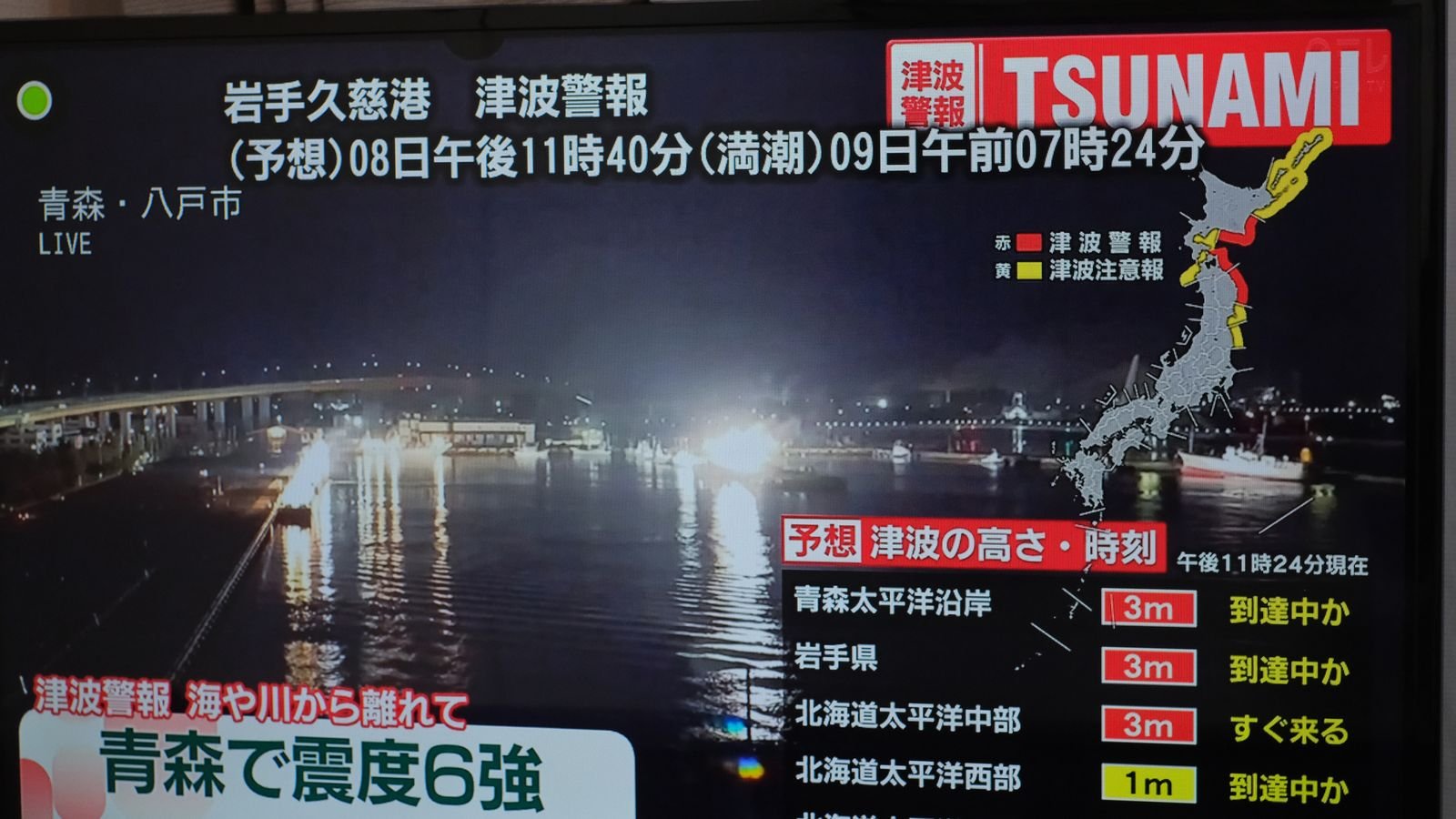
A significant earthquake of 7.5 magnitude struck off the northern coast of Japan late last night, injuring at least 23 individuals and prompting a tsunami alert. The epicentre was located approximately 80 kilometres from Aomori prefecture, prompting swift evacuation measures for thousands of residents in the affected areas.
Casualties and Damage
The Fire and Disaster Management Agency in Japan reported that the injuries included one person in serious condition, primarily due to falling debris. Approximately 800 homes were left without power, and transport services, including the Shinkansen bullet trains, were disrupted as emergency protocols were enacted.
Response and Evacuation Measures
In response to the earthquake, the Japan Meteorological Agency issued warnings for potential tsunami surges of up to three meters (10 feet). Evacuations were ordered for around 90,000 residents. Chief cabinet secretary Minoru Kihara urged citizens to seek higher ground and safety until further advisories were announced.
Impact of the Tsunami
A tsunami measuring 70 cm was recorded at Kuji port in Iwate prefecture, while lesser waves of up to 50 cm were detected in other locations. Eyewitness reports indicated significant public anxiety, with residents attempting to flee from low-lying areas towards safer regions.
Emergency Shelters Activated
In readiness for safety concerns, around 480 individuals took refuge at Hachinohe Air Base, with defence minister Shinjiro Koizumi confirming the deployment of 18 helicopters for damage assessment. Additionally, witnesses noted traffic congestion as people raced to escape the threat of the tsunami.
Background
Japan has a history of devastating earthquakes, including the catastrophic event in 2011, which led to a massive tsunami claiming approximately 20,000 lives and a nuclear meltdown at the Fukushima Daiichi Nuclear Power Plant. This recent quake has served as a stark reminder of the persistent threat posed by seismic activity in the region.
Nuclear Safety Concerns
Following the quake, approximately 450 litres of water spilled from a cooling area at the Rokkasho fuel reprocessing plant in Aomori. Fortunately, officials from the Nuclear Regulation Authority reported that water levels remained stable and there were no immediate safety concerns.
Looking Ahead
As of now, the government has lifted all tsunami warnings but cautioned residents to remain vigilant for possible aftershocks for the next week. Satoshi Harada, from the meteorological agency, emphasised the need for preparedness, highlighting the potential for future seismic events akin to the 2011 disaster.
Source: Original Article






