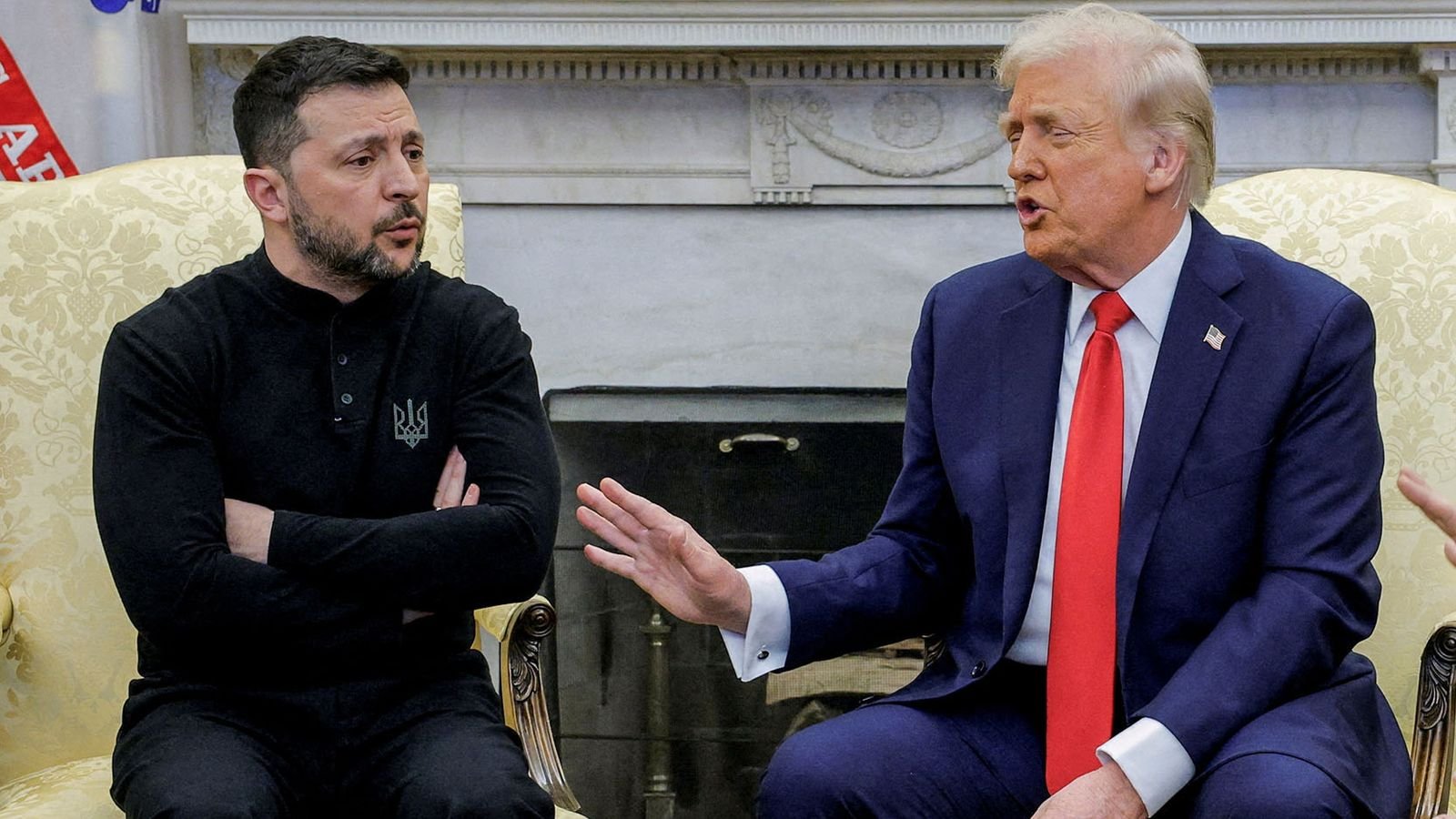
Zelenskyy Responds to US Peace Proposal for Donbas Region
Ukrainian President Volodymyr Zelenskyy has revealed that the United States has proposed the establishment of a “free economic zone” in the contentious Donbas area of eastern Ukraine. This initiative aims to facilitate a peace agreement, but Zelenskyy has expressed significant reservations regarding its viability and fairness.
Contentious Peace Plan
The Donbas, which encompasses the industrially significant regions of Donetsk and Luhansk, has emerged as a major point of contention in the recently proposed peace plan from the US. A draft of this plan, leaked last month, included provisions requiring Ukraine to relinquish control over certain areas in Donbas, a requirement that Kyiv deemed “unacceptable.”
In response, President Zelenskyy has been reviewing and amending the proposal, actively working to excise elements that he views as detrimental to Ukrainian interests. After consultations with European allies, including meetings in London, he sent a revised peace proposal to Washington, reducing its breadth to just 20 key points. The latest US iteration suggests that Ukraine should retreat from its positions in Donbas while ensuring that Russian forces do not use this as an opportunity to advance further.
Zelenskyy’s Reservations
Despite the US’s attempts to mediate, Zelenskyy has cast doubt on the effectiveness of the suggested measures. He voiced concerns about how governance would function within this proposed “free economic zone,” questioning the feasibility of maintaining security against potential Russian incursions.
“If one side withdraws while the other remains in place, what mechanism would prevent further Russian aggression?” Zelenskyy queried, stressing the need for a just compromise should discussions continue. He also highlighted the necessity of a credible security presence to deter future attacks, stating that the only reliable way to keep Russia at bay would be through international military support.
Expert Opinions on the Proposal
Military analysts have expressed skepticism regarding the proposed plan. Michael Clarke, a military expert, remarked that the strategy fails to provide any tangible solutions to ensure long-term security for Ukraine. He stated that relinquishing strategic cities without adequate deterrence could lead to further exploitation by Russia.
Matthew Savill from the Royal United Services Institute echoed these concerns, suggesting that the absence of armed support would create a dangerous vacuum, likely inviting renewed aggression from Russian forces. He hinted that while a temporary ceasefire could offer some respite, it would require a firm commitment from European nations to provide meaningful military reassurances.
International Involvement
In the context of ongoing discussions, a coalition of nations committed to supporting Ukraine met recently to pledge continued military assistance and discuss strategies for mobilising frozen Russian assets. After this meeting, Zelenskyy affirmed that any peace settlement must incorporate substantial elements of European deterrence to safeguard Ukraine’s sovereignty.
He also addressed the rising pressure from the US regarding potential elections in Ukraine, stressing that a ceasefire must be a precondition for any democratic processes. The urgency of these discussions comes as the geopolitical climate continues to evolve with ongoing military tensions.
Background
The conflict in Ukraine has been ongoing since 2014, marked by Russia’s annexation of Crimea and heavy fighting in the eastern regions. The Donbas region has been a focal point of international concern, as it houses vital industrial resources and has faced prolonged military confrontations. The US’s role in proposing peace initiatives reflects broader Western interests in stabilising the region and supporting Ukraine’s territorial integrity.
The situation remains fluid, with global implications regarding security, diplomacy, and international law as the conflict progresses.
Source: Original Article