






















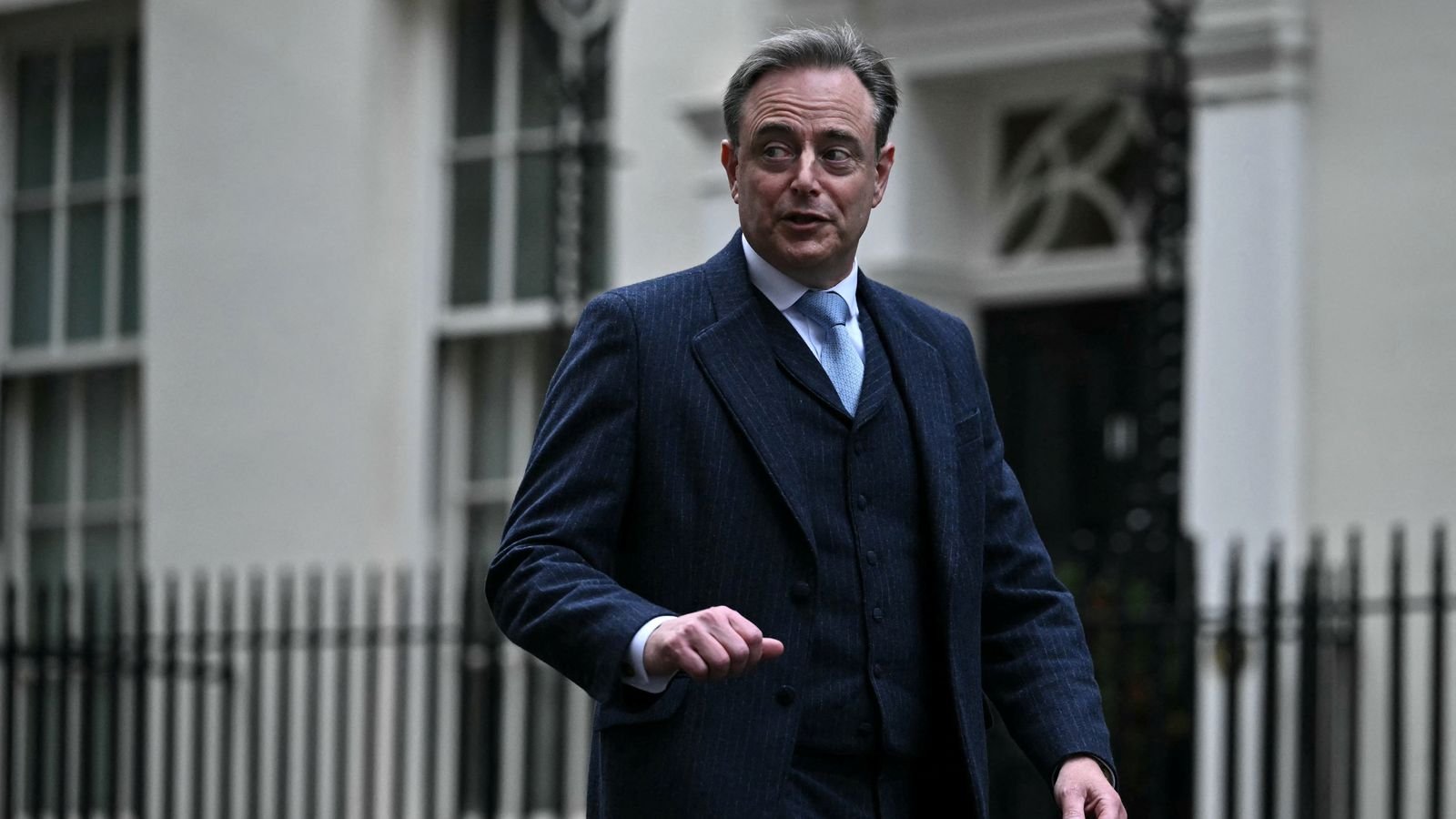
Belgian Prime Minister Expresses Scepticism Over Ukraine Loan from Frozen Russian Assets
The Prime Minister of Belgium, Bart De Wever, has voiced doubts regarding the proposal to provide financial assistance to Ukraine through loans backed by frozen assets belonging to Russia. Following a meeting with UK Labour leader Sir Keir Starmer at Downing Street, De Wever emphasised the necessity for collaboration with European partners in any such initiative.
Concerns About Legal and Financial Risks
During discussions with Sky News, De Wever acknowledged the significant Russian assets located in Belgium, estimated to be around €190 billion, which dwarf the €8 billion held in the UK. Despite this, he cautioned against the potential liabilities connected to using these funds to support Ukraine, indicating a need for a “mutualisation” of any risks involved.
When asked if Belgium could play a pivotal role in shaping Ukraine’s defence finance, he referred to the question as “a bit cynical.” He reiterated his country’s willingness to explore options but underscored the complexities involved, particularly around shared financial responsibilities. “It’s a tall order,” De Wever stated, alluding to the potential legal ramifications that could arise.
Reactions and Next Steps
European Council President Antonio Costa stated earlier in the week that there is growing support among members for the proposal. However, De Wever has expressed that if the European Union moves forward with confiscating these assets, he might consider legal action against the bloc.
A spokesperson from Downing Street remarked that Sir Keir and De Wever had productive discussions focused on Ukraine’s financial needs and the potential avenues for utilising immobilised Russian assets. The two leaders agreed to continue their collaborative efforts on the complex matter.
Background
Russia’s central bank has already deemed plans for the confiscation of its assets as unlawful and has indicated readiness to defend its interests vigorously. The European Union has taken measures to freeze Russian assets indefinitely, utilising special procedures aimed at addressing economic emergencies, thereby preventing these funds from being redirected to support Ukraine.
As the situation evolves, international leaders are faced with the difficult task of assessing the implications of using such frozen assets while ensuring legal compliance and financial accountability.
Source: Original Article






