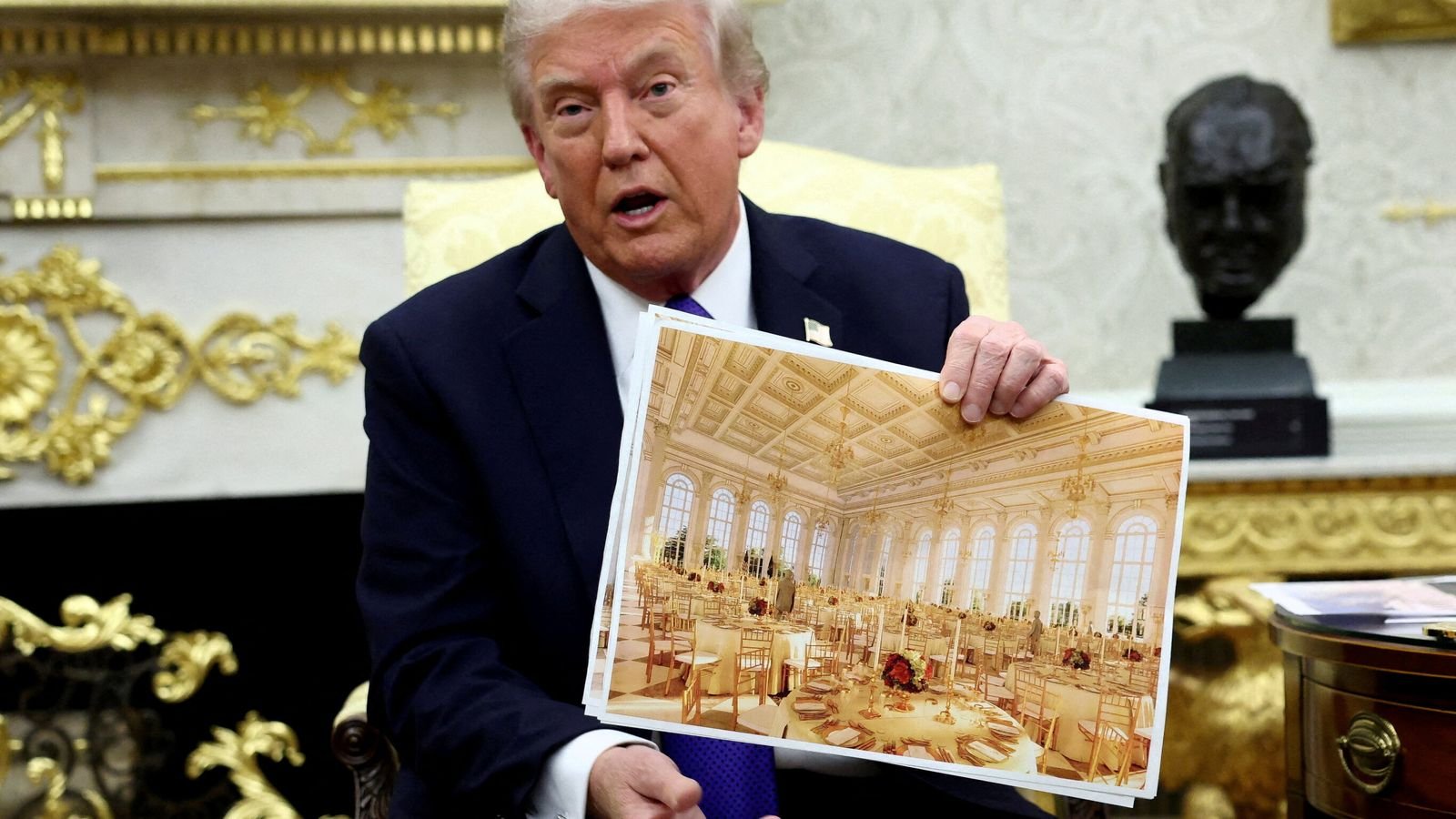
Trump Sued Over White House Ballroom Construction
Former President Donald Trump is facing a lawsuit from a historical preservation organisation that seeks to block the ongoing construction of a new ballroom at the White House. The National Trust for Historic Preservation argues that the project, which carries a price tag of $300 million, requires multiple independent reviews and congressional approval.
Lawsuit Claims Violation of Legal Procedures
The lawsuit contends that no president, including Trump, is permitted to alter significant parts of the White House without undergoing necessary reviews. The organisation states, “No president is legally allowed to tear down portions of the White House without any review whatsoever.” Furthermore, it highlights that the public must be given a chance to voice their opinions on any construction on federal property.
Concerns from Preservationists and Experts
The plan for the ballroom has attracted criticism from various quarters, including preservation advocates, architects, and political opponents of Trump. Critics argue that the new ballroom’s size—almost double the East Wing’s previous footprint—presents concerns regarding the integrity and historical significance of the White House.
Government Statements and Responses
In response to the lawsuit, White House spokesman David Ingle asserted that Trump retains full authority to modernise and enhance the White House, a practice customary among past presidents. However, Ingle did not clarify whether there would be any consultation with Congress regarding the ballroom’s construction.
Historical Context of White House Renovations
While it is common for presidents to make alterations to the White House, Trump’s initiatives are described as the most extensive renovations since President Harry Truman’s significant overhaul following World War II. Unlike Trump, Truman sought explicit congressional backing and engaged multiple authorities to oversee the changes made to the historic residence.
Funding and Legal Considerations
Trump insists that financing for the ballroom comes from private sources, including his own funds, a detail he believes exempts the project from standard federal review protocols. Nevertheless, federal laws stipulate that congressional oversight is essential for projects located in Washington, D.C.
Public Input and Previous Oversights
The lawsuit further alleges that Trump did not seek public input prior to initiating construction and violated regulations that require consultation with the National Capital Planning Commission and the Commission of Fine Arts before approving the East Wing’s demolition.
Significance of the Lawsuit
This legal challenge underlines ongoing discussions about the preservation of historical sites and the extent of presidential authority concerning federal property. As the lawsuit progresses, it raises questions about accountability and transparency in decisions affecting one of the most iconic buildings in the world.
Background
This lawsuit marks a distinctive attempt by preservationists to intervene in presidential renovation projects, echoing broader concerns about maintaining the integrity of iconic national landmarks. The outcomes could have implications not only for the White House but also for future assertions of executive power regarding historical sites in the United States.
Source: Original Article