






















Australia’s Migration Protests Escalate Amid Growing Tensions
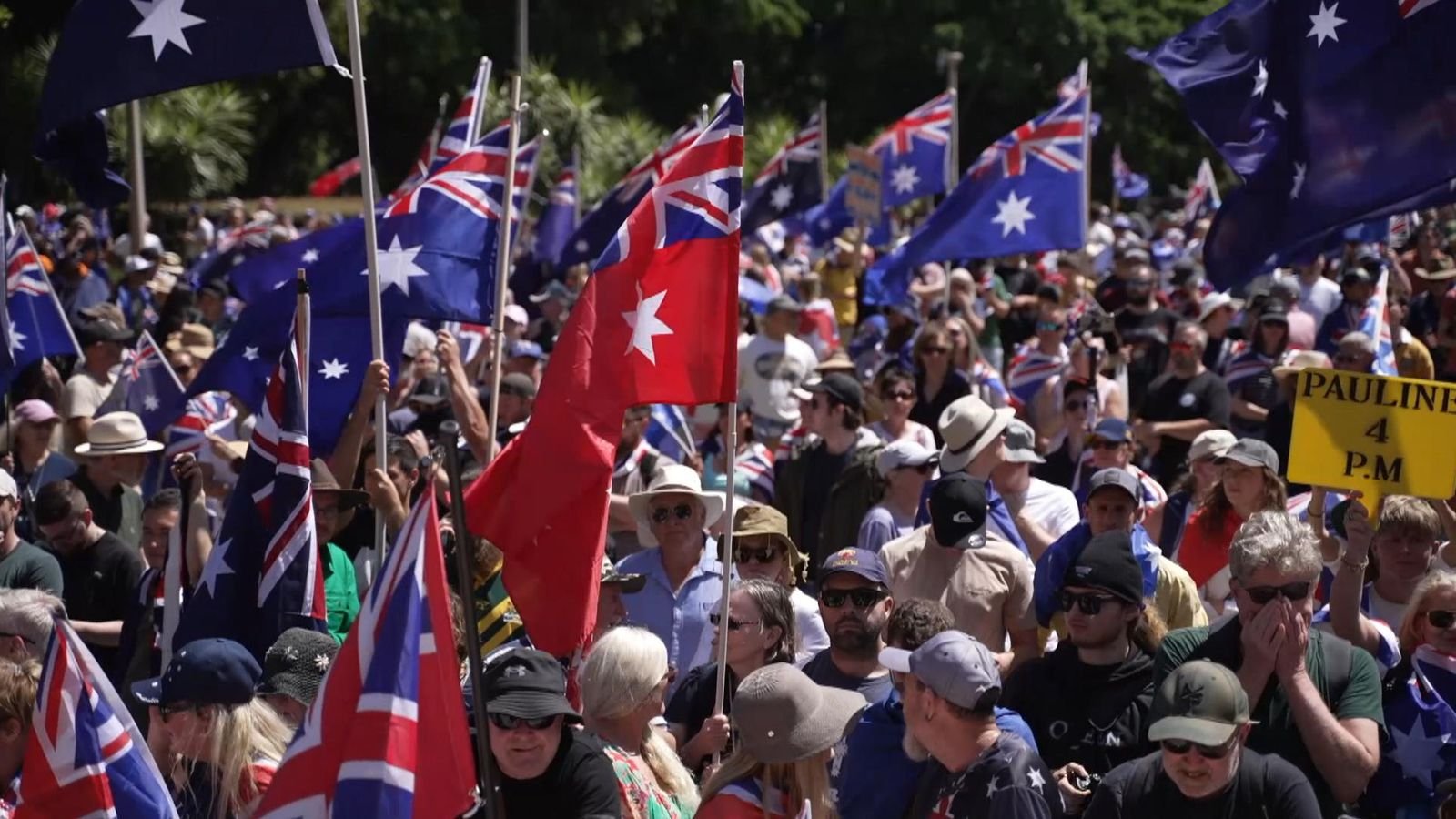
As Australia approaches the summer months, it finds itself embroiled in extensive protests focused on the contentious issue of migration. In August, approximately 50,000 demonstrators took to the streets across various cities, with notable clashes erupting between far-right and far-left factions during a rally in Melbourne.
Recent Protests and Rising Tensions
Following the initial protests, further demonstrations occurred in October, where law enforcement reported instances of violence attributed to the far-left group targeting police officers and confronting right-wing activists. The atmosphere remains charged, with both sides expressing heightened animosity.
Fran Grant, a Sydney protester, has participated in each rally, voicing her dissatisfaction with the government’s immigration policies. “I love Australia and I’m not happy with what’s happening now,” she stated, highlighting concerns over a lack of infrastructure to support the influx of new immigrants. Grant’s remarks underscore a growing sentiment among Australians, some of whom perceive the current migration levels as excessively high.
Shifts in Migration Patterns
Migration to Australia experienced a significant decline during the COVID-19 pandemic due to strict border restrictions. However, post-pandemic years saw a dramatic increase, with 1.4 million individuals entering the country during this period. Data from the Australian Bureau of Statistics indicates that net overseas migration has since decreased by nearly 40% since reaching its peak, yet a substantial number of Australians continue to believe that current figures remain too elevated.
Calls for Immigration Control
In Sydney’s multicultural suburb of Auburn, where nearly 80% of families speak a language other than English at home, local councillor Steve Christou—whose family immigrated from Greece—echoed similar concerns about the influx. “All we’re saying is put a stop to excess immigration until the country’s infrastructure can keep up. We can’t keep going like this,” he asserted. Christou clarified that the blame is directed not at immigrants, but rather at the government for permitting the rapid population increase.
The protests have drawn mixed reactions, with some critics deeming them as inflammatory or racially charged, while participants contend they are rallying in support of Australian values and against the ongoing housing crisis and rising living costs.
Far-Right Groups and Public Response
The protests also included the presence of neo-Nazi groups, especially during the August demonstrations in Melbourne and Sydney. These far-right factions not only joined the protests but were allegedly involved in violent confrontations, even targeting Indigenous camps. The deputy leader of the Australian Greens, Mehreen Faruqi, commented on the alarming rise of far-right groups, asserting that their visibility on the streets has intensified.
Dr. Josh Roose, a terrorism expert from Deakin University, expressed concern over the participation of neo-Nazis in these rallies, suggesting that they aim to normalise extreme ideologies and influence public sentiment. This rise in activity has prompted the New South Wales government to consider enhancing legislation against public displays of neo-Nazi symbolism.
Political Context and Ongoing Controversies
In a related political context, Pauline Hanson, leader of the far-right One Nation party, recently ignited controversy by wearing a burqa in federal parliament as part of her campaign to ban the garment in public. Her party’s rising popularity suggests an increasing appeal among disillusioned voters in Australia.
Background
The debates surrounding migration and immigration policy in Australia are not new but have gained momentum as the country navigates the physical and social ramifications of its post-pandemic recovery. The current situation showcases deep-seated concerns regarding infrastructure, cultural identity, and the economic viability of ongoing immigration rates.
As Australia grapples with these challenges, the protests highlight a nation at a crossroads, confronted by divergent opinions on immigration and cultural integration that resonate beyond its borders, drawing international attention to rising populist sentiments and their implications.
Source: Original Article






