Winter Strawberry Production Pioneers in West Sussex
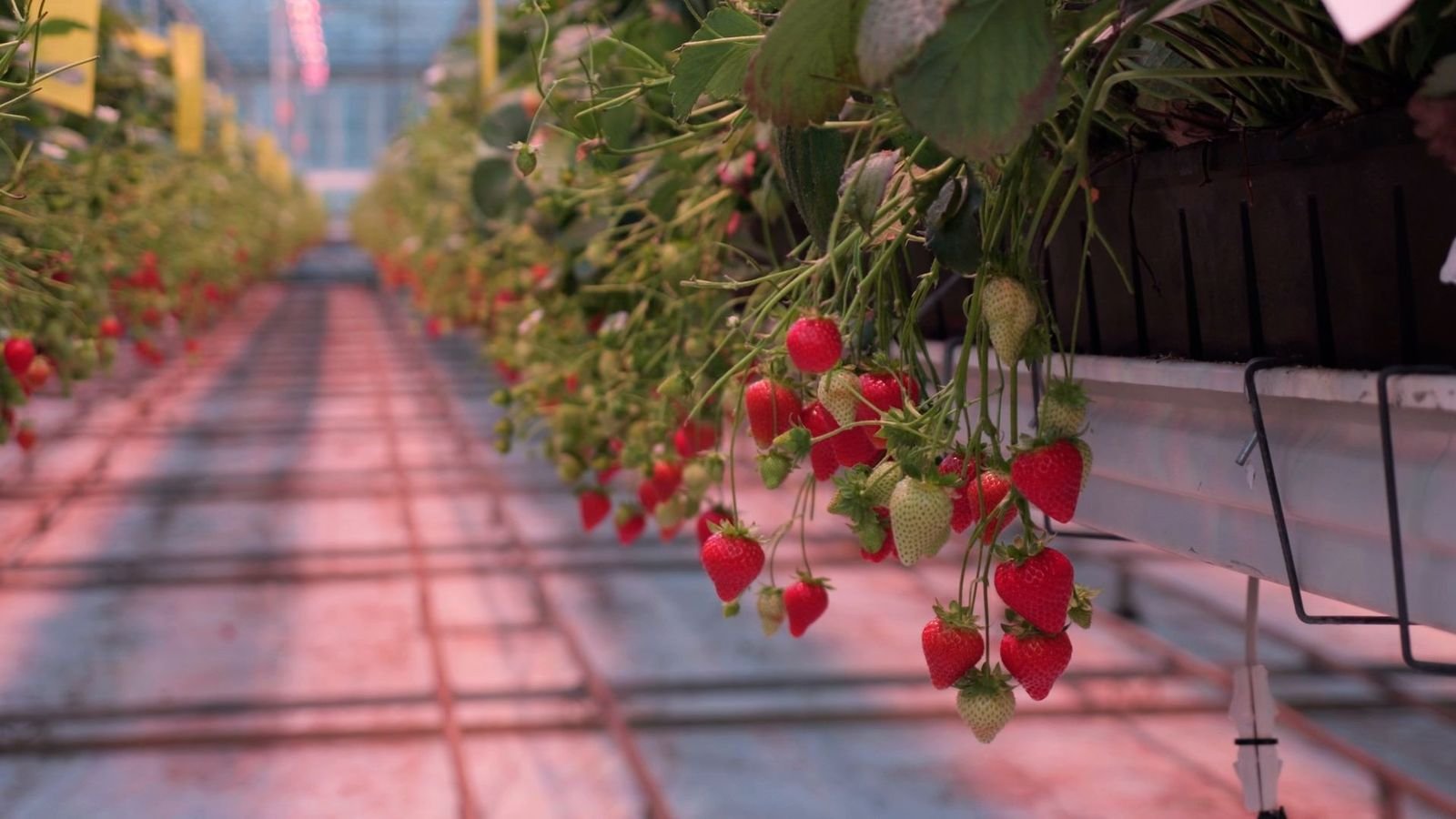
This winter, West Sussex will see the emergence of sweet, red strawberries available in UK supermarkets, thanks to innovative year-round cultivation techniques. Utilising LED lighting within extensive glasshouses enables the production of berries on a commercial scale for the first time during the cold months, significantly reducing dependence on imported fruit.
Innovative Growing Techniques
With the aid of LED technology, the berries thrive in an artificial environment, even on days with limited natural sunlight. Bartosz Pinkosz, the operations director at The Summer Berry, highlighted that this lighting is crucial for photosynthesis, providing energy for the plants to grow successfully.
“We can ensure the berries achieve optimal sweetness, as well as the right size and shape due to the advanced growing conditions,” Pinkosz remarked. The site, located in Chichester, boasts 36,000 square metres of greenhouses that utilise some renewable energy sources and incorporates bees to aid pollination.
Local Economic Impact
The development has created approximately 50 year-round jobs, offering consistent employment in the local area. In total, approximately 1.5 million punnets of strawberries are anticipated to be harvested this winter, allowing British-grown strawberries to be available for the festive season.
Environmental Considerations
Despite the reduction in food miles, concerns about the environmental impact of large-scale heated glasshouses persist. Dr. Tara Garnett, director of the food systems platform TABLE, cautioned that the substantial energy required for heating and lighting needs careful consideration, particularly in relation to its energy source.
“To replicate summer conditions, a considerable amount of heat and light is necessary. The energy source influences the overall sustainability of this approach,” Garnett explained.
UK’s Fruit Self-Sufficiency Challenges
The UK grapples with low levels of fruit and vegetable self-sufficiency, with only 16% of the fruit consumed being domestically grown, and around half of vegetables also coming from imports. This shortfall emphasizes the need for increased local food production capabilities.
Conclusion
While some may argue that strawberries are best reserved for the summer months, the innovative practices in West Sussex are set to provide UK consumers with freshly picked strawberries during winter for the first time. This paradigm shift not only addresses seasonal eating but also aims to fortify local production against climate challenges and global supply chain issues.
Source: Original Article