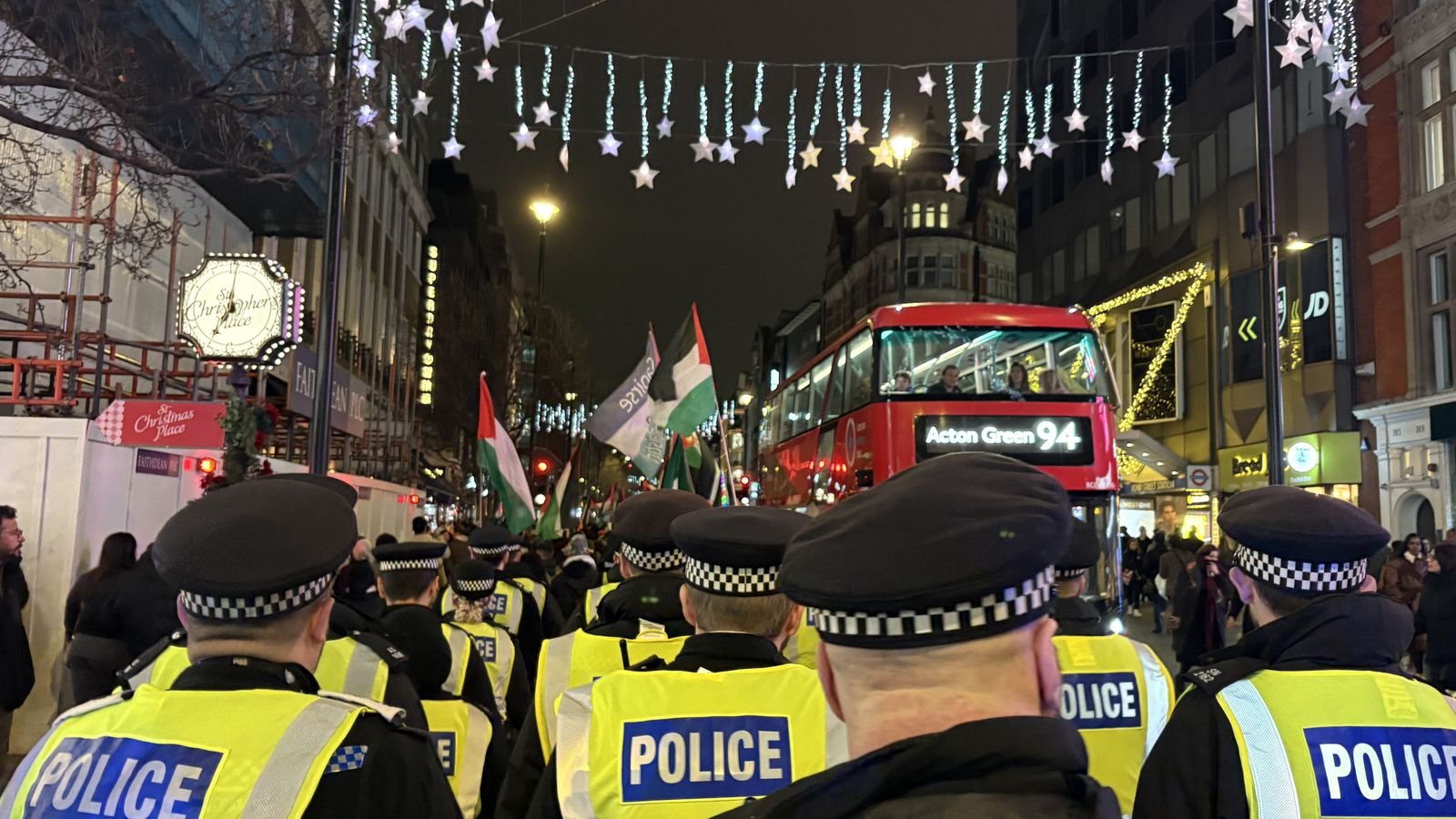
Protesters Face Arrest Over “Globalise the Intifada” Slogan Following Bondi Beach Terror Attack
Authorities in London and Manchester have raised concerns over the use of the phrase “globalise the intifada” during protests, particularly following a recent terrorist incident at Bondi Beach, Sydney, where 15 individuals lost their lives. This announcement comes in the wake of heightened tensions and a noted increase in antisemitic incidents across the UK.
Details of the Recent Attack
On Sunday evening, a shooting at Bondi Beach targeted a gathering of Jewish individuals celebrating Hanukkah. The assailants, armed gunmen, claimed the lives of 15 people. This tragic event has intensified scrutiny on hate speech and its byproduct—violence against the Jewish community.
The incident follows a separate attack at Heaton Park Synagogue in Manchester, which occurred roughly two months earlier, resulting in two fatalities. Both attacks underline a disturbing trend of violence affecting Jewish populations during significant religious observances.
Call to Action from Leadership
High-profile figures, including Chief Rabbi Sir Ephraim Mirvis, have urged for immediate action against hate speech that features prominently in pro-Palestinian demonstrations throughout the UK. Sir Ephraim emphasized the detrimental consequences of such rhetoric, linking it to the violence witnessed in the recent attacks. He stated that expressions like “globalise the intifada” carry legal implications and encourage violent outcomes.
Police Response and Policy Review
In a joint statement, the heads of Greater Manchester Police and the Metropolitan Police expressed their commitment to addressing concerns around potentially inciting phrases used in protests. They stressed that individuals utilizing these slogans should anticipate police intervention, especially given recent violent occurrences.
Met Commissioner Sir Mark Rowley and GMP Chief Constable Sir Stephen Watson added that the context of increasing hate crimes necessitates a renewed approach to enforcement. They noted that current laws may not adequately criminalize certain phrases that incite fear among Jewish communities, but pledged to adopt a more assertive strategy, including the use of the Public Order Act during worship services at synagogues.
Wider Context of Conflict
The escalation of antisemitic crimes has been attributed to the highly charged atmosphere following the Hamas-led attacks on Israel starting on October 7, 2023. This has resulted in significant violence and unrest, prompting law enforcement to reassess their tactics in managing protests and public safety events, especially in areas adjacent to synagogues and Jewish gatherings.
In light of these developments, Justice Minister Alex Davies-Jones has also encouraged restraint regarding chants that may incite violence, such as “from the river to the sea,” which has drawn criticism for allegedly calling for the abolition of the Israeli state.
Conclusion and Community Impact
As authorities tighten their grip on hate speech in the UK, communities remain on high alert. The effects of the Bondi Beach attack resonate beyond Sydney, highlighting the global interconnectivity of such violent acts and the imperative for cohesive action against antisemitism.
With the police prepared to impose restrictions at forthcoming protests to maintain order and safeguard Jewish community members, the landscape of political expression in the UK may undergo significant changes as authorities respond to an evolving threat environment.
Background
The term “intifada,” which translates to “uprising” in Arabic, refers to two major Palestinian uprisings against Israeli rule during the late 20th and early 21st centuries, resulting in thousands of casualties. In contemporary discourse, it has become a rallying cry that reflects the deep-seated tensions and ongoing conflict in the region, reverberating across diverse societies worldwide, including the UK.
Source: Original Article