






















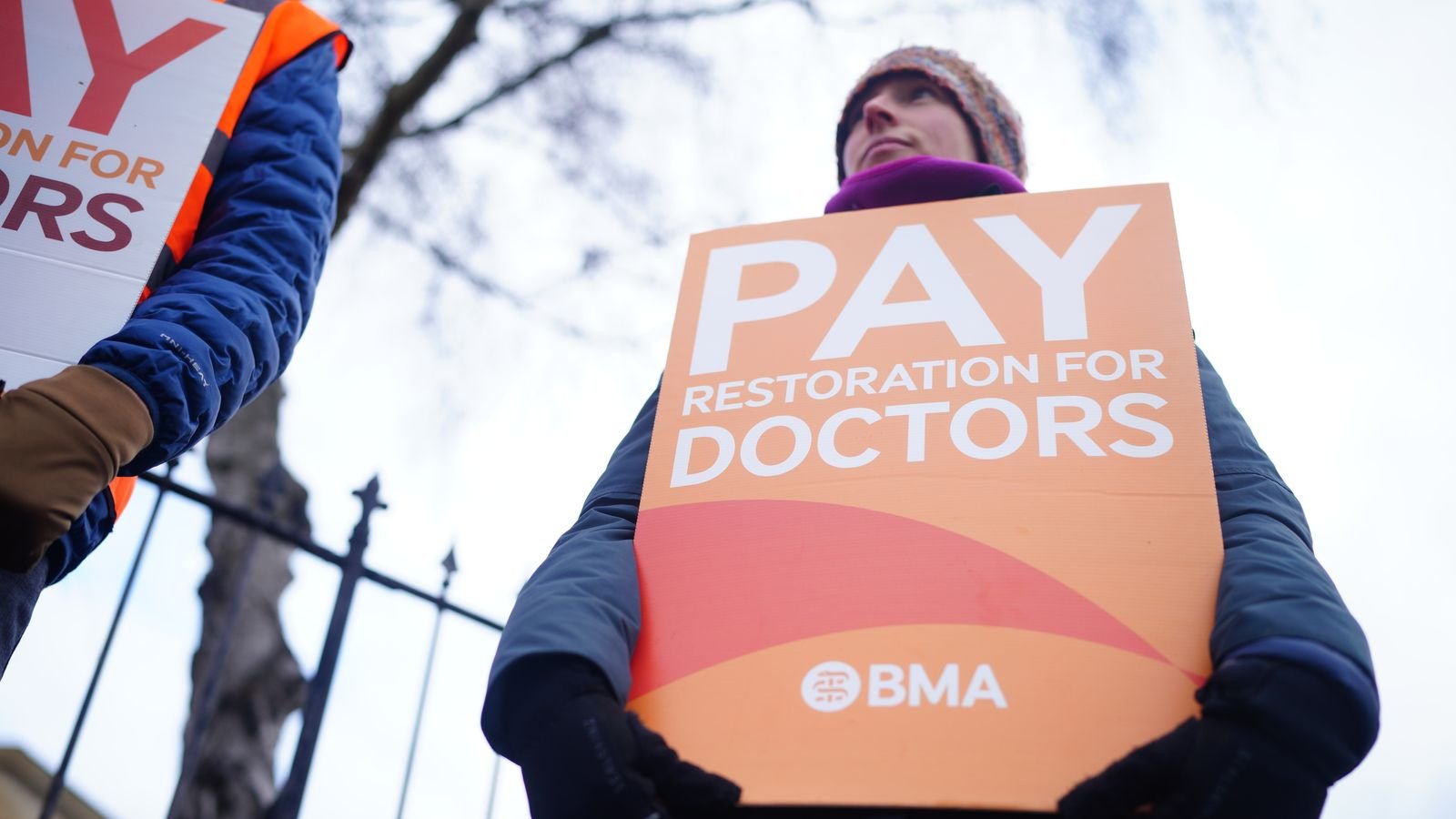
Resident Doctors in Scotland Set to Strike in January Amid Pay Dispute
In a significant development, resident doctors in Scotland have voted overwhelmingly to strike starting 13 January, as their union seeks a “credible” pay offer from the Scottish Government. The British Medical Association (BMA) reported that 92% of members who cast their votes supported the industrial action, with a turnout of 58%.
Strike Details
The planned strike is scheduled to commence at 7am on Tuesday, 13 January, and is expected to conclude at 7am on Saturday, 17 January. However, the duration may change depending on the progress of ongoing pay negotiations.
This announcement follows ongoing strike actions by resident doctors in England, which started recently and are set to continue until Monday. The situation highlights a deepening crisis in the NHS regarding staff pay and working conditions.
Union’s Concerns and Government Response
Chris Smith, chair of the BMA Scottish resident doctors committee, highlighted the collective frustration among members, accusing the Scottish Government of failing to honour a previous pay agreement established two years ago. He stated, “We are simply asking for the government to deliver on what they previously promised,” emphasising the necessity of a substantial pay offer to address the erosion of wages since 2008.
Smith pointed out that if the government had adhered to its earlier commitments, the current dispute might have been avoided. He expressed hope that a resolution could still be reached to prevent strikes, asserting that BMA Scotland’s resident doctors are dedicated to fulfilling their part of the agreement.
In contrast, Scottish Health Secretary Neil Gray expressed disappointment at the strike vote and extended an invitation for talks to Smith. He defended the proposed 4.25% pay uplift for 2025/26 as part of a two-year agreement similar to those accepted by other NHS staff, stating that this would culminate in a cumulative pay rise of 35% by 2027. Gray added, “Industrial action will put all that progress at risk,” underlining concerns about waiting times and overall patient care.
Background
In 2023, junior doctors (now referred to as resident doctors) in Scotland accepted a new pay deal and agreed to engage in annual discussions aimed at making credible progress towards restoring lost wages. However, the BMA noted in October that the government’s offer of a 4.25% increase breached their agreement.
Smith commented that resident doctors were already 17% worse off compared to their peers in 2008, and this latest offer would exacerbate the situation. As negotiations continue, the stakes remain high for both healthcare workers and patients relying on the NHS.
Wider Context of NHS Strikes
The strikes by resident doctors in England have raised further concerns, with 83% of English BMA members rejecting a recent proposal from the Labour government. Sir Keir Starmer labelled the strike action as “irresponsible,” while Health Secretary Wes Streeting condemned the union for what he described as a “shocking disregard for patient safety.” The BMA has firmly stated that the current strikes are “entirely avoidable” and is demanding a legitimate offer to avert what they term “real-terms pay cuts.”
The BMA has contacted the Scottish government for additional comment as the situation unfolds, amid growing concern for the future of NHS services in the UK.
Source: Original Article






