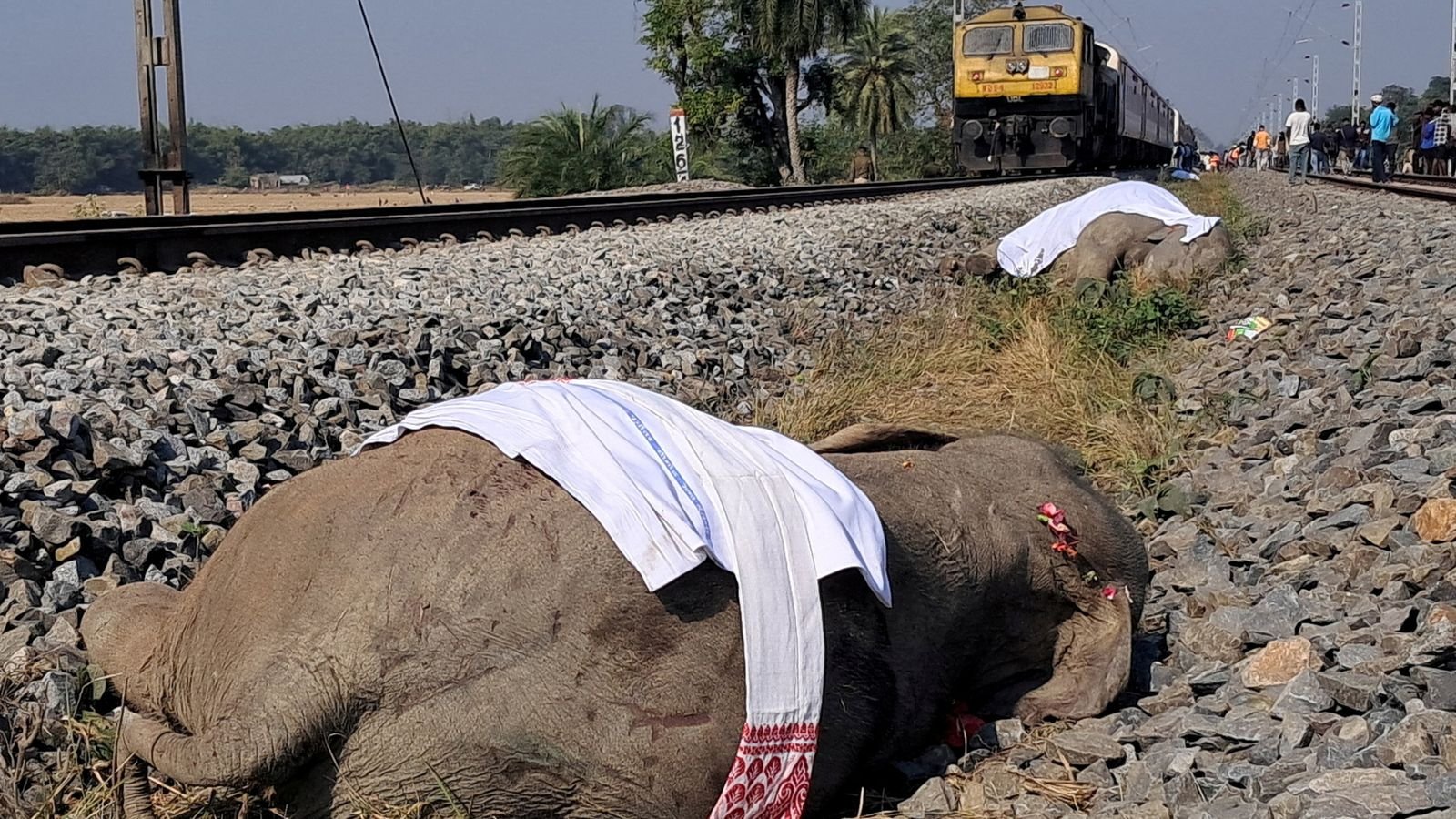
High-Speed Train Collision Claims Lives of Asiatic Elephants in India
A high-speed train in northern India collided with a herd of wild Asiatic elephants, resulting in the deaths of seven elephants and injuring a calf. Fortunately, the incident, which occurred in Assam, resulted in no human fatalities among the 650 passengers on board.
Incident Details
The tragedy took place during the early hours of Saturday morning. The Rajdhani Express was en route from Mizoram, a state bordering Myanmar, to New Delhi when it struck the herd. Although the train’s driver attempted to halt the train by activating the emergency brakes upon spotting the wildlife, the speed of the train was such that several elephants did not escape in time.
Following the collision, five train coaches and the engine went off the rails. Passengers in the unaffected carriages continued their journey towards the national capital, while around 200 passengers from the derailed coaches were relocated to Guwahati via an alternative train.
Local Response
Authorities have reported that veterinarians conducted autopsies on the deceased elephants, which will be buried later. Indian Railways officials have stated that the area where the accident occurred is not designated as an elephant corridor, although the railway tracks in the state are often traversed by elephants.
Wider Context
Assam is home to one of the largest populations of wild Asiatic elephants in India, with estimates suggesting around 7,000 individuals in the region. Unfortunately, collisions between speeding trains and elephants are not uncommon in Assam, with at least a dozen elephants reported killed by trains since 2020. This situation is exacerbated during the harvesting season when wild elephants often wander into agricultural areas.
Conclusion
The collision highlights ongoing concerns regarding wildlife conservation and railway safety, particularly in regions where human habitation and wildlife territories intersect. As investigations continue, local authorities are likely to address the increasing frequency of such tragic incidents.
Background
Incidents involving wildlife and transportation are a significant concern in many parts of the world, leading to discussions about the implementation of measures to enhance safety for both animals and humans alike. In regions with high wildlife populations, like Assam, balancing infrastructure development with ecological preservation remains a crucial challenge.
Source: Original Article