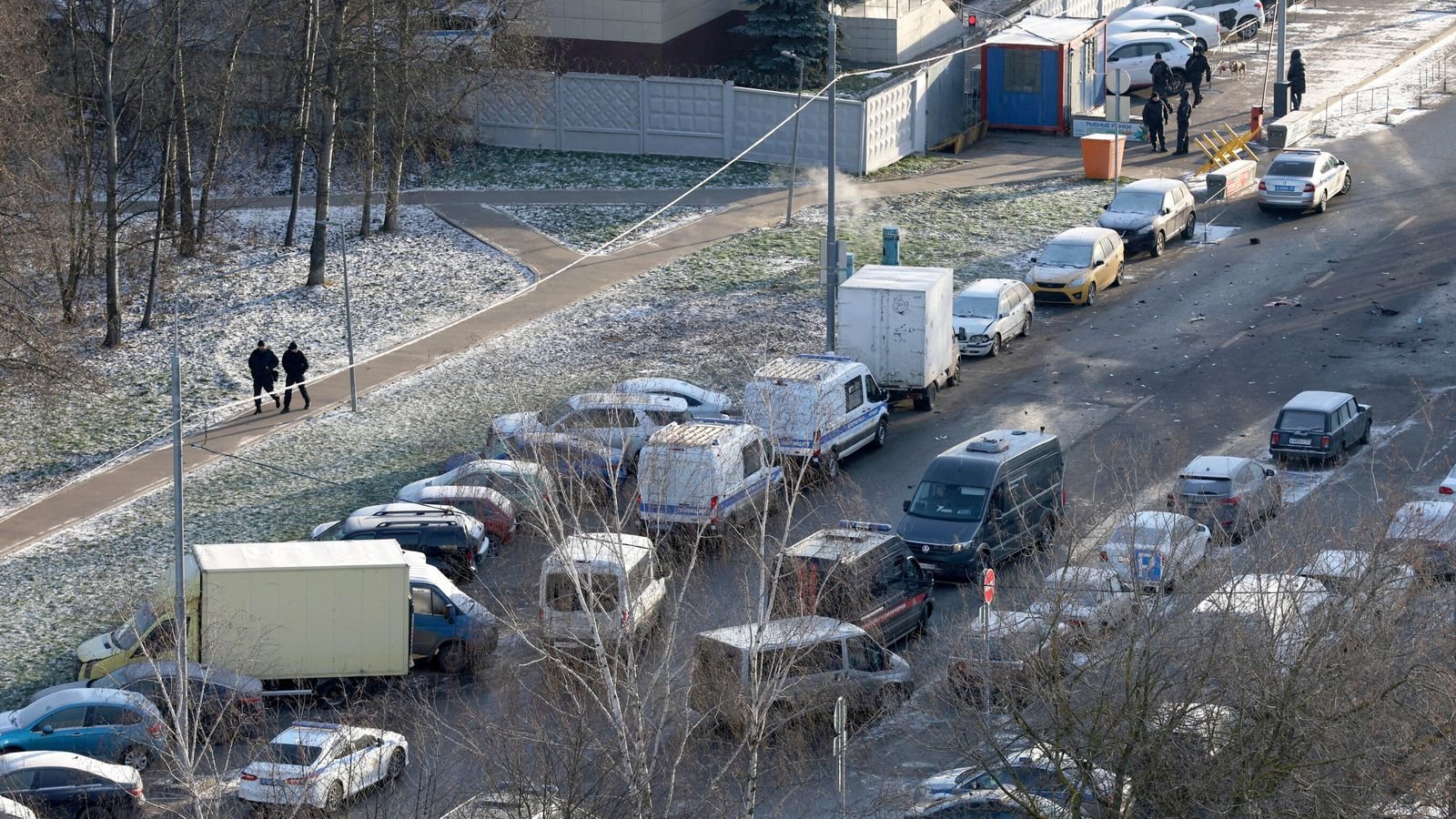
Escalating Violence in Moscow: Second Bombing in Days
Moscow experienced its second deadly bombing within three days, marking a worrying trend for the Kremlin amid its ongoing conflict in Ukraine. The most recent attack resulted in the death of Lieutenant General Fanil Sarvarov, raising serious questions about the security of high-profile officials in the Russian capital.
Details of the Attack
The car bomb that killed General Sarvarov is part of a sequence of violent incidents targeting senior military figures in Russia since the initiation of the invasion of Ukraine. Only days after this incident, the killings of two police officers in proximity to the first bombing have further escalated concerns regarding the safety and competence of Russian security forces.
This series of attacks is particularly alarming for President Vladimir Putin, who previously rebuked security agencies following the assassination of a military official last year via a similarly hidden explosive device. Despite this admonishment, the frequency of high-stakes assassinations raises significant doubts about the effectiveness of Russia’s internal security measures.
Implications for Ukraine and the West
While Ukraine has been implicated in some of the attacks occurring on Russian soil, officials in Kyiv have yet to comment on this specific incident. Analysts speculate whether this escalation is a calculated move by Ukraine to influence ongoing peace negotiations, especially considering it coincides with talks aimed at reshaping the narrative surrounding the conflict.
Recent developments suggest that Ukraine has gained ground in persuading the United States to entertain a less severe peace framework, which includes Article 5-style security guarantees and retention of military capabilities. The timing of the attacks may serve as a strategic pivot to demonstrate to international observers that Russia does not command an unassailable position in the negotiations.
Reactions and Future Outlook
The Kremlin’s official response to the shifting dynamics in peace talks has been dismissive, indicating that its opposition to proposals involving foreign security guarantees remains steadfast. This stance underscores the challenges that lie ahead for any potential resolution to the conflict.
As violence continues to disrupt the stability of Moscow and broader Russia, the implications extend beyond its borders, impacting global perceptions of security, diplomacy, and military strategy in the ongoing war in Ukraine.
Background
Since the onset of the conflict in Ukraine, Russia has witnessed a series of high-profile assassinations that have implicated various groups and raised security concerns. Previous incidents have prompted calls for reform within Russia’s security infrastructure, but substantive changes seem unlikely given the recent events.
As the situation evolves, both Moscow and Kyiv will need to navigate a complex landscape, shaped by internal dynamics and external pressures, particularly from Western nations.
Source: Original Article