






















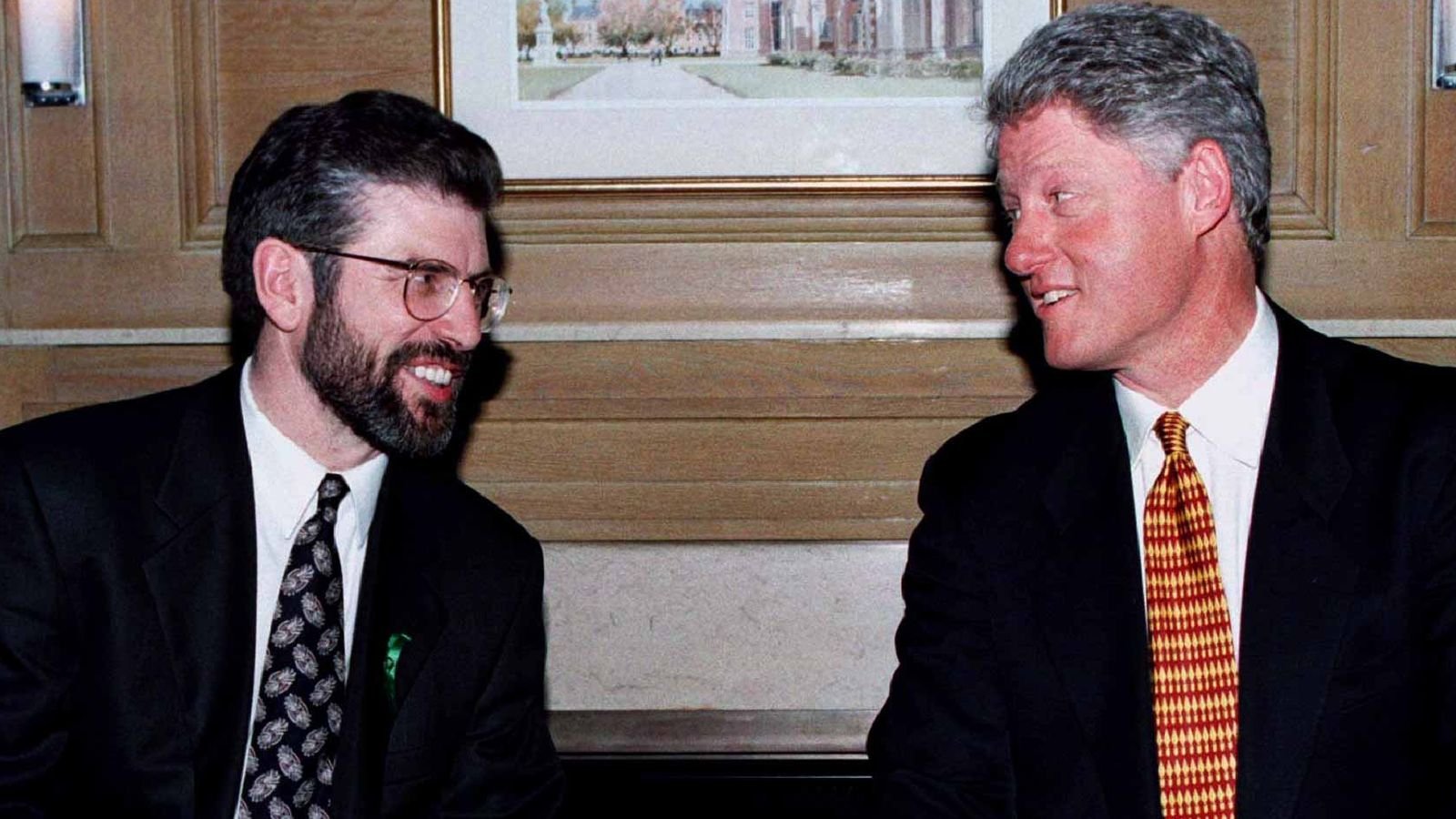
Clinton Handshake with Sinn Fein Leader Revealed to Be Deliberately Avoided
Newly declassified documents have unveiled that White House officials sought to prevent former President Bill Clinton from shaking hands with Gerry Adams, the leader of Sinn Fein, during his significant visit to Ireland in 1995. This visit marked the first time a sitting US president had travelled to Northern Ireland.
Political Sensitivities Surrounding the Visit
Clinton’s handshake with Adams occurred on 30 November 1995 along the Falls Road in Belfast, a moment that Mr. Clinton later described as monumental, likening its significance to an earth-shattering event. However, documents released from the National Archives of Ireland indicate that there was considerable concern at the White House regarding the potential political ramifications of such a public display.
A letter from Irish government official David Donoghue prior to the presidential visit outlined that American officials “preferred to avoid a handshake photograph” between Clinton and Adams. This concern arose amid tensions surrounding the political affiliations of Adams and Sinn Fein, which is known as the political arm of the IRA and has faced significant scrutiny from British authorities.
Pressure from the UK Government
Reports suggest that Clinton faced pressure from then British Prime Minister John Major to limit his warmth towards Adams. The historical context is crucial; peace negotiations in Northern Ireland were sensitive, and the British government closely monitored US involvement in the process.
Clinton’s Ancestry Scrutinised
The declassified documents also feature a genealogy expert’s findings regarding Clinton’s ancestral claims to origins in County Fermanagh, Northern Ireland. There had been assumptions regarding Clinton’s links to the region through his mother’s side. However, genealogist Sean Murphy dismissed these claims, stating that the supposed connections were largely unfounded.
Murphy concluded that the earliest identifiable ancestor in Clinton’s maternal line was likely born in South Carolina in the mid-18th century, with no solid evidence supporting the idea that his family hailed from Fermanagh. Nonetheless, he noted that it was “reasonable to speculate” that some ancestors may have travelled from Ulster to America at some point.
Implications of Discovery
These revelations shed light on the complex interplay between politics and personal legacy, particularly concerning the Northern Ireland peace process. The nuanced relationship between US involvement and British government sensitivities during this period highlights the importance of public perception in diplomatic matters.
Background
Clinton’s visit to Northern Ireland was part of a broader effort to strengthen peace talks between the various factions involved in the region’s long-standing conflict. The 1990s were pivotal in moving towards a ceasefire, ultimately leading to the Good Friday Agreement in 1998.
Previous disclosures have included records showing that former US Attorney General Janet Reno advised against granting Adams a visa for fundraising activities in the US, evidencing the tensions surrounding Sinn Fein’s political activities and the IRA’s disarmament.
The ongoing release of government documents from three decades prior continues to provide new insights into the intricacies of historical events that shaped both British and Irish landscapes.
Source: Original Article






