Thailand and Cambodia Sign Ceasefire Agreement Amid Ongoing Border Conflict
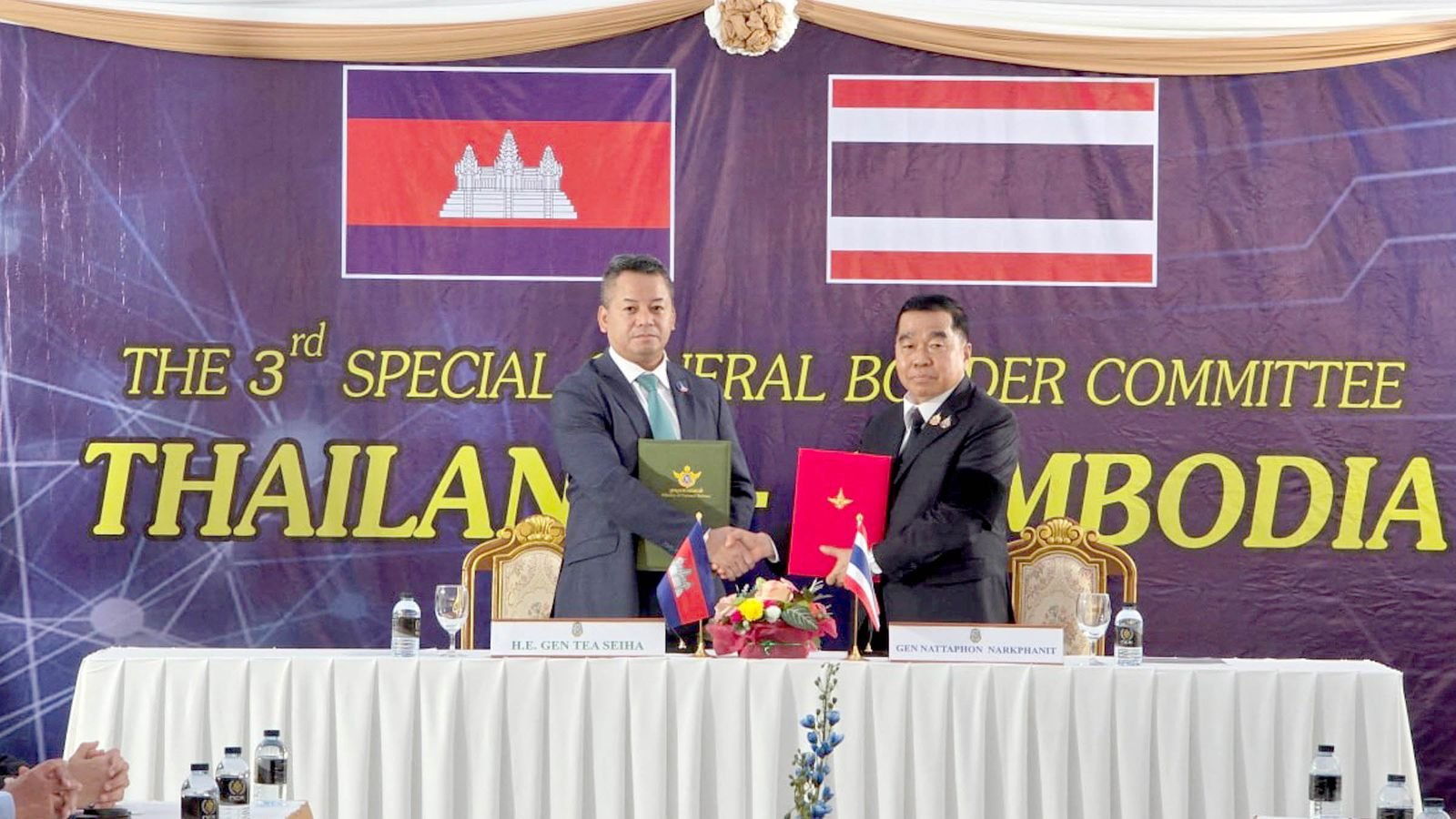
Thailand and Cambodia have formally agreed to a ceasefire, concluding several weeks of intense military engagement along their disputed border. The ceasefire took effect at noon local time and includes provisions to prevent further military actions by either side.
Details of the Agreement
In addition to halting the fighting, the ceasefire stipulates that both nations must refrain from military movements and avoid violations of each other’s airspace for military activities. Notably, Thailand had been conducting airstrikes against Cambodian positions, with the last reported attack occurring on Saturday morning.
Following a 72-hour period of successful ceasefire, Thailand is also required to return 18 Cambodian soldiers who have been held captive since July, a significant demand from the Cambodian government. The agreement was signed by the defence ministers of both countries at a border checkpoint, following three days of negotiations involving military officials under the General Border Committee framework.
Historical Context
This ceasefire marks a continuation of efforts that began in July, which were mediated by Malaysia and strongly supported by former US President Donald Trump, who exerted pressure on both countries to reach an agreement. Despite previous accords, hostilities resumed, escalating into heavy fighting earlier this month, which has seen considerable casualties on both sides.
Casualties and Impact
Since combat resumed on December 7, Thailand has reported the deaths of 26 soldiers and one civilian, alongside 44 civilian fatalities caused by collateral damage. Cambodia has not provided comprehensive figures on military losses, but has reported 30 civilian deaths and 90 injuries related to the conflict. The violence has forced hundreds of thousands to evacuate from affected areas on both sides of the border.
International Considerations
The ceasefire agreement also includes commitments to adhere to international treaties prohibiting the use of landmines, an issue of paramount concern for Thailand. As tensions remain high, the international community continues to monitor the situation closely, underscoring the geopolitical significance of the ongoing conflict, particularly in the context of regional stability.
Conclusion
As this situation unfolds, further updates are anticipated. The ceasefire offers a glimmer of hope for de-escalation, though the underlying tensions may persist without comprehensive diplomatic solutions.
Background
Prior to this latest conflict, both nations had reached a ceasefire in July, orchestrated under external influence, yet it failed to stabilize the border area, leading to continued skirmishes. The history of territorial disputes between Thailand and Cambodia reflects broader regional complexities that resonate with international observers.
Source: Original Article