






















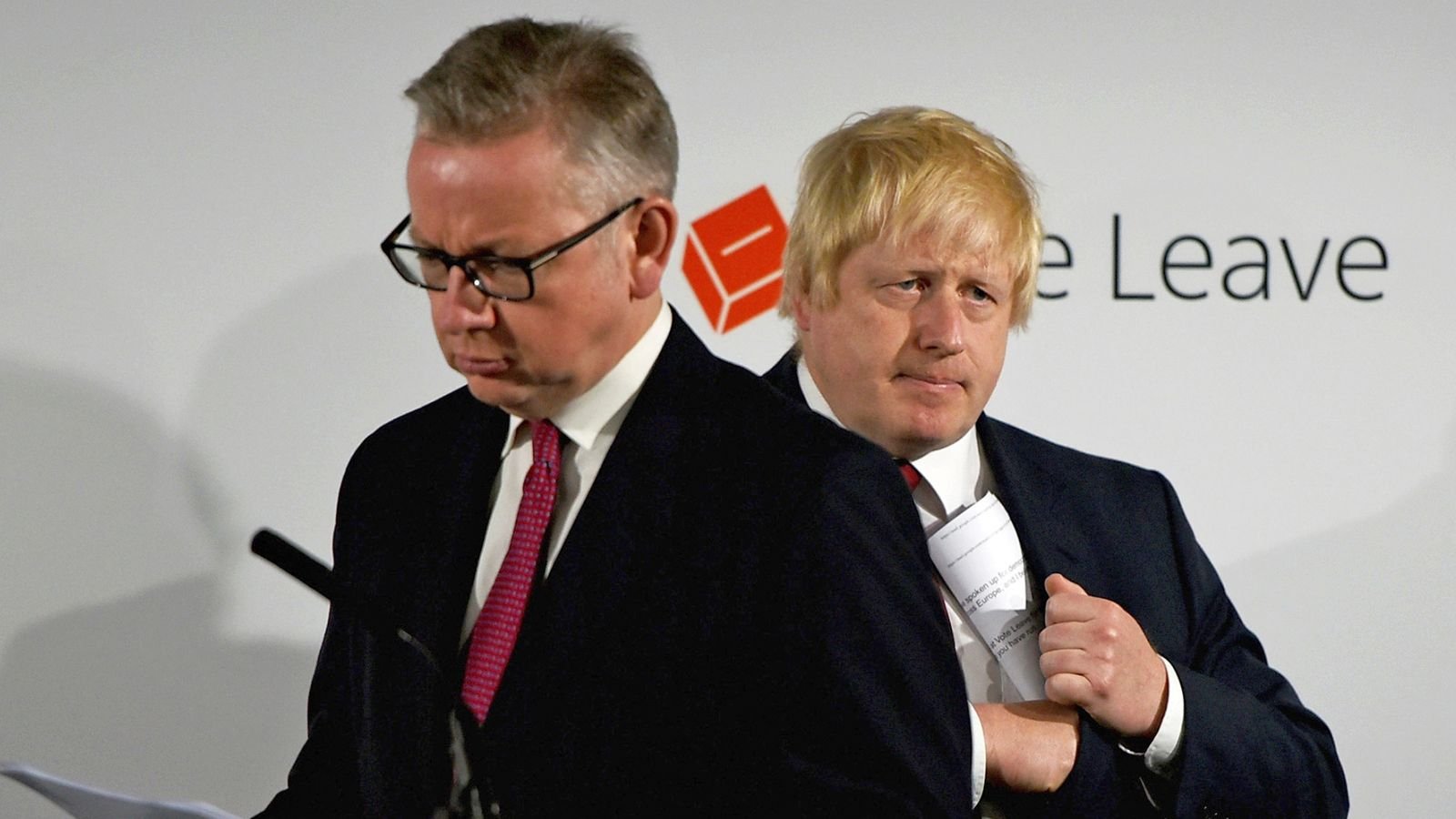
Gove Reflects on Controversial Decision to Undermine Johnson’s Leadership Bid
Michael Gove has publicly expressed regret for his role in derailing Boris Johnson’s attempt to lead the Conservative Party following the Brexit referendum in 2016. Speaking in a special programme on Sky News, Gove acknowledged that his intervention may not have been in the best interest of party unity.
Admission of Regret
Now a peer in the House of Lords, Gove remarked that he likely acted hastily when he questioned Johnson’s capability to lead following David Cameron’s resignation. At the time, Johnson was widely expected to take charge of the Conservative Party after serving as a prominent figure in the Leave campaign.
Reflecting on his actions, Gove stated, “I think on balance, it would have been better all round if I had thought, ‘OK, I may have these profound worries, but it is better that I keep them to myself and that I do everything possible to make things work.’” His comments reveal a sense of introspection regarding his previous decisions.
Impact of the Leadership Challenge
Following the resignation of Cameron, who led the unsuccessful Remain campaign, a leadership contest ensued. Johnson was seen as the frontrunner. However, Gove’s late intervention, which involved expressing doubts about Johnson’s leadership potential, notably led to considerable media backlash, with some accusing him of a “political assassination.”
After Gove’s statement, Johnson ultimately decided not to run for leadership and instead expressed support for Andrea Leadsom, who also later withdrew from the race, paving the way for Theresa May to become Prime Minister.
Further Reflections
Gove admitted that despite questioning Johnson’s ability to lead, he recognised Johnson’s prominence within the party at that time. He also described Johnson’s reaction in the immediate aftermath of the referendum as indicative of a “fundamental unseriousness,” which further fueled his concerns.
When pressed about whether he had additional regrets, Gove stated that some decisions were clearly right or wrong while others were ambiguous, making it difficult to ascertain how events might have unfolded differently. He emphasised that while he reflects on his choices, the outcome remains uncertain.
Controversial Stances
Interestingly, Gove maintained that he does not regret the infamous “Brexit bus” featuring the claim that the UK sends £350 million to the EU weekly. This statement, which faced significant criticism for its accuracy, continues to be a topic of debate among politicians and economists alike.
Background
The Brexit referendum, held in June 2016, produced a contentious outcome with a narrow majority in favour of leaving the European Union. This result sparked significant political turmoil within the UK, leading to a series of leadership challenges and a realignment of party politics. Gove’s actions during this period exemplify the intense rivalry that characterized the Conservative Party in the aftermath of the referendum.
Broader Implications
During the same Sky News episode, former Deputy Prime Minister Nick Clegg criticised the Remain campaign as “lamentable” and specified that had the Liberal Democrats remained in power, Brexit may not have occurred. This highlights the ongoing discourse about the effectiveness of political messaging and strategy in shaping public opinion and government policy in the UK.
Source: Original Article






