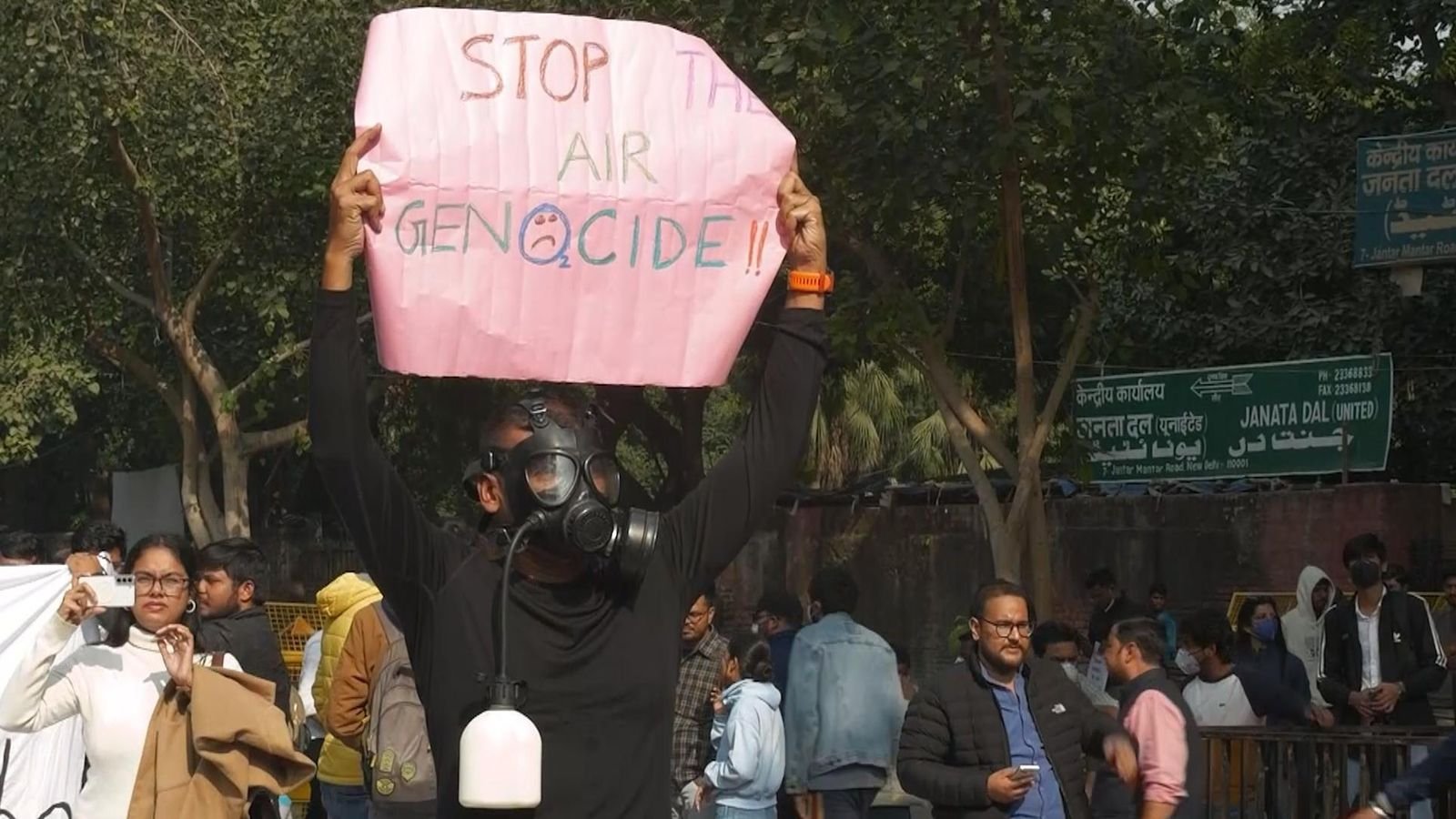
Delhi Residents Protest Against Escalating Air Pollution Crisis
Activists and concerned citizens gathered at Jantar Mantar, close to the Indian Parliament, to voice their frustration over deteriorating air quality in Delhi, labelled the world’s most polluted capital. Among them, Bhavreen Kandhari, a driving force in the movement for cleaner air, highlighted the grave health impacts of continuous air pollution, predicting a lack of government action as parliamentary sessions begin.
A Monumental Health Crisis
Delhi’s air quality has been consistently poor, with daily metrics often reaching hazardous levels. The city’s pollution stems from various sources, including vehicle emissions, industrial waste, construction activities, and harmful agricultural practices. A toxic mix of carbon monoxide, nitrogen dioxide, and fine particulate matter, notably PM2.5—particles smaller than 2.5 micrometers—permeates the atmosphere, posing serious health risks.
Experts warn that prolonged exposure to this polluted air can lead to severe respiratory illnesses, cardiovascular diseases, and cognitive impairments, ultimately reducing life expectancy. Recent reports indicate that pollution-related fatalities due to fossil fuels in India reached over 1.7 million, surpassing deaths from terrorism, riots, and other crises combined.
Public Outcry and Inadequate Government Measures
The protest comes amid growing public discontent with government responses to the pollution crisis, which many view as inadequate and temporary. Critics argue that bans on polluting vehicles and halting construction work when pollution levels rise are mere stopgap measures rather than robust long-term solutions. Activists note that despite their calls for significant legislative action, the parliamentary session began without addressing air quality concerns.
- Vehicle emissions
- Farm fires
- Industrial discharges
- Household energy consumption
Farmers are also caught in the crossfire. Many still resort to burning crop stubble, a traditional practice, despite an official ban that includes penalties for violators. Farmers argue that they contribute minimally to the air quality issues compared to larger industrial polluters, highlighting the complexities of addressing air pollution in the context of economic survival.
Wider Implications
Air pollution in Delhi extends beyond the capital, impacting the broader Indo-Gangetic Plain and affecting millions across the region. The UN’s Global Environment Outlook report warns that nearly the entire global population is exposed to some level of air pollution, with significant health risks particularly acute in low and middle-income countries.
Health professionals have raised alarms about the situation, dubbing the effects of air pollution as a “silent killer” that is increasingly recognised as a public health emergency. As calls for action go unheard, many are left to navigate this health crisis without significant governmental intervention.
Background
Delhi’s pollution has escalated in recent years, compounded by urbanisation, population growth, and inadequate environmental regulations. Despite ongoing protests and significant media attention, lasting change remains elusive as citizens grapple with the profound implications of their deteriorating air quality.
The urgent pleas from medical professionals, health workers, and activists reflect a desperate need for government accountability and decisive action. As air quality levels remain perilously low, the time for effective policy responses is now.
Source: Original Article