






















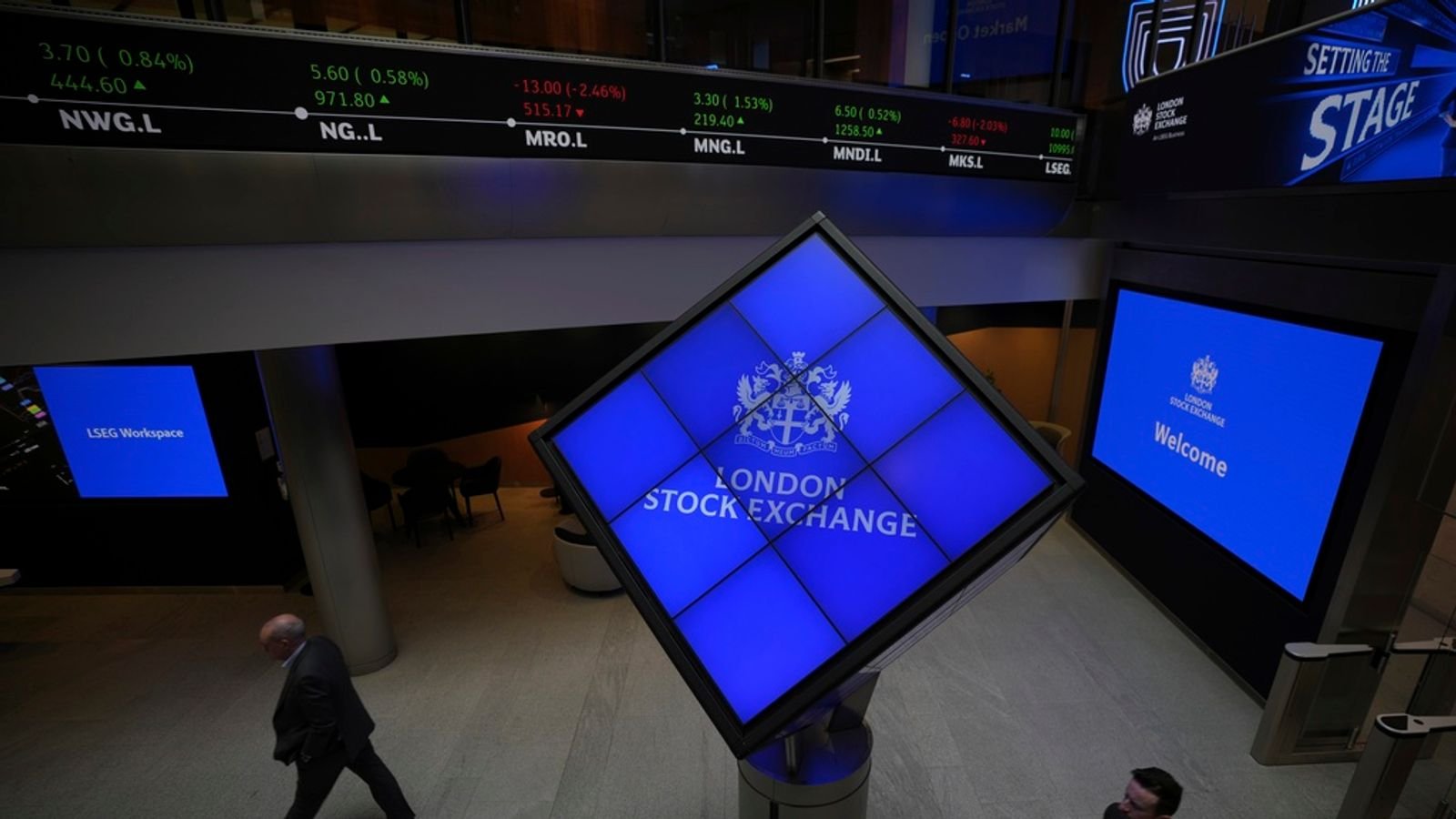
FTSE 100 Crosses 10,000 Points: Encouraging Trends Amid Economic Uncertainty
The FTSE 100 index has surpassed the 10,000-point mark, representing a significant milestone that suggests a positive trajectory for the UK’s largest firms. This achievement follows a notably strong performance in the previous year, despite concerns surrounding London’s position as a trading hub facing competition from US tech markets.
Performance Overview
Established in 1984 with a starting value of 1,000, the FTSE 100 experienced its best annual growth since 2009, showing an increase of 21.5% in 2025. This growth has defied predictions of stagnation in London’s financial landscape, attributed to the diverse sectors represented within the index.
Sector Contributions
The index includes major UK players in various thriving sectors such as:
- Banking
- Mining
- Defence
- Oil and gas
- Pharmaceuticals
- Consumer brands
However, the index notably lacks any tech giants, which may offer an avenue for diversifying investment portfolios, particularly amid concerns about the high valuations of US technology companies and potential overvaluation in the AI sector.
Key Stock Performers
Rolls-Royce and other defence-related stocks have thrived amid increased military expenditure across Europe. The mining sector, especially precious metals like gold and silver, has also benefited, with Fresnillo emerging as a standout performer, rising over 360% in value.
In the banking sector, the absence of tax hikes in the most recent budget has been welcomed. Major banks such as Lloyds saw significant increases, with shares up by 80%, followed by substantial gains for Standard Chartered, Prudential, and Barclays.
Despite facing challenges, pharmaceutical companies like AstraZeneca and GSK have maintained stability, bolstered by a recent UK-US pharmaceuticals agreement expected to boost NHS drug spending.
Optimism Amid Real Economic Gloom
While the rising valuations of the FTSE 100 might contrast sharply with the economic hardships faced domestically, many constituents generate significant revenues from international markets. Companies like HSBC, Anglo American, and BAE Systems are examples of entities that serve global markets.
In comparison, the FTSE 250—comprising the next tier of UK firms—only saw a modest gain of 9% as it is more closely aligned with domestic economic conditions.
Looking Ahead
The strong performance at the start of 2026, following a rewarding 2025, provides a degree of optimism for investors. As inflation and interest rates are projected to continue declining, some analysts suggest that a positive outlook could be beneficial for the market.
Given the dynamic nature of stock market investments, the FTSE 100 presents a mix of potential risks and rewards, highlighting the complexity of the current economic landscape.
Background
The FTSE 100’s rise is particularly noteworthy against a backdrop of global economic challenges and shifting market dynamics, especially as concerns grow about the sustainability of rapid growth within the tech sector. Understanding the underlying factors that contribute to this phenomenon can offer vital insights for investors and policymakers alike.
Source: Original Article






