Yemen’s Separatists Seek Independence as Tensions Rise
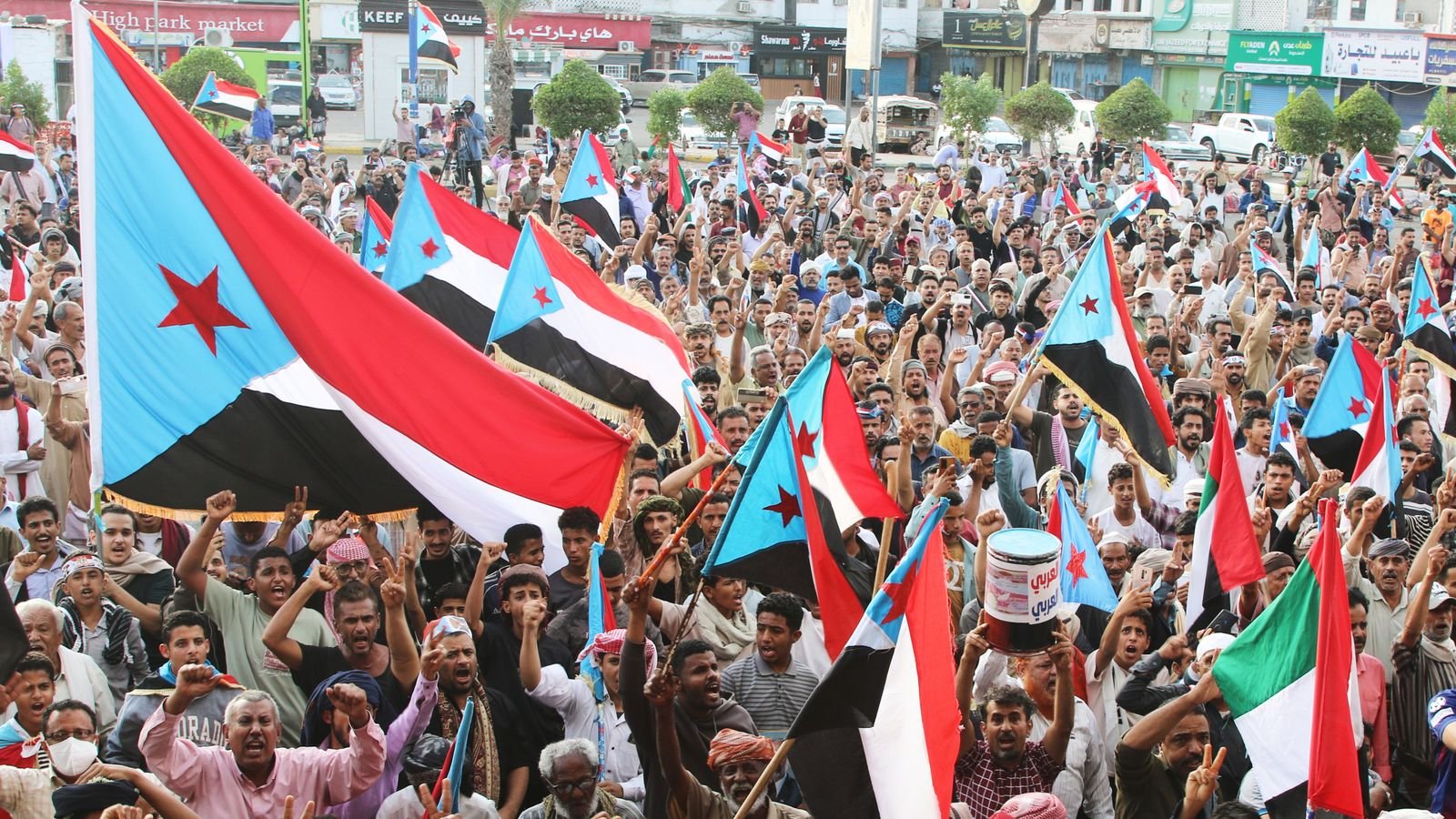
The Southern Transitional Council (STC), representing Yemen’s southern separatist movement, has unveiled a new constitution aimed at orchestrating a referendum on independence from northern Yemen. This development marks a significant escalation in the ongoing conflict between the STC, backed by the United Arab Emirates (UAE), and the Saudi-led coalition supporting Yemen’s internationally recognised government.
Recent Developments
The announcement by the STC comes amid heightened tensions between Saudi Arabia and the UAE, following the STC’s recent military successes in the south. STC-affiliated fighters have wrested control of two southern provinces from Saudi-backed forces and have reportedly seized the presidential palace in Aden, compelling the Yemeni government to relocate to Riyadh.
In the wake of the STC’s declaration, Saudi Arabian warplanes have targeted military positions held by the separatists in Hadramout province, reflecting a serious escalation of military engagement in the region. Saudi-supported fighters attempted to regain lost territory, underscoring the ongoing volatility of the situation.
The coalition has been focused on restoring Yemen’s internationally recognised government, which has been challenged by the Houthi rebels in the north. However, the increasing strain between the coalition forces threatens to undermine their collective goals.
Constitution and Independence Referendum
Aidarous al Zoubeidi, leader of the STC, announced that the new constitution would be operational for two years, during which a referendum will be conducted to assess the southern population’s desire for self-determination. He emphasised the need for a dialogue between different factions in Yemen during this period, aiming to establish a collaborative approach to governance.
The proposed constitution outlines the formation of “the State of South Arabia,” covering territories akin to those of the former People’s Democratic Republic of Yemen, which existed from 1967 until 1990. While the declaration is a bold step towards independence, its practical implications remain uncertain, raising questions about potential conflict with the existing coalition.
International Reactions
In contrast to the STC’s assertive posture, the UAE’s foreign ministry conveyed a message of restraint and a commitment to regional stability. They have stressed the importance of coordinated efforts in managing the situation, indicating a desire to avoid further escalation of military actions.
Conversely, the Saudi ambassador to Yemen, Mohammed al-Jaber, expressed frustration over repeated attempts to dissuade the STC from its escalating actions in the region. He noted that these efforts had been met with ongoing resistance from the STC leadership.
Background
The conflict in Yemen has persisted for nearly a decade, rooted in deep-seated political divisions and exacerbated by external interventions, particularly from Saudi Arabia and the UAE. The civil war has wrought devastation on the nation, recognised as the Arab world’s poorest country.
This recent move by the STC could further complicate ongoing peace efforts and exacerbate an already dire humanitarian situation in Yemen, making global attention on the conflict more crucial than ever.
Source: Original Article