























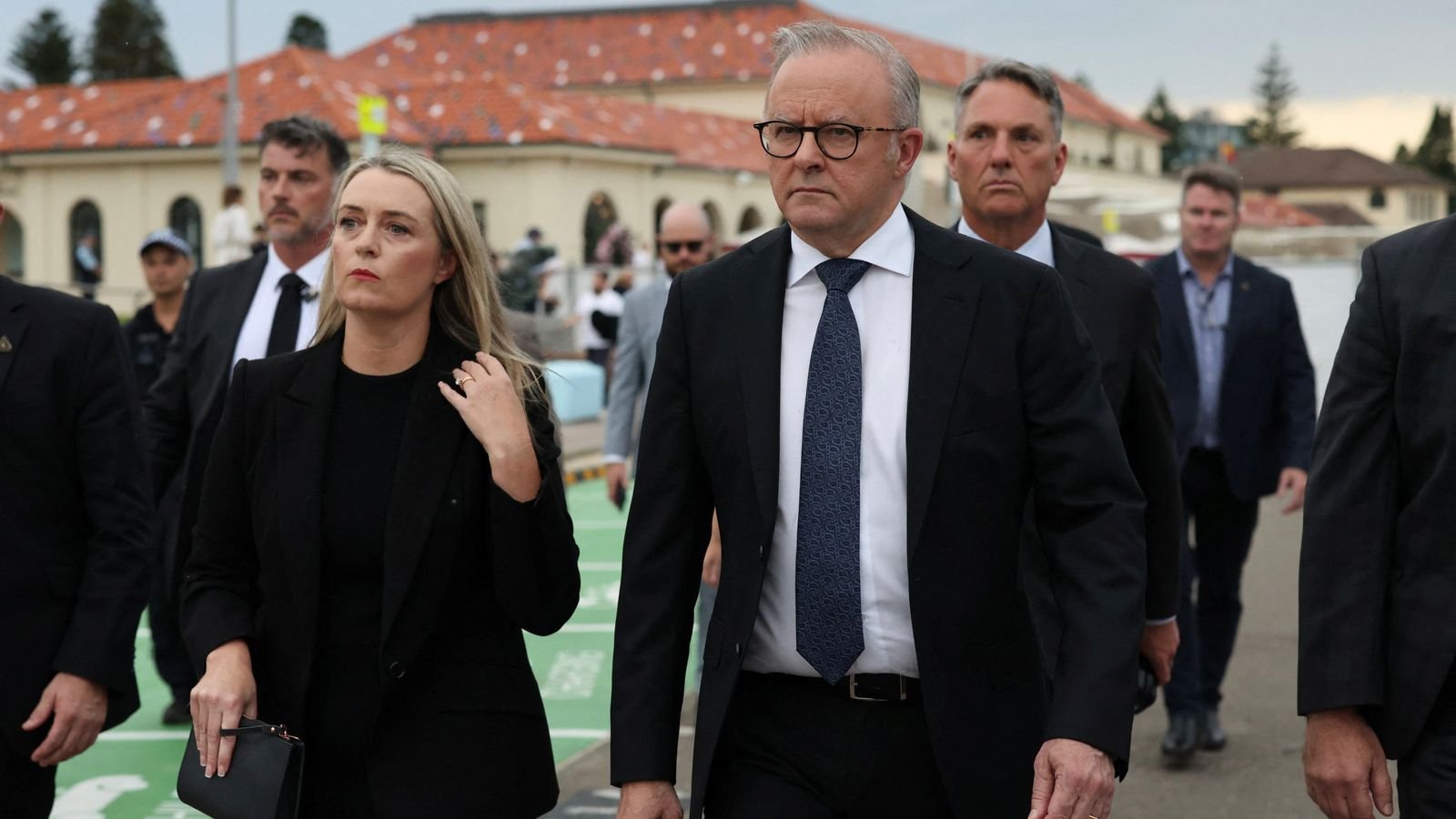
Australia Initiates Review of Security Agencies After Bondi Beach Shooting
Following a harrowing gun attack at Bondi Beach, Australia’s Prime Minister, Anthony Albanese, has announced a comprehensive review of the nation’s police and intelligence agencies. This decision comes just over a week after the incident, which resulted in multiple fatalities and raised significant concerns about public safety and security protocols.
Review Underway
Prime Minister Albanese stated that the forthcoming review, which will be led by a former head of the country’s intelligence services, aims to evaluate whether the existing powers, structures, processes, and collaboration frameworks among federal police and intelligence bodies are adequate to protect Australian citizens.
This review has been prompted by the recent tragic events at Bondi Beach, where a shooting by two gunmen claimed lives and left others injured. In tribute to the victims, Australians have been encouraged to light candles in remembrance.
Vigil and Solidarity Event
A memorial event is set to take place at Bondi Beach, where police have indicated that they will maintain a substantial presence, including officers armed with rifles. A minute’s silence was also observed at 6:47 PM local time to honour those affected by the violence.
Earlier in the week, a mass gathering saw approximately 700 individuals on paddle boards and surfboards form a large circle in the water, symbolising unity and support for the victims.
Addressing Security Gaps
The Bondi Beach attack has highlighted significant shortcomings within the gun licensing assessment process and the need for improved information exchange among various agencies. Politicians have voiced their commitment to addressing these deficiencies.
In an effort to bolster gun control, Albanese has introduced a nationwide buyback initiative, although experts have noted that the country’s gun laws, whilst being among the strictest globally, remain susceptible to exploitation. Officials suspect that the assailants were influenced by extremist ideologies linked to Islamic State.
Political and Social Implications
Albanese has faced mounting pressure from critics who argue that his government has not adequately addressed rising antisemitism, particularly since the outbreak of conflict in Gaza. In response to the attack, the Prime Minister has pledged to enhance hate crime legislation.
On a state level, the New South Wales government plans to introduce a bill prohibiting the display of symbols associated with terrorist organisations, including those of Islamic State, Hamas, and Hezbollah, amid ongoing investigations linked to the attackers.
One suspect, identified as 50-year-old Sajid Akram, was fatally shot by police at the scene, while his son Naveed Akram, aged 24 and also wounded during the altercation, remains in custody facing multiple charges, including murder and terrorism.
Conclusion
This incident and its aftermath underscore the ongoing challenges Australia faces regarding public safety, national security, and the prevention of extremism. As the review of security agencies commences, the outcomes will be critical in shaping the future landscape of law enforcement and counter-terrorism efforts in Australia.
Background
This tragic event comes against a backdrop of increasing scrutiny concerning the effectiveness of Australia’s security measures, particularly in relation to domestic terrorism. The government’s response will likely influence public confidence in safety protocols and the management of radical ideologies within the country.
Source: Original Article






