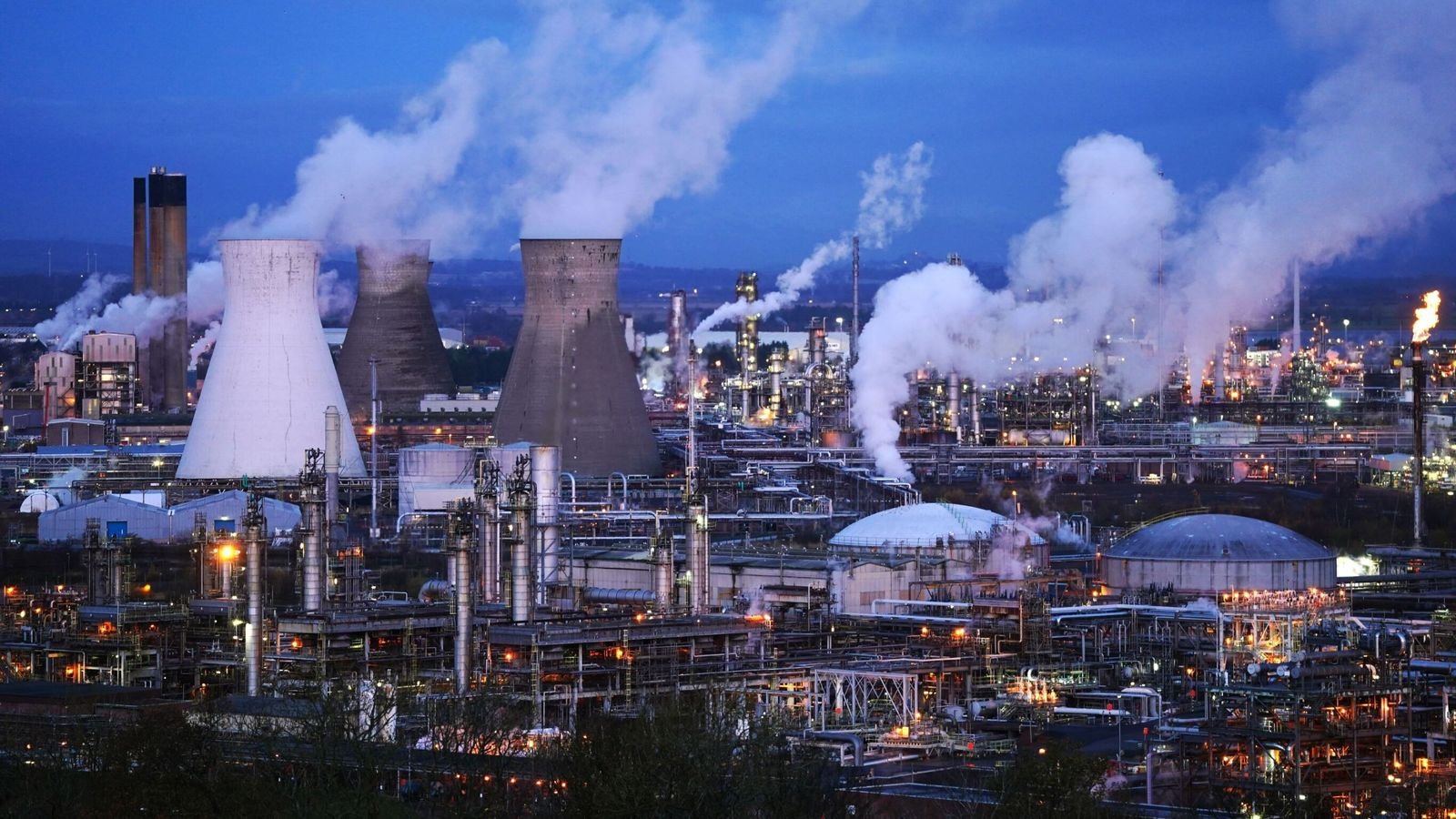
Government Allocates £120m Bailout to Grangemouth Chemical Plant
The UK government has confirmed a financial assistance package exceeding £120 million for the Grangemouth chemical plant in Scotland, a critical component of the nation’s industrial framework. This decision comes at a time when the plant’s operator, INEOS, is considering closing its ethylene cracker, which has raised concerns about job losses and the impact on the wider chemicals sector.
Importance of Grangemouth and Ethylene Production
Grangemouth plays a pivotal role in the UK’s chemicals supply chain, primarily through its production of ethylene, a vital precursor for numerous everyday products. Used in the creation of materials like polyethylene and PVC, ethylene serves as a fundamental building block in the manufacturing of a wide range of items. The plant itself converts North Sea oil and gas into ethane and subsequently cracks it to produce ethylene, supplying this essential chemical to various facilities across the country.
The Pipeline Network
Notably, Grangemouth is linked to an extensive UK Ethylene Pipeline System that connects significant chemical manufacturing sites. This infrastructure includes essential production facilities in Cheshire and Teesside, and Grangemouth serves as the final operational link after the closure of other key plants like Wilton and Mossmorran. The interconnectedness of this network underscores the potential implications of a plant closure, which could resonate well beyond local job losses.
Job Security Concerns
The potential impact of Grangemouth’s closure is substantial; estimates suggest it could jeopardise around 500 direct jobs while triggering a secondary wave of job losses throughout the network, potentially affecting over a thousand positions in total. With the chemicals sector already facing challenges, the closure would exacerbate existing economic concerns.
Recent Government Interventions
This bailout is part of a broader trend of government intervention aimed at stabilising vital sectors within the economy. Earlier this year, significant funds were injected into British Steel and other manufacturing entities such as Tata Steel and Jaguar Land Rover amid various crises. However, critics argue that these actions reflect a reactive rather than a well-coordinated industrial strategy.
Future Challenges
Despite the immediate relief offered by the bailout, the broader issues facing the UK’s chemicals industry remain unresolved. A notable decline—over 20%—in economic output has been reported in the sector over the past three years, driven in part by high energy costs and regulatory hurdles, leading to hesitancy in investment and expansion.
Background
The chemicals sector has historically been a cornerstone of the UK economy, but a series of closures and economic challenges have raised alarms about its sustainability. As the crisis continues, the future of the Grangemouth plant and the wider implications for the industry remain to be seen, with further developments expected as companies navigate this turbulent landscape.
Source: Original Article