Investment in AI Sparks Concerns Over Market Sustainability
The escalating interest in artificial intelligence (AI) continues to dominate markets, despite recent declines in the valuations of key players like Nvidia and Oracle. At present, a significant portion of returns in the US stock market is heavily reliant on a limited number of AI-focused stocks, raising concerns about the potential for a market bubble.
AI’s Market Impact
Currently, about 75% of the returns from the S&P 500 index stem from just 41 AI-related companies. The so-called “magnificent seven” companies—Nvidia, Microsoft, Amazon, Google, Meta, Apple, and Tesla—alone contribute to 37% of the S&P’s overall performance. While these numbers illustrate a thriving AI market, there are emerging fears that such concentrations in a singular sector may not be sustainable.
Nvidia’s Perspective
Jensen Huang, the CEO of Nvidia and a prominent figure in the AI sector, recently asserted that fears of an impending market bubble are unfounded. He indicated in an interview that the industry still has a long way to go before experiencing significant downturns. However, not all experts share this optimistic outlook.
Investor Anxiety
Gary Marcus, an AI scientist and emeritus professor at New York University, cautions that excessive investment focused primarily on large language models—areas that have yet to deliver significant profits—may be unsettling for investors. He voiced concerns about the broader economic implications should the AI bubble burst, warning that extensive economic fallout could ensue, potentially leading to bank failures and taxpayer bailouts.
Warnings of Overinvestment
With extensive spending projected in the AI space, the landscape appears precarious. Major companies like Microsoft, Amazon, Google, and Meta are estimated to spend around $1 trillion on AI by 2026. In comparison, OpenAI, known for its groundbreaking model ChatGPT, plans to invest $1.4 trillion over the next three years. However, anticipated profits remain starkly low, with OpenAI expecting to generate profits of just over $20 billion by 2025.
Infrastructure Challenges
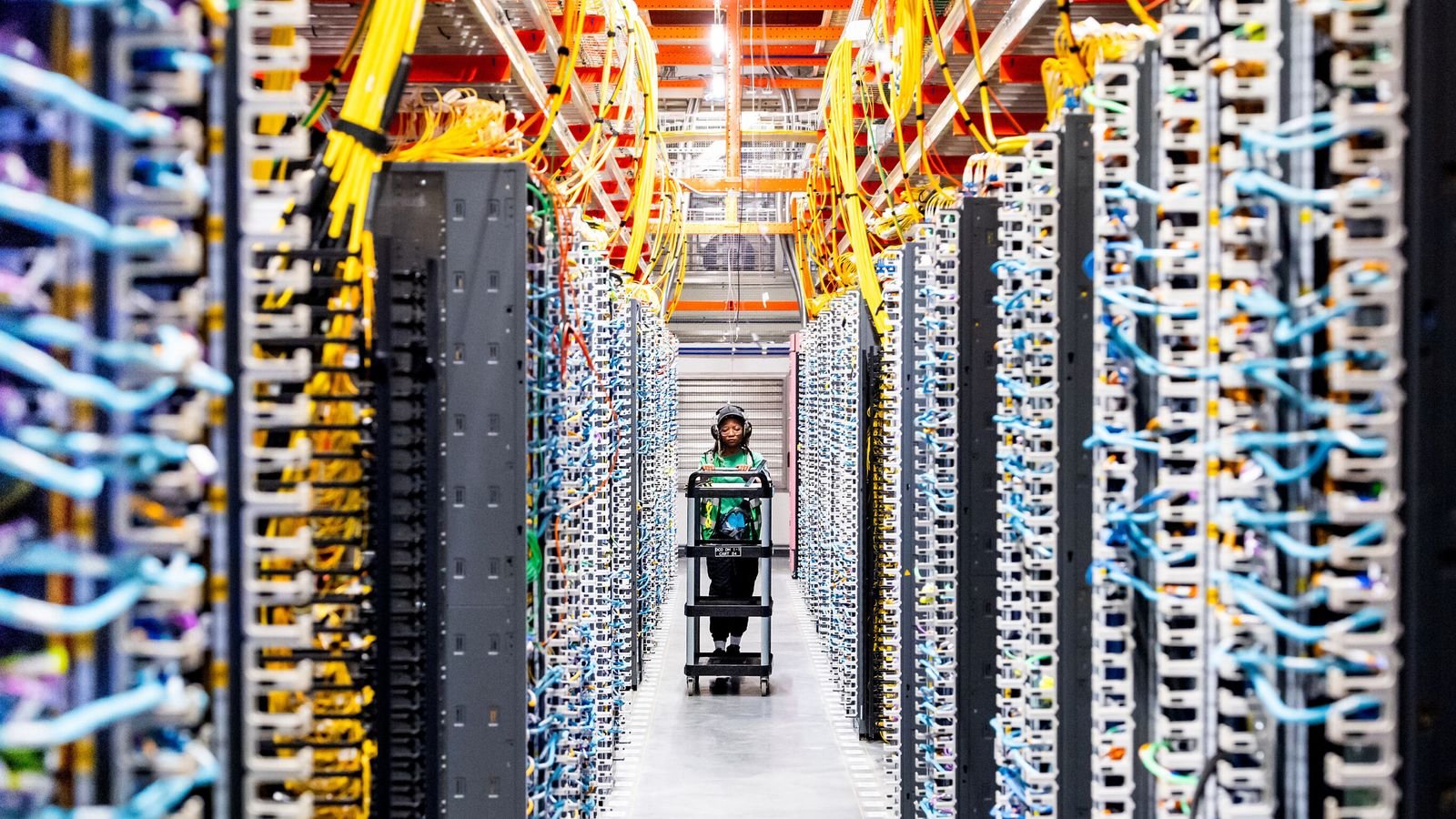
The infrastructure needed to support AI development is not only costly but also evolving rapidly. The release of advanced models, such as OpenAI’s GPT-4, represents a substantial leap in capabilities, necessitating increasingly powerful data centres and chips. These require not only monumental power but also frequent upgrades, presenting investors with uncertainties concerning depreciation and future returns.
Market Preparations
The rapid growth of data centres is further straining energy resources, particularly in the United States, where some facilities have faced delays in securing necessary grid connections. Despite financial muscle allowing firms like Microsoft and Google to potentially build their own power resources, investors still grapple with fundamental questions: Will these investments yield sufficient financial returns?
Return on Investment Questions
The fundamental concern remains that while AI technologies are becoming part of daily life for many—from students using AI for homework to businesses looking for automation solutions—the question of how these innovations will generate revenue on a scale that justifies the enormous investments hangs heavy. Research indicates that although many companies are currently piloting AI, commercial adoption has not fully taken off, particularly among larger businesses.
Expert Predictions
Many experts assert that the ongoing investments lack a solid basis for long-term profitability. According to Prof. Marcus, the astronomical spending on AI technologies, coupled with minimal immediate profits and high depreciation rates, puts the entire enterprise at risk. If the current trajectory continues, a significant market correction may be unavoidable, leading to a re-evaluation of investment strategies surrounding AI.
Background
The AI boom gained momentum following the release of OpenAI’s advanced models, which marked a significant step forward in AI capabilities, yet challenges surrounding revenue generation and market sustainability persist. The ongoing conversation about whether the current hype will translate into lasting economic benefits continues to play a critical role in how stakeholders perceive the future of the burgeoning AI market.
Source: Original Article