























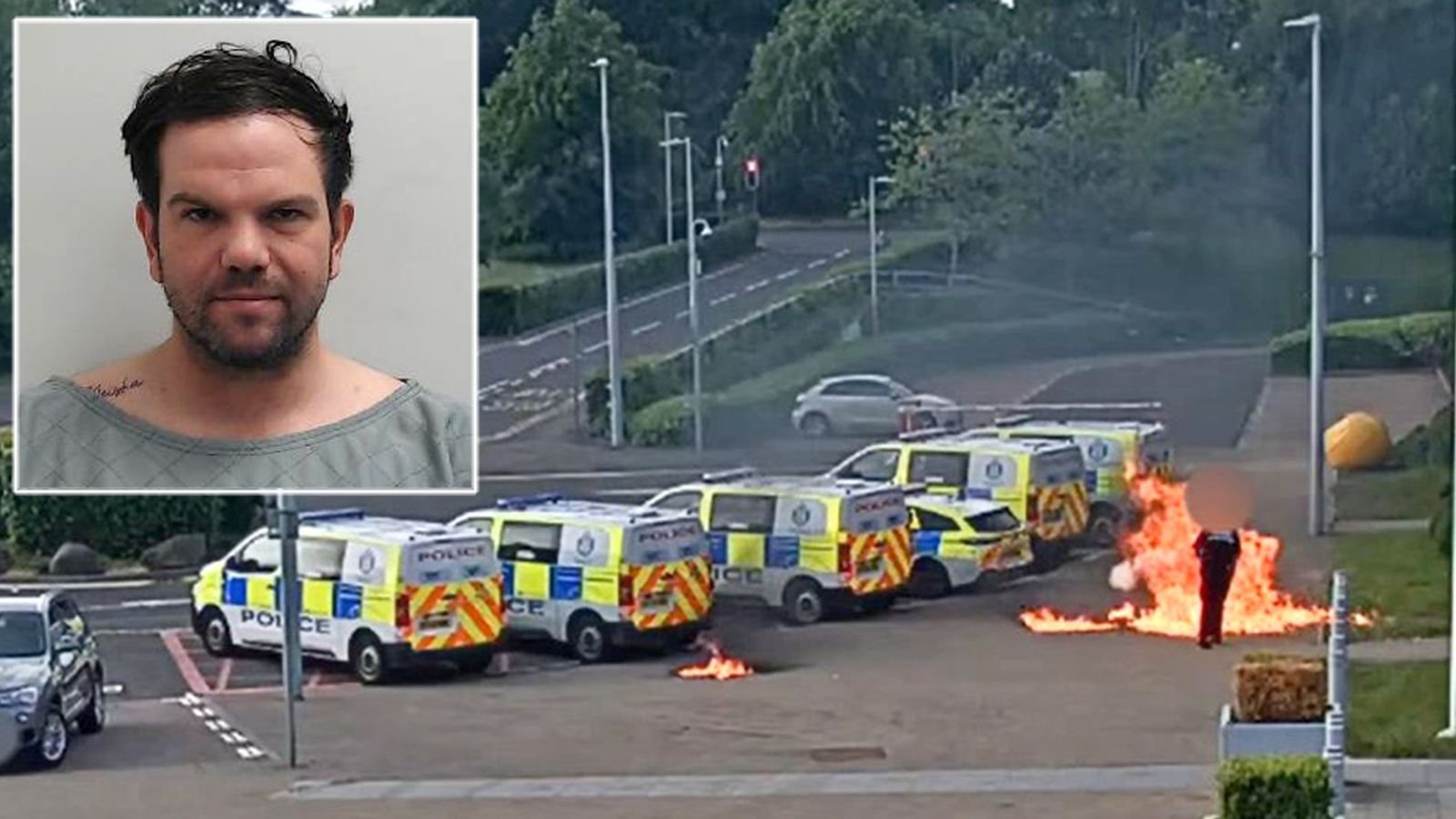
A Veteran Sentenced for Petrol Bomb Attack on Police Station
Jamie Taylor, a 34-year-old veteran of the British Army, has been sentenced to three-and-a-half years in prison following a petrol bomb attack on a police station in Livingston, West Lothian. The incident, which occurred on 30 May last year, involved Taylor throwing three Molotov cocktails at police vehicles parked outside the station, endangering the lives of officers present.
The Attack
According to court proceedings, Taylor had communicated with his mother prior to the attack, expressing his intent to “blow up” the police station using a “bag full of vodka bottles filled with petrol.” Surveillance footage captured Taylor’s actions, with two of the improvised explosives failing to hit their target but exploding on the ground, while a third ignited dangerously close to Police Constable Kirsty Forsyth as she attempted to extinguish the flames.
Court Proceedings and Sentencing
During the trial held at the High Court in Edinburgh, Taylor pleaded guilty to multiple offences, including breaches of the Explosives Act and acting recklessly towards Constable Forsyth. He was sentenced at the High Court in Stirling, where the judge, Lady Ross, also imposed a 12-month supervision order alongside the prison term.
Prosecutor Wojciech Jajdelski noted that following the attack, Taylor was apprehended by police and was discovered nearby, emitting a strong odour of fuel. Lady Ross remarked on the serious nature of Taylor’s actions, acknowledging that although he did not intend to target Constable Forsyth directly, he had placed her in considerable danger.
Context of the Incident
The court heard about Taylor’s troubling background, including a history of military service that had left him with complex post-traumatic stress disorder (PTSD) after deployments in Afghanistan. Lady Ross recognised Taylor’s service but emphasised the need for accountability given the severity of his actions.
Defence solicitor advocate Iain McSporran highlighted that Taylor’s mental health issues contributed significantly to his behaviour, asserting that this was not a targeted assault against officers but rather a reaction influenced by his personal circumstances and history. Taylor had struggled following his military career, facing the loss of his relationship and employment due to his criminal past.
Reactions and Consequences
Inspector Lindsey McIntyre described the event as a “terrifying incident” and condemned the recklessness involved in such behaviour. She affirmed every officer’s right to return home safely after their shifts, stressing that no one should be targeted while fulfilling their duties.
Background
This case shines a light on the broader issues of mental health among veterans and their reintegration into civilian life. Taylor’s actions, stemming from psychological trauma and grievances with law enforcement, demonstrate the complex challenges faced by those transitioning out of military service. Moreover, it raises questions about the societal support systems in place for individuals struggling with similar afflictions.
Source: Original Article






