Trump’s Bold Statement on Venezuelan Oil Sparks Controversy
Donald Trump has asserted that the United States plans to effectively control Venezuela until a political transition occurs, capitalising on the country’s extensive oil reserves to sell to international markets. This declaration follows the recent capture of Venezuelan President Nicolas Maduro and his spouse, raising questions about the future of the South American nation’s oil industry.
Massive Investment in Infrastructure
During a briefing with journalists, Trump indicated that “major” American oil companies are poised to invest billions in renovating Venezuela’s “badly broken infrastructure.” He claimed that US occupation would be financially supported through revenues generated from oil extraction, suggesting, “it won’t cost a penny.”
However, industry responses to Trump’s comments have been muted; currently, only Chevron maintains operations within Venezuela’s borders. The ongoing US embargo on Venezuelan oil further complicates any potential economic collaboration.
The Current State of Venezuela’s Oil Industry
Globally, Venezuela possesses the largest proven oil reserves, accounting for nearly 17% of the world’s total. Despite this, production has plummeted from a peak of 3.5 million barrels per day in the 1970s to just about 1.1 million barrels daily last year, reflecting a mere 1% of global output.
While the US used to be the primary consumer of Venezuelan oil, current sanctions have shifted that role to China. If access to Venezuelan oil is restored, analysts warn that substantial infrastructural investment—potentially in the tens of billions—would be necessary to rejuvenate the sector.
Why Venezuelan Oil Matters
Venezuela is central to the US oil strategy, as it is rich in heavy crude, which many American refineries require. Despite the US’s status as the leading oil producer, its reliance on imports of heavy oil continues, creating a dependence on trading partners like Venezuela, Canada, and Russia.
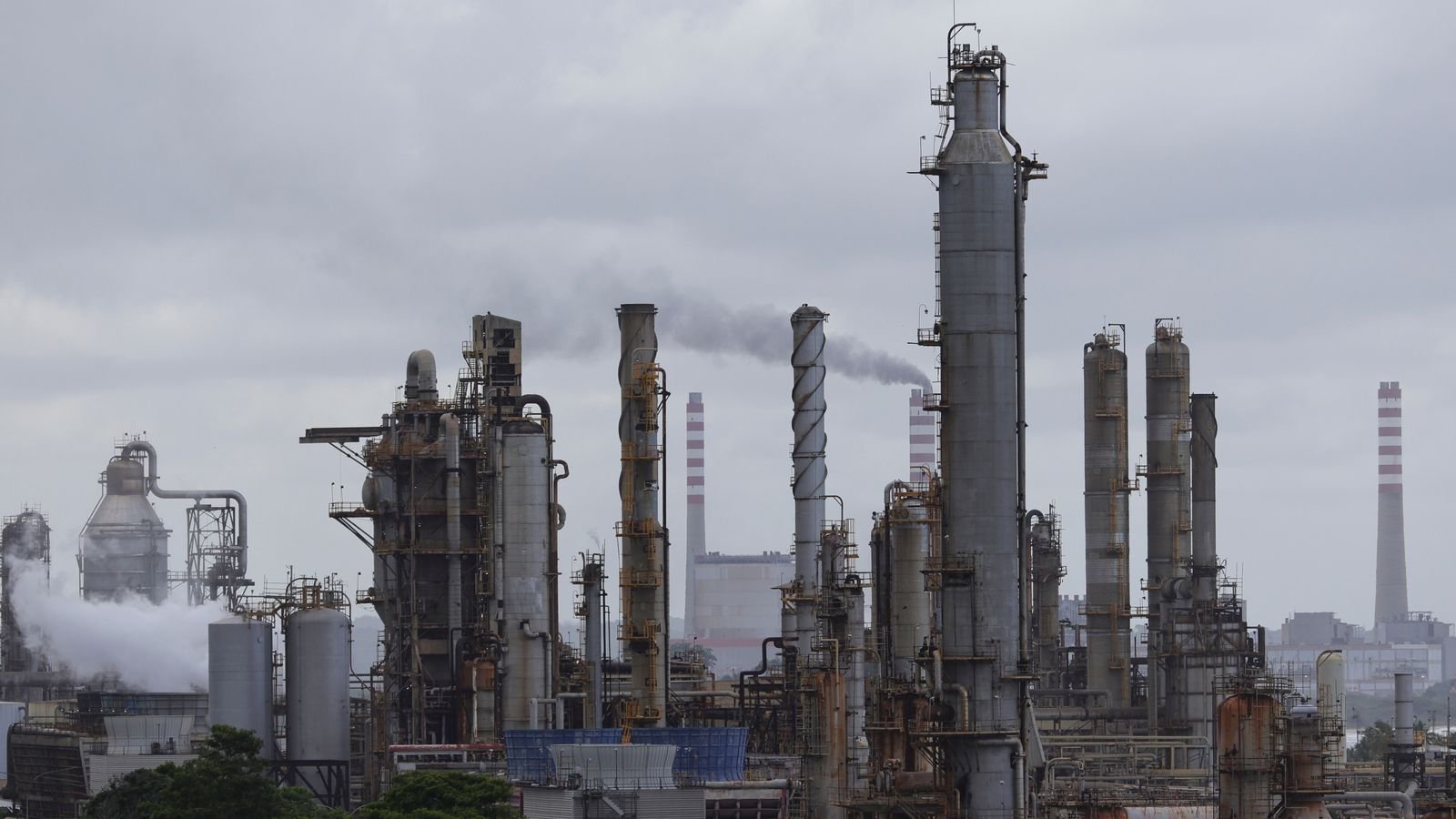
As laid out by economics and data editor Ed Conway, there are significant hurdles to refurbishing the Venezuelan oil industry, primarily due to a lack of investment and the dilapidated state of infrastructure resulting from years of mismanagement and economic turmoil.
Future of US-Venezuela Relations
The ramifications of Trump’s statement raise several questions regarding the future trajectory of US-Venezuela relations, especially considering the existing sanctions and the geopolitical stakes involved. Industry leaders from Chevron have reaffirmed their commitment to complying with laws while navigating potential new developments in this complex situation.
Background
Venezuela has been in political turmoil for several years, largely attributed to the leadership of Nicolas Maduro, who has faced widespread opposition and accusations of authoritarianism. The US has imposed several sanctions aimed at crippling the Venezuelan economy, leading to widespread humanitarian challenges. These conditions have made discussions around foreign intervention and exploitation of natural resources increasingly contentious.
As events develop in Venezuela, the international community will be watching closely, not only for their implications on US foreign policy, but also for the stability and welfare of the Venezuelan people.
Source: Original Article