US Military Strikes Raise Legal Concerns Amid Drug Trafficking Operations
In the latest US military operation targeting drug trafficking, four individuals were killed following the strike on an alleged narcotics vessel in the eastern Pacific Ocean. This incident marks the 22nd boat destruction linked to the US military’s ongoing efforts against drug trafficking, raising significant questions regarding the legality of such military actions.
Details of the Strike
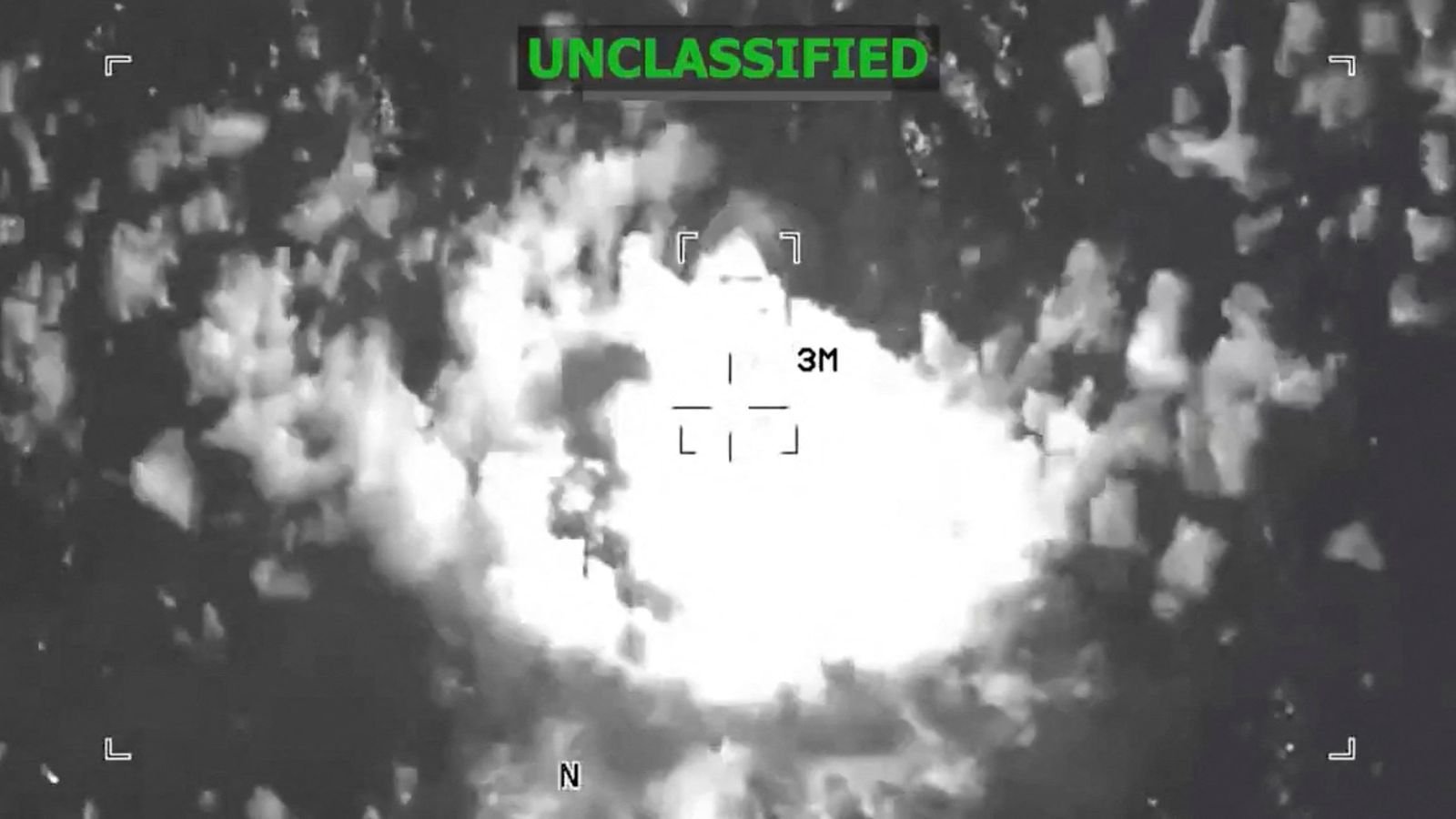
The attack occurred on Thursday, following a hiatus of almost three weeks since the last military action. According to the US Southern Command, the casualties were described as “male narco-terrorists” and were reportedly found on a vessel identified as carrying illegal narcotics along a known trafficking route.
Visual evidence from the strike captures the small boat just before it was hit, witnessing explosions that led to flames and smoke engulfing the vessel.
Context of America’s War on Drugs
Since the onset of Donald Trump’s administration, at least 87 individuals have lost their lives in operations aimed at combatting what has been portrayed as a significant narco-trafficking threat originating from Venezuela. The Venezuelan government, led by President Nicolas Maduro, has consistently refuted any claims linking them to drug trade activities.
Growing Investigations into Military Tactics
A separate investigation has been initiated in Washington, scrutinising the first strike against a drug boat that occurred earlier this month. Allegations surfaced claiming that Admiral Frank “Mitch” Bradley issued an order to target survivors of that strike, following directives from Defence Secretary Pete Hegseth to “eliminate the threat.”
During recent briefings, Admiral Bradley denied these claims while maintaining that the decision to sink the vessel was justifiable. However, President Trump indicated his lack of prior knowledge regarding the follow-up strike and suggested that he would not have approved such an action.
Legal and Ethical Concerns
Legal analysts are increasingly questioning the permissibility of attacking individuals who survive such strikes. According to the Defence Department’s Law of War Manual, targeting incapacitated or shipwrecked individuals violates established military laws, unless they pose an active threat. This has led to assertions that some military directives could be classified as “clearly illegal.”
Democrats have expressed serious concerns regarding the nature of these military operations. Representative Jim Himes voiced his disquiet after viewing footage of the recent briefings, emphasising the distress experienced by survivors who were rendered helpless by the attacks.
Background
The trend of using military strikes to combat drug trafficking has escalated notably under recent administrations, with debates surrounding their legality becoming more pronounced. Concerns have been exacerbated by the high fatality rates and reports of military actions that may contravene established laws governing warfare.
This ongoing situation not only highlights internal US policies but also underscores the broader implications for international relations, particularly with nations like Venezuela that have been accused of facilitating drug trafficking. The complexity of the issue continues to prompt discussions about moral and legal responsibilities in military engagement.
Source: Original Article