























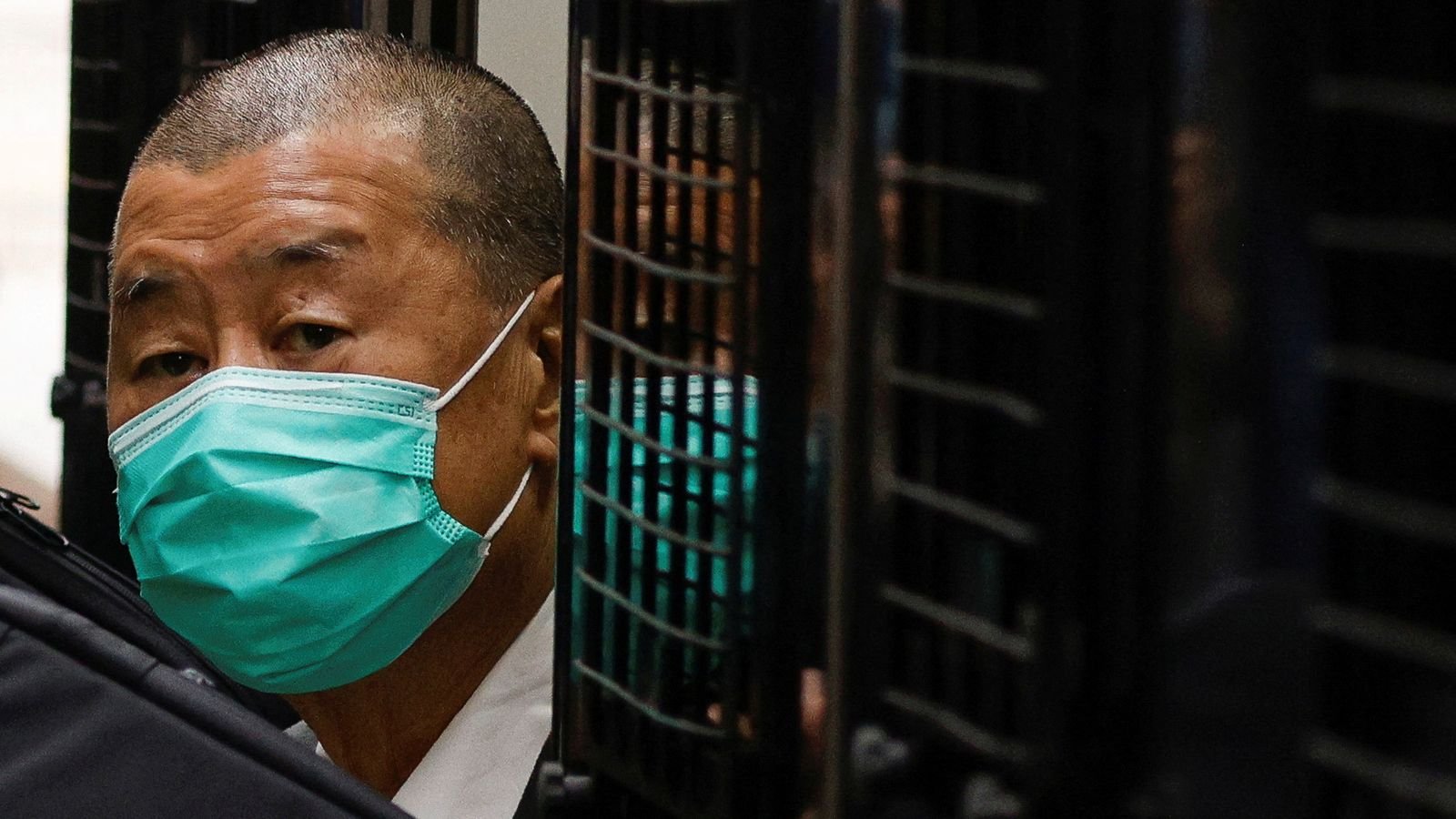
Hong Kong Leader Defends 20-Year Sentence of Pro-Democracy Activist
The Chief Executive of Hong Kong, John Lee, has praised the 20-year prison sentence given to British pro-democracy advocate Jimmy Lai. He claimed that Lai’s actions had “poisoned” the city, dismissing rising criticism from Western nations, including the UK, after Lai’s sentencing was announced.
Details of the Sentencing
Jimmy Lai, aged 78, was sentenced after being convicted of multiple charges, including conspiracy to work with foreign entities and publishing materials deemed seditious. Lai, who has consistently denied the allegations, describes himself as a “political prisoner” subjected to Beijing’s persecution. His son, Sebastien, characterized the ruling as effectively a “death sentence” given the severity of the term imposed.
International Backlash and Political Response
In the wake of the sentencing, the UK government faced calls to address Lai’s situation directly with Chinese President Xi Jinping during a recent visit to China. Sir Keir Starmer, leader of the Labour Party, was notably urged to raise the issue but opted for a more diplomatic approach, focusing on strengthening economic ties instead.
Foreign Secretary Yvette Cooper expressed severe concerns regarding the politically charged nature of Lai’s trial and highlighted her worries about his health during incarceration. While Western nations have condemned the ruling, the Chinese government remains resolute. In a statement, the Chinese embassy in London described Cooper’s comments as inaccurate and accused the UK of meddling in its judicial matters.
Beijing’s Security Law and Its Implications
The situation follows the release of a white paper by the Chinese government, which aims to bolster the stringent national security law used to stifle dissent in Hong Kong. This law has been frequently criticized for curbing free speech and targeting activists. Lee welcomed the publication of the white paper, stating that Lai’s sentencing serves as a “solemn warning” against actions that could jeopardize national security.
Background
This legal action against Jimmy Lai is part of a wider crackdown on pro-democracy voices in Hong Kong, which included extensive protests in 2019 against perceived encroachments on freedoms. Lai, founder of the now-defunct Apple Daily newspaper, has been a long-standing critic of the Chinese Communist Party, thus becoming a symbol of resistance for many.
The developments surrounding Lai’s case are indicative of the strained relations between the UK and China since the handover of Hong Kong in 1997, raising important questions about human rights and democratic freedoms in the region.
The Future of Activism in Hong Kong
As international criticisms mount, many observers speculate on the implications of Lai’s ruling for the future of activism in Hong Kong. With the Beijing regime tightening its grip, the city’s pro-democracy movement faces an uncertain path ahead, leaving the global community to watch closely.
Source: Original Article






