























Marines Rescue Stranded Climber on Ben Nevis
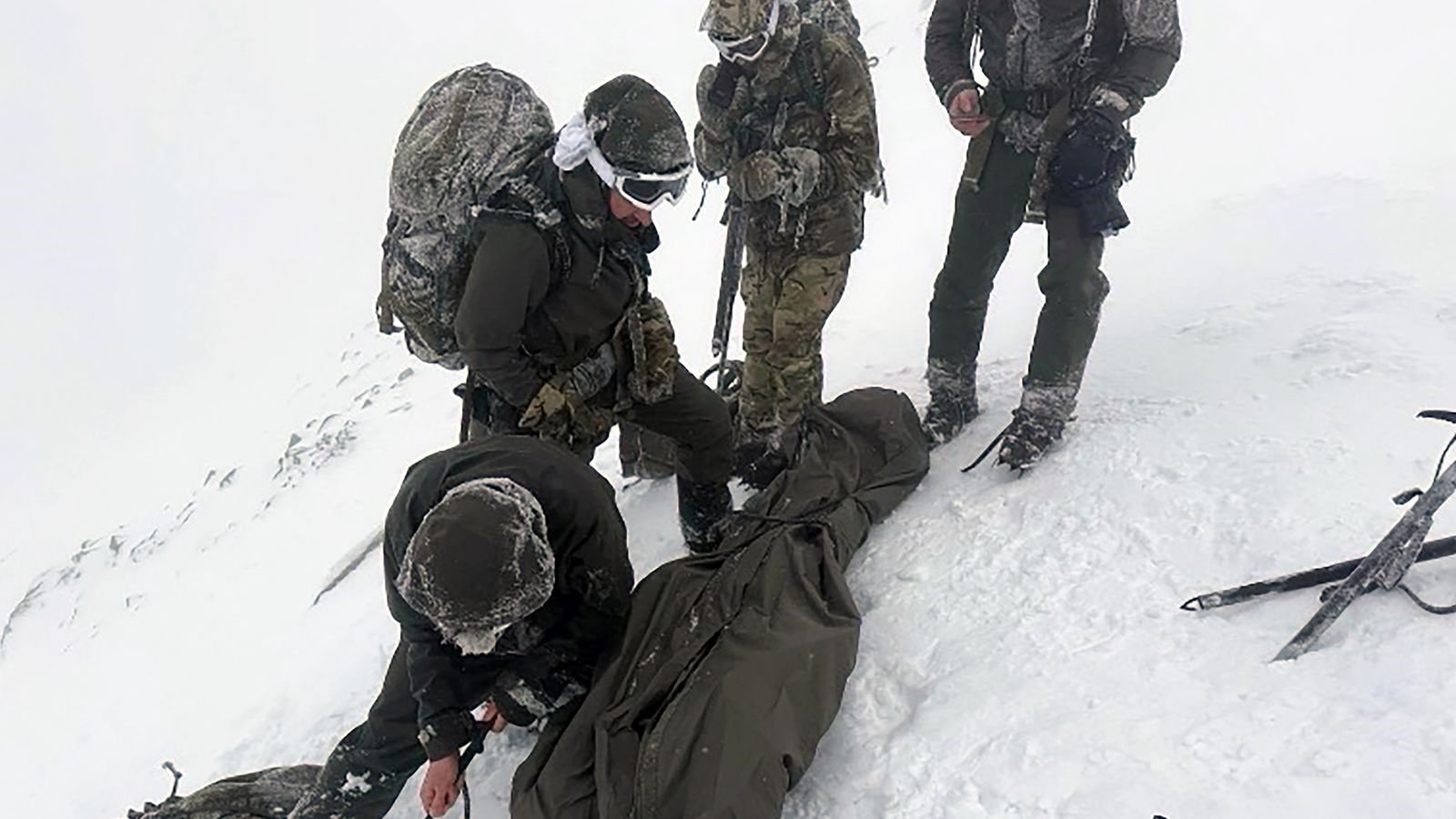
On January 24, 2023, a team of marines conducted a life-saving rescue of a climber trapped on Ben Nevis, Scotland’s highest peak, amid extreme weather conditions. Operating under freezing temperatures and a blizzard, the two-member rescue squad, comprising members of the Scottish Royal Marine Reserves and the Dutch Korps Mariniers, found the climber vulnerable to exposure near the mountain’s summit.
Rescue Operation
The climber was discovered in a precarious state, curled up in the snow, showing clear signs of hypothermia and fatigue due to long exposure. Colour Sergeant McKenzie of the Royal Marine Reserves reported that evident ice formations had developed on the climber’s gear, indicating a significant period spent in the extreme cold. The climber had become separated from his friends and was unaware of their whereabouts.
According to the marines, the wind gusts at the peak were estimated at around 40 mph, creating a chilling effect that could drop temperatures to between -15°C and -20°C. This posed serious risks for anyone caught in such conditions.
Challenges During the Rescue
To expedite the rescue, two Dutch marines assisted the climber by supporting his arms, which improved his stability, though it also complicated their movement. As they progressed down the mountain, the team faced challenges with their equipment as several crampons came loose, necessitating frequent pauses to secure them. During one of these stops, the climber’s condition worsened significantly; he began to show impaired coordination and limited mobility, a clear indication of hypothermia.
Improvised Stretcher and Safe Descent
Recognising the urgency of the situation, the marines improvised a stretcher using available materials, including a bivvy sack, ropes, and a mat. They successfully transported the climber to safety, preventing a potentially fatal outcome. Sergeant Onno Lankhaar, the section commander for the Dutch marines, stated, “If we hadn’t seen him, he certainly would not have survived.”
Conclusion of the Rescue
After reaching the snowline, the climber had sufficiently regained some strength to walk on his own. The marines handed him over to the emergency services for further evaluation to ensure his safety.
Background
The incident underscores the significant risks associated with mountain climbing in adverse weather conditions, particularly in Scotland, where sudden weather changes can be perilous. The successful rescue highlights the effectiveness of collaborative efforts between military rescue units, underscoring their training and readiness in emergency situations.
Source: Original Article






