























Palestine Action’s Legal Challenge Against Government Ban Begins at High Court
The High Court has commenced a significant judicial review regarding the government’s decision to designate Palestine Action as a proscribed terrorist organization. On the first day of the three-day proceedings, lawyers representing the group argued that their actions are akin to historical civil rights movements, including the suffragettes, and questioned the legality of the government’s ban.
Arguments Presented in Court
During the hearing, Raza Husain KC, representing Palestine Action co-founder Huda Ammori, contended that the suffragette movement would have faced similar restrictions under current laws. The group has previously been implicated in actions that resulted in considerable damage to defense contractors, leading to its proscription by former Home Secretary Yvette Cooper.
Husain emphasized that such a ban is unprecedented, highlighting that no other direct action organization advocating for non-violence has been classified as terrorist under the UK’s Terrorism Act. He stated, “Palestine Action is the first direct action civil disobedience organisation that does not advocate for violence ever to be proscribed as terrorist.”
Public Response
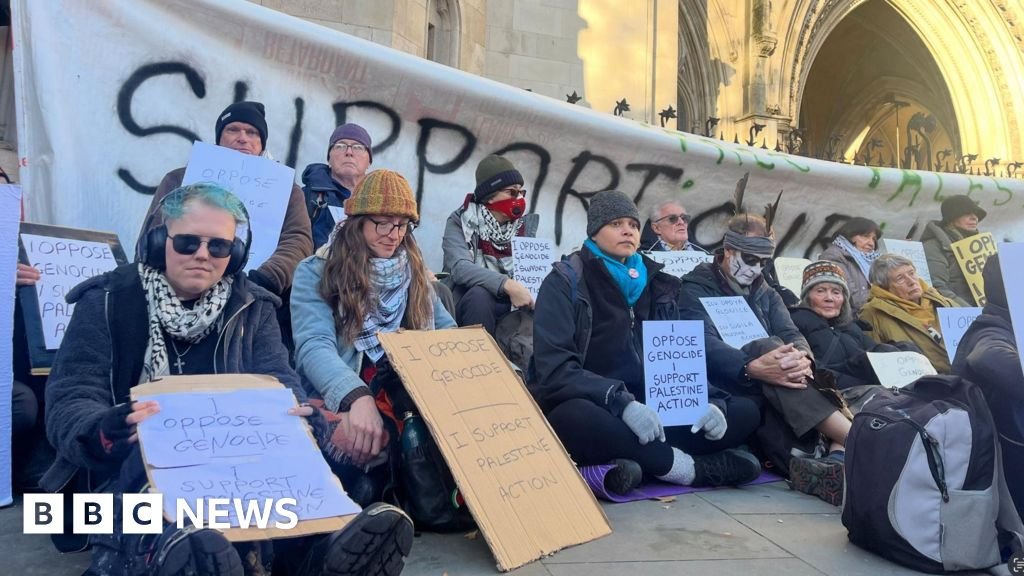
Around 200 demonstrators gathered outside the High Court to express their support for Palestine Action, many of them holding placards that read, “I oppose genocide, I support Palestine Action.” The police reported that 143 individuals were arrested for showing support for the group, which has seen over 2,200 arrests nationwide since its ban was enforced.
Key Legal Challenges
Ammori’s legal team argues that the proscription unlawfully infringes upon the right to free expression and assembly. They assert that the then-Home Secretary failed to adequately consult with Palestine Action or consider the implications of such a ban, which they argue must be proportionate to the actions involved.
Owen Greenhall, another member of the legal team, claimed that the wide scope of the ban had deterred legitimate protest activities against defense firms targeted by Palestine Action since its inception. He stated that potential demonstrators risked being perceived as affiliated with the group due to the severe restrictions.
Continuing Developments
The case is set to continue later this week, with the government’s legal representatives expected to respond to these challenges. They maintain that their decision to impose the ban was lawful, citing several incidents that warranted such an action under terrorism legislation.
Following a break, the court will reconvene for final submissions next Tuesday, which will include a closed hearing addressing national security concerns.
Background
The classification of Palestine Action as a terrorist organization has sparked significant debate about civil liberties in the UK. By comparing the group’s activities to historical movements for social change, this case raises substantial questions about the balance between national security and the right to protest.






