Demolition in Silwan Leaves Residents Homeless
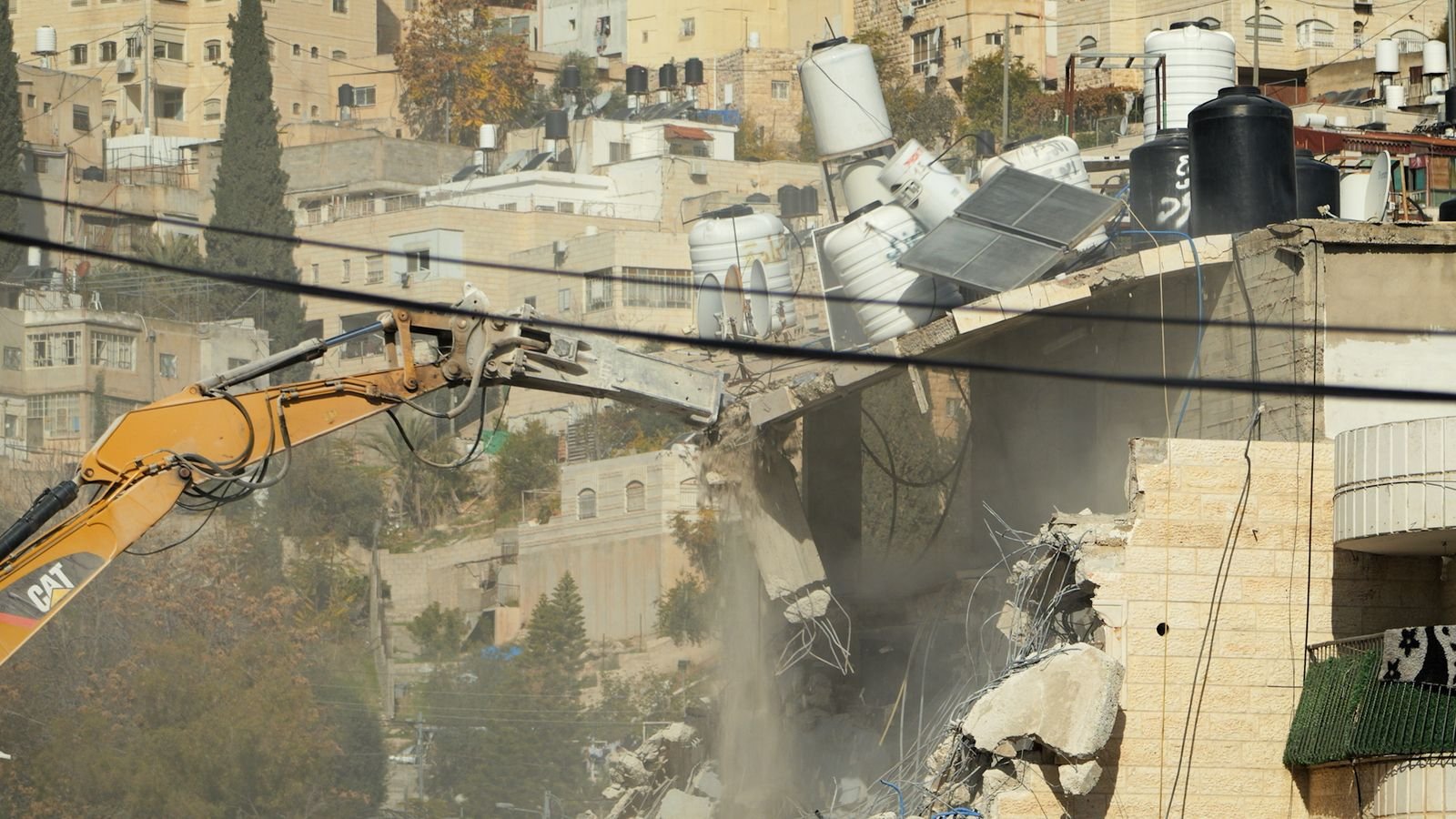
The demolition of a four-storey building in East Jerusalem’s Silwan neighbourhood has rendered around 100 people homeless, as Israeli authorities proceed with a campaign to remove perceived illegal structures. The event, which drew crowds of local residents, has sparked anger and frustration, particularly among those who feel abandoned by regional Arab nations.
The Incident
Local onlookers gathered as three diggers demolished the building at Wadi Qaddom, a well-known structure in the area. Israeli police cordoned off the streets, allowing residents to observe the destruction from various angles. The elderly residents expressed their outrage, with one woman vocally lamenting the lack of support from Arab countries, stating, “Where are the Arab countries? No one is here to help us.”
Details of the Demolition
This building was one of 230 structures demolished in East Jerusalem in 2025, recognised as the most significant among them, taking approximately 12 hours to complete the task. The Jerusalem Municipality clarified that the demolition was sanctioned by a court order from 2014, following refusals by residents to accept alternative arrangements offered to them.
Many of the demolished structures, including this block of flats, were erected without the necessary permits and were located on land classified as non-residential. While residents were in the process of challenging demolition orders, authorities moved in early morning to take action.
Controversy Over Planning Rights
According to Sari Kornish, an architect and urban planner from Bimkom, an Israeli NGO advocating for planning rights, the residents were inadequately accommodated during the planning process. Kornish stated that they were notified about the demolition and then given a mere six months to contest the decision—insufficient time, given the complexity of planning procedures.
Permit Challenges for Palestinians
Requests for building permits among Palestinians in East Jerusalem face significant obstacles, with Kornish noting a sharp decline in approvals since October 7. He asserted that systemic discrimination has long affected permit-granting practices.
The demolition was celebrated by far-right Israeli officials, including National Security Minister Itamar Ben-Gvir, who hailed the removal of “illegal buildings” and affirmed his commitment to the demolition policy. However, such actions raise complex questions under international law regarding Israel’s annexation of East Jerusalem and the West Bank.
Impact on Local Community
As a direct consequence of systemic demolitions, 500 Palestinians have lost their homes in East Jerusalem due to permit-related actions, with an additional 1,000 individuals, including numerous children, at imminent risk of eviction due to ongoing court cases initiated by settler organisations.
In Silwan’s Batn al Hawa area, community members like Zuhair al Rajabbi are left staring at the remnants of once-thriving homes, now marked by demolition sites. Al Rajabbi reflected on the harsh reality of neighbourhood disintegration, observing the slow transformation as settlers renovate these buildings, often accompanied by Israeli flags.
Background
The demolitions in East Jerusalem are part of a broader narrative involving the Israeli-Palestinian conflict, where issues of land use, legal rights, and housing remain highly contentious. The displacement of Palestinians through such demolitions continues to attract international scrutiny and raise ethical questions about settlement policies in occupied territories.
As demolition continues, the situation remains fluid, and calls for a more equitable resolution grow louder amidst the cries of the affected communities.
Source: Original Article