























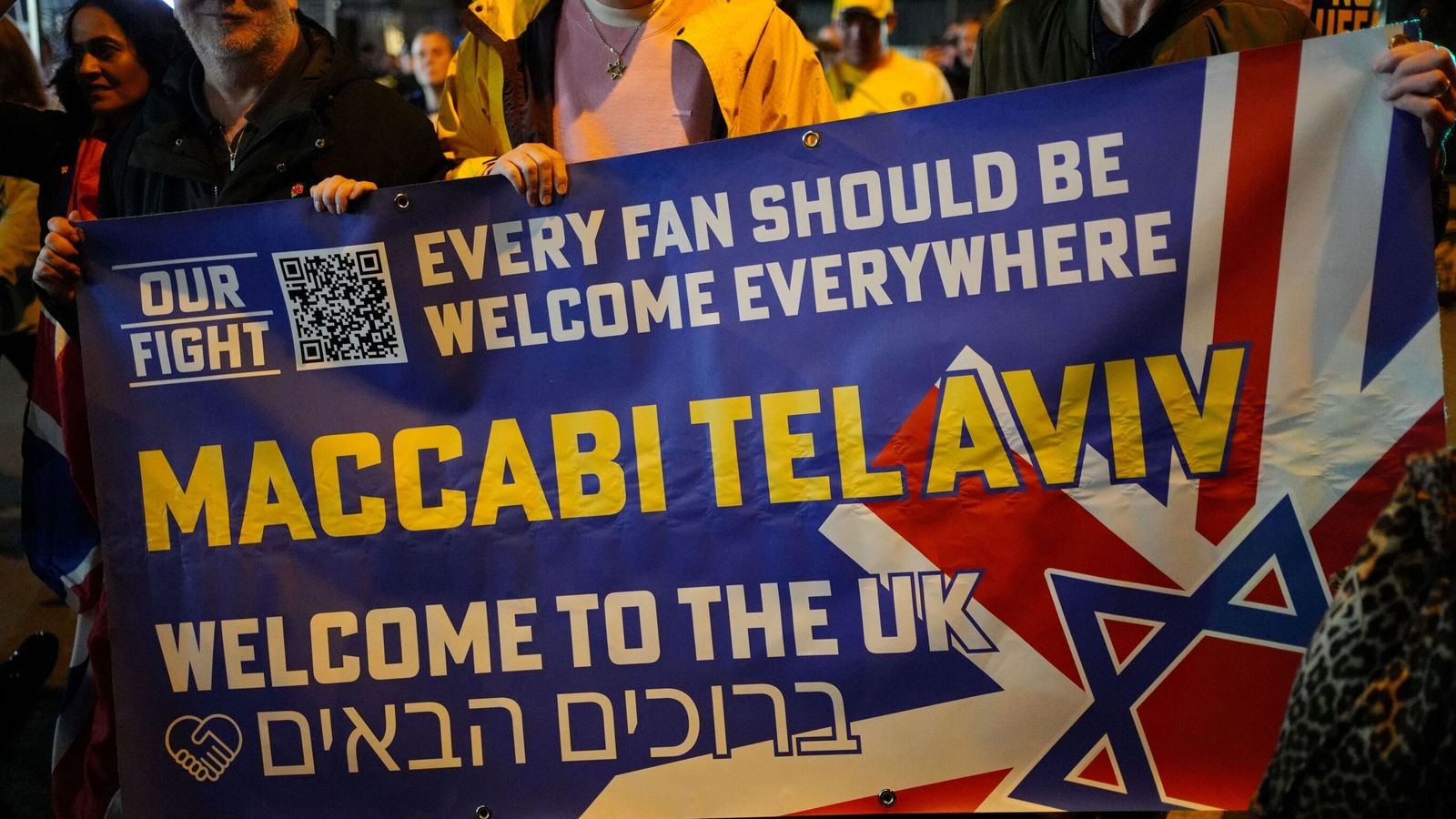
West Midlands Police Defends Decision to Ban Israeli Football Fans
West Midlands Police has firmly rejected claims that the recent decision to prohibit Israeli fans from attending a football match in Birmingham was driven by political influences. The force stressed that the choice to bar Maccabi Tel Aviv supporters from the Europa League clash against Aston Villa last November was a reasoned assessment focused on safety.
Details of the Ban
Israeli supporters were not allowed at the highly anticipated Europa League game at Villa Park on 6 November last year. This action drew widespread outrage from political figures across the spectrum, including strong criticism from the Prime Minister, who labelled the ban unacceptable.
During a session with the Home Affairs Select Committee, Chief Constable Craig Guildford stated that he believed there was no political influence impacting the decision. He stressed that all discussions and assessments conducted within the Safety Advisory Group (SAG) were focused on the information presented and the associated risks.
Police Response to Criticism
Asserting the integrity of the decision-making process, Guildford addressed the concerns raised, saying, “While I am sure there were local political pressures, I do not believe these influenced our decision.” He added that the Safety Advisory Group considered various viewpoints, but ultimately, the decision was based on operational requirements rather than external pressures.
Insufficient Evidence of Conspiracy
Police leaders assured MPs that they were not seeking justification for a ban. They maintained that the decision stemmed from an operational assessment of safety risks associated with the match. Conservative MP Karen Bradley indicated that the circumstances suggested a need to defend the ban, prompting concerns about the motivations behind it. Guildford categorically rejected this notion, expressing regret if the approach appeared misleading.
Assistant Chief Constable Mike O’Hara clarified that the police had valid intelligence indicating that certain local groups intended to target Maccabi fans with violence. He also noted that some individuals posing as Maccabi fans on social media were inciting local communities, further necessitating the police’s actions.
Concerns Over Representation of the Jewish Community
ACC O’Hara later addressed allegations about misrepresenting the views of the local Jewish community regarding the ban. Labour MP Joani Reid pointed out discrepancies in prior statements made by the police, claiming the ban had community support, which she stated was not the case.
O’Hara expressed regret over any misunderstanding caused and reiterated the commitment to strengthen relations with the Jewish community. “It was never my intention to misrepresent,” he stated, acknowledging his disappointment upon learning of the confusion caused by previous discussions.
Political Fallout
Following the committee meeting, Conservative leader Kemi Badenoch described Chief Constable Guildford’s position as “untenable.” In a statement shared on social media platform X, she accused West Midlands Police of yielding to extremist pressures and misrepresenting the situation to Parliament. Badenoch’s comments highlight ongoing tensions surrounding the handling of community safety and political perceptions in the UK.
Background
This incident occurred in a climate of heightened community tensions and fears, particularly surrounding events deemed politically charged. The Safety Advisory Group, responsible for assessing the safety of public events, includes representatives from various sectors, including police and local councils, reflecting the collaborative nature of such decision-making.
The fallout from the decision to ban Maccabi Tel Aviv fans underscores ongoing discussions about community safety, political dynamics, and the role of law enforcement in ensuring both security and fair treatment for diverse groups.
Source: Original Article






