























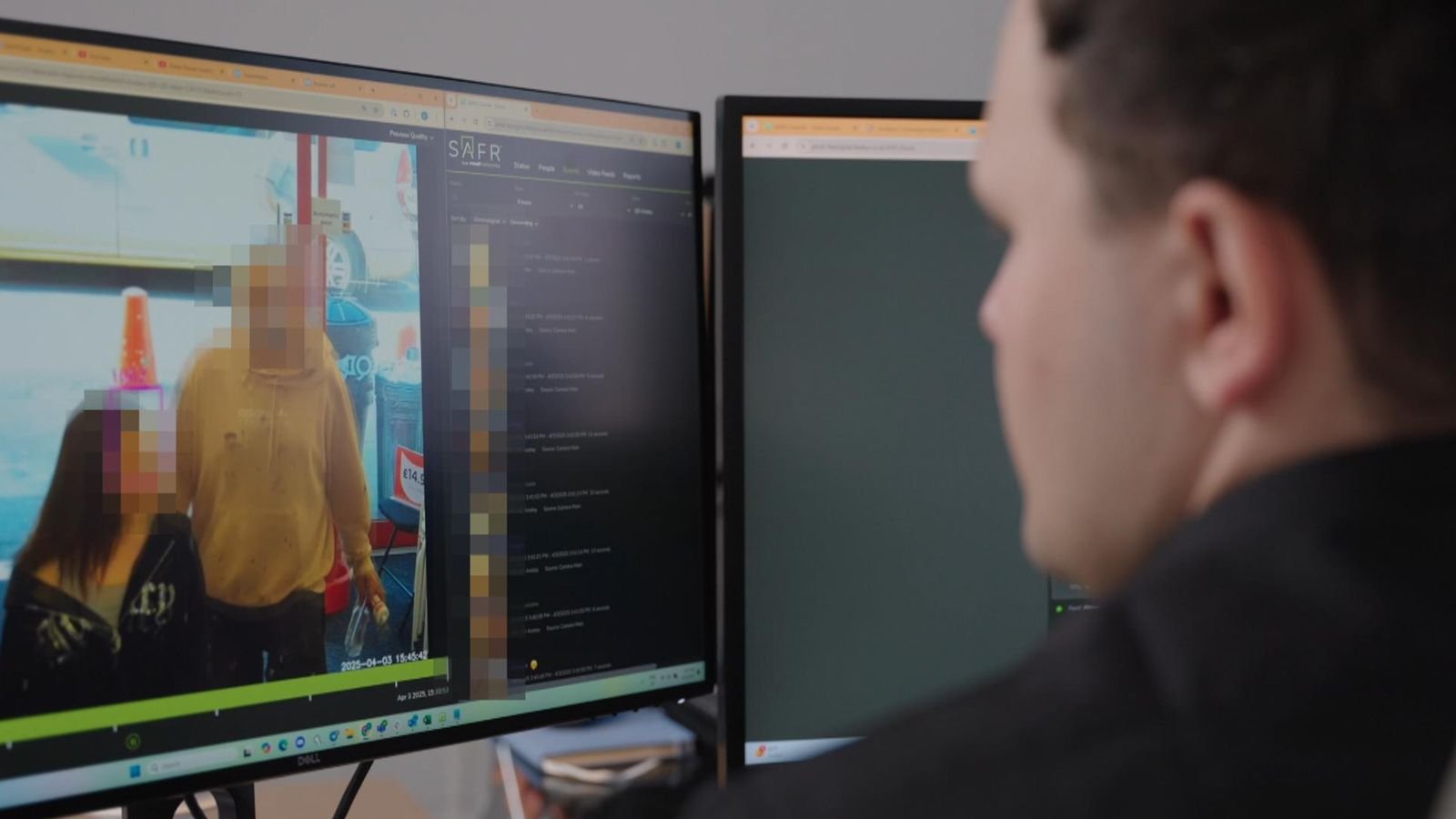
Retailers Turn to Facial Recognition Amid Rising Shoplifting Concerns
As the festive season approaches, UK retailers are experiencing a troubling spike in shoplifting incidents, prompting some to adopt advanced facial recognition technology as a deterrent. Despite an increase in theft, police responses remain stretched, leading businesses to take security measures into their own hands.
Increasing Incidents of Theft
Recent statistics indicate a 13% rise in shoplifting offences during the past year, with nearly 530,000 incidents reported by June. Alarmingly, over 80% of these cases resulted in no charges, raising questions about the effectiveness of current law enforcement measures. In parallel, retailers are facing alarming rates of violence and abuse against employees, with over 2,000 reports occurring daily.
Facial Recognition Technology in Retail
High-profile retailers such as Sainsbury’s, Asda, Budgens, and Sports Direct have begun utilising Facewatch, a cloud-based facial recognition system. This technology scans customers’ faces as they enter stores and matches them against a database of known offenders. When a match is detected, an alert is triggered, allowing staff to take preventive action before theft occurs.
Real-Life Impact on Businesses
James Evans, managing director of Ruxley Manor Garden Centre in south London, highlighted the increasingly organised nature of thefts, stating that losses from shoplifting now account for approximately 1.5% of their overall turnover. He described instances of children being sent in to steal while parents waited outside, showcasing a concerning trend that poses significant safety risks to staff.
Staff Safety Concerns
Staff at the garden centre have faced serious incidents as a result of theft attempts. In one incident, employees attempting to apprehend a suspected shoplifter were nearly struck by a getaway vehicle. “It’s not just about losses; it’s about the safety of our staff,” Evans remarked.
Criticism of Surveillance Technology
While some retailers view facial recognition as a necessary security measure, civil liberties advocates warn about the potential erosion of privacy. Silkie Carlo, director of Big Brother Watch, condemned the technology as “privatised policing” that jeopardises civil liberties. Concerns have been raised about the handling and storage of sensitive biometric data and the possibility of wrongful accusations.
Real Experiences of Misidentification
One high-profile case involved Rennea Nelson, who was mistaken for a shoplifter by a retailer using facial recognition technology. During a stressful moment, while she was pregnant, she faced undue accusations that not only affected her emotionally but also threatened her immigration status. The retailer later issued an apology, calling it an isolated incident caused by human error.
Industry Reactions
Nick Fisher, the chief executive of Facewatch, defended the use of facial recognition technology, arguing that criticisms often exaggerate its implications. He asserted that the company only retains data on confirmed repeat offenders, positioning the technology as a responsible tool for enhancing retail security.
Background
This surge in shoplifting comes at a time when many businesses are struggling to safeguard their operations within a challenging economic climate. As traditional policing methods are perceived to be insufficient in addressing the rise in crime, the reliance on technology by retailers reflects the urgent need to protect both goods and personnel.
In the face of this escalating issue, a delicate balance remains between safeguarding retail operations and respecting individual privacy rights. The ongoing debate surrounding surveillance technology continues to raise critical questions about its long-term implications for society at large.
Source: Original Article






