























UK Government Postpones Decision on Chinese “Super Embassy” in London
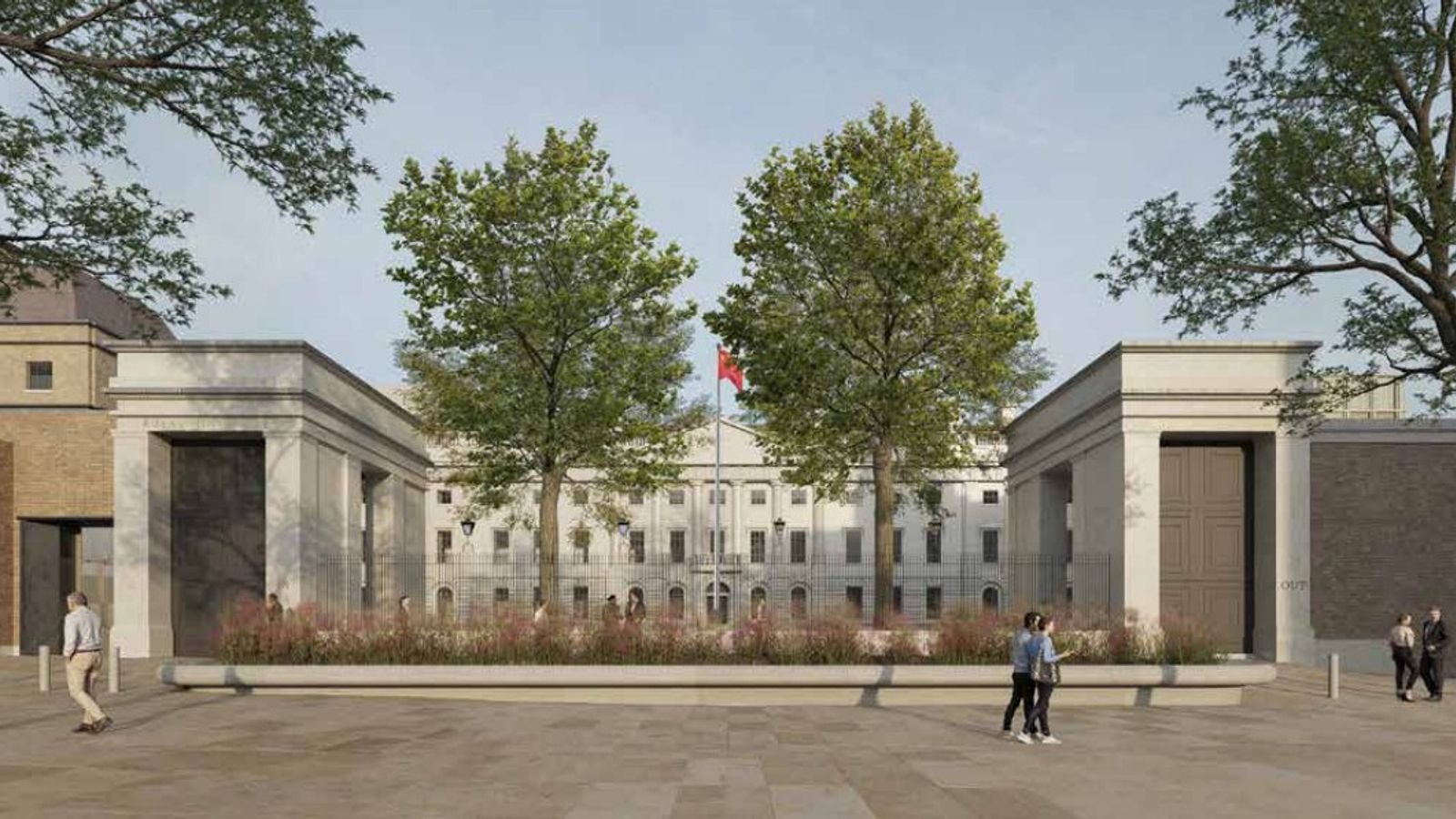
The UK government has delayed its decision regarding a proposed Chinese “super embassy” in London, now set to occur on 20 January 2024, instead of the previously scheduled 10 December. The project, situated near the historic Tower of London, has sparked significant controversy and debate over national security concerns.
Government’s Timeline for Decision
A letter from the planning inspectorate, reviewed by Sky News, confirmed the new date for the decision. This marks yet another delay in a process that has seen multiple extensions. Government sources indicate that approval is likely, bolstered by endorsements from both MI5 and MI6, who have reportedly not raised formal objections, contingent upon appropriate security measures being implemented.
Housing Secretary Steve Reed cited the need for additional time to consider recent submissions from the Foreign Office and Home Office. He underscored that these departments are expected to refrain from opposing the plans if adequate mitigations for national security are established.
Concerns and Opposition
There has been significant opposition to the embassy project, particularly from the Inter-Parliamentary Alliance on China (IPAC). This group has cautioned against the embassy’s approval, citing fears that it could serve as a hub for espionage across Europe. Luke de Pulford, IPAC’s executive director, noted that the government’s indecision has left residents and dissidents uncertain about their safety.
Additionally, last-minute commitments from the Chinese government to limit the embassy’s area to exclude the ambassador’s residence have reportedly alleviated some concerns, as indicated in a letter from UK secretaries to the planning inspectorate.
Protests and Public Sentiment
Widespread protests have erupted against the embassy’s establishment, with activists voicing fears that parts of the building designed “for security reasons” might be used to detain individuals who have fled political persecution in China. The ongoing demonstrations reflect deep unease within the community regarding the implications of the embassy’s presence.
Political Context
The delay arrives shortly after Sir Keir Starmer’s comments on the national security risks posed by China. The Labour leader described the need for a coherent strategy towards Beijing, suggesting that failing to adopt a consistent approach could undermine both UK national security and potential economic partnerships with China. His remarks underscore the ongoing debate within UK politics regarding the balance between security and economic interests.
Background
Prior to this latest disruption, the decision had already been postponed several times. Mr. Reed, who took office as housing secretary in September, originally shifted the timetable from October. This decision followed earlier delays instigated by former housing secretary Angela Rayner, offering a timeline rife with uncertainty since the Chinese government resubmitted its application shortly after Labour took power.
Last year, the Tower Hamlets Council rejected the embassy application, but the then-Conservative government opted not to intervene, leaving the issue to the current administration to resolve. As the January deadline looms, all eyes remain fixed on Westminster and the potential implications of this high-stakes decision.
Source: Original Article






